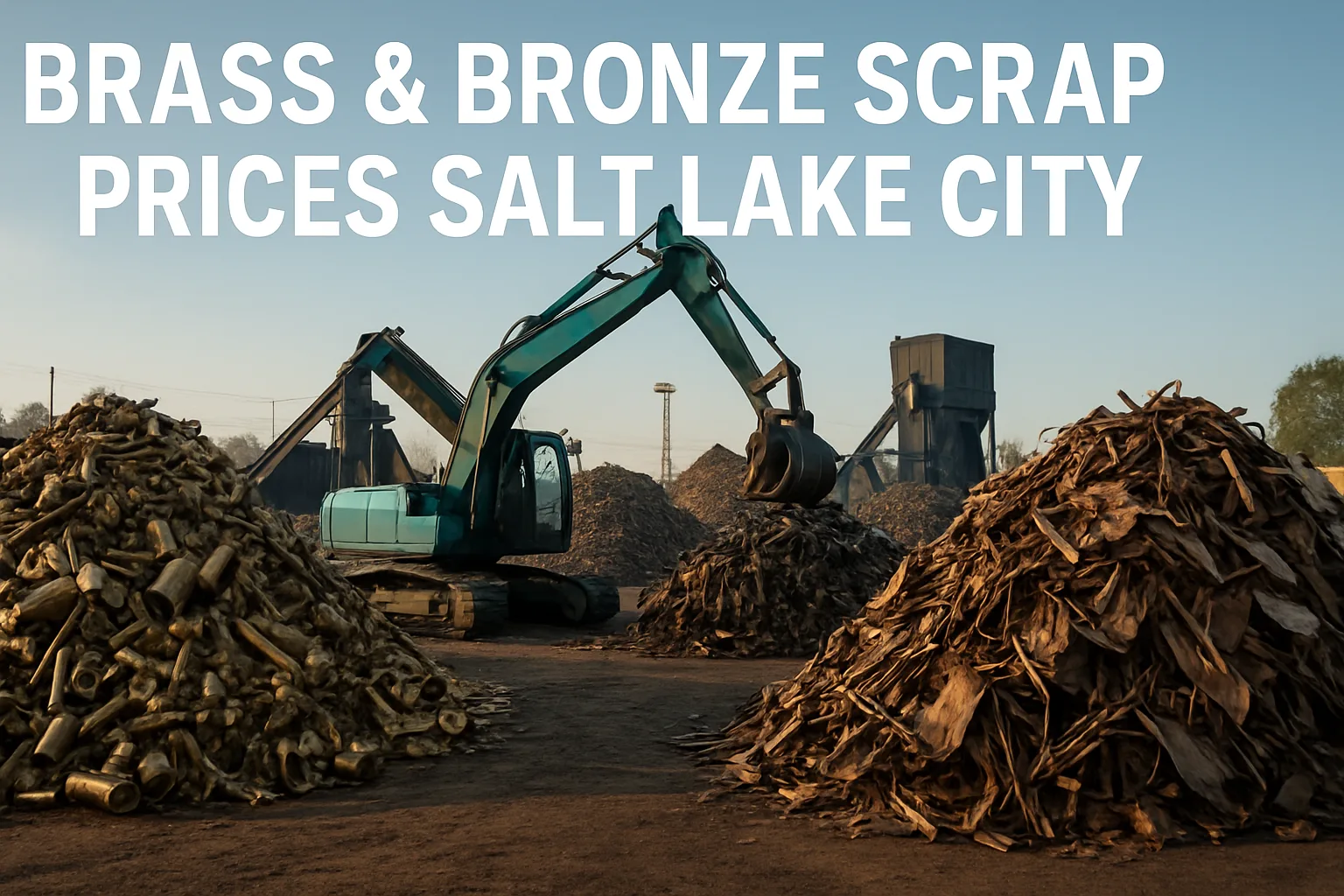
Brass and Bronze Scrap in Salt Lake City: What It's Worth and Where to Find It
Most people walk past brass and bronze every day without realizing they're looking at serious scrap value. A pile of old plumbing fittings, a worn-out industrial valve, a box of spent shell casings — that's not junk. That's non-ferrous metal worth real money. If you're doing scrap metal recycling in Salt Lake City, brass and bronze deserve your attention.
These alloys sit well above steel and aluminum on the price-per-pound scale. They're denser, more valuable, and easier to identify once you know what to look for. This guide breaks down what brass and bronze actually are, where you're likely to find them, what they fetch on today's market, and how to make sure you're not leaving money on the table when you sell.
What Are Brass and Bronze — and Why Does the Difference Matter?
Both are copper-based alloys, but they're not the same material and they don't price the same way. Brass is copper mixed with zinc. Bronze is copper mixed with tin — and sometimes aluminum, manganese, or silicon depending on the application. Most scrap yards treat them as separate categories, so knowing the difference affects your payout.
Here's a practical way to think about it:
- Brass — yellowish, found in plumbing, fittings, valves, musical instruments, shell casings, door hardware
- Bronze — darker, more reddish-brown, found in bearings, bushings, marine hardware, bells, statues, industrial machinery
- Yellow brass — the most common grade, lower copper content than red brass
- Red brass — higher copper content, commands a higher price per pound
- Bronze bearings and bushings — often sorted separately by yards that know what they're doing
When you bring a mixed load in, a knowledgeable buyer will sort it. When you sort it yourself before you arrive, you negotiate from a stronger position. Documented, sorted loads get better offers. That's true in Salt Lake City and everywhere else.
Where to Find Brass and Bronze Scrap in Utah
You don't need a demolition crew to source these metals. Brass and bronze show up in predictable places — you just need to know where to look. Salt Lake City's industrial corridor, older residential neighborhoods, and the surrounding construction activity all generate steady supply.
Common sources include:
- Plumbing tearouts — older homes in Salt Lake City often have brass fittings and shut-off valves throughout. Full kitchen and bathroom remodels can yield several pounds of yellow and red brass.
- HVAC and mechanical systems — commercial buildings use brass valves, gauges, and manifolds in heating and cooling systems
- Electrical components — brass terminals, bus bars, and connectors appear in panel replacements and industrial electrical work
- Auto parts — older radiators had brass and copper cores; some carburetors are brass
- Industrial machinery — Utah has significant mining, manufacturing, and energy infrastructure. Equipment overhauls generate bronze bearings and brass fittings in volume.
- Shell casings — spent brass cartridges are a consistent source for shooters and ranges near Salt Lake City
- Architectural salvage — door hardware, railings, decorative fixtures from commercial renovations
- Estate and auction lots — antique fixtures, vintage hardware, and ornamental pieces often contain more copper alloy than people realize
If you're a contractor, plumber, or HVAC tech working across the Wasatch Front, you're generating sellable brass on nearly every job. Don't throw it in the bin. A dedicated collection bucket in the truck pays for itself fast.
What Is Brass and Bronze Actually Worth? Scrap Metal Prices in Utah
Brass and bronze prices move with the copper market. Copper is the dominant component in both alloys, so when copper scrap prices shift — and they do, regularly — brass and bronze follow. In 2026, copper markets have remained active due to ongoing demand from the energy transition, EV infrastructure, and industrial manufacturing.
As a general guide (not a guarantee — prices fluctuate daily):
- Yellow brass typically prices lower than red brass — fewer cents per pound difference but it adds up on volume loads
- Red brass commands a premium because of its higher copper content
- Bronze bearings and bushings can price similarly to or above red brass depending on grade and condition
- Clean, sorted brass fetches more than mixed or contaminated loads
- Shell casings (spent brass) price competitively — some yards pay a premium for clean, sorted brass casings
Always confirm current rates before you haul. Spot prices change, and different buyers in Utah may offer meaningfully different numbers for the same material. That gap is exactly where platforms like SMASH create value — when more than one buyer sees your load, you find out what the market actually thinks it's worth. To find the best scrap metal prices today, you need competitive bids, not a single phone call guess.
Disclaimer: Scrap metal prices fluctuate based on commodity markets, buyer demand, and material grade. Always verify current rates before selling.
How to Prepare Your Brass and Bronze Load for Maximum Value
Preparation is where sellers leave money on the table — or pick it up. A sorted, documented load gives buyers confidence. Confidence translates into better offers. This isn't complicated, but most casual sellers skip it entirely.
Here's what proper preparation looks like:
- Sort by grade — separate yellow brass, red brass, and bronze. Don't mix them into a single pile.
- Remove attachments — brass valves with iron stems get downgraded. Steel nipples on brass fittings pull your price down. Take five minutes to strip fittings before you load up.
- Clean the material — paint, rubber gaskets, heavy grease, or plastic attached to your brass hurts your per-pound rate. Buyers discount for contamination.
- Weigh it yourself — know your approximate weight before you arrive. It keeps the transaction honest and helps you evaluate offers.
- Document with photos — if you're selling through an auction platform, photos of sorted, labeled material attract more serious buyers.
- Group shell casings separately — spent brass is its own category. Don't mix it with fittings and valves.
SMASH's inventory documentation tools make this process straightforward. Photo upload, grade labeling, and weight entry are all built into the platform. When buyers across North America see a properly documented load, competition picks up. That's better price discovery — and that's the whole point. Find the best price for your scrap on SMASH by listing your prepared load and letting buyers compete for it.
The Old Way vs. the SMASH Way — How to Stop Guessing at Your Price
The traditional approach to selling scrap in Salt Lake City goes like this: call one yard, get one number, accept it or don't. If you know the buyer personally, maybe you get a slightly better rate. If you don't, you're guessing whether that number is fair. That's not a market. That's a single data point.
The SMASH way works differently. You document your load — brass grade, weight, photos, condition. Vetted buyers see it and compete. The auction format means you're not negotiating against one opinion of what your scrap is worth. You're finding out what multiple buyers are actually willing to pay right now. Competition reveals the market. One phone call doesn't.
For yards and sellers moving volume — contractors, dismantlers, industrial accounts — this difference compounds over time. Even small per-pound improvements on regular loads add up significantly across a year. If you want to read scrap metal pricing guides that go deeper on how to evaluate your loads and understand market movement, there's a full resource library to work through.
No subscription fees. SMASH wins when you win. That's the model.
Secondary Metals in a Brass and Bronze Load — Don't Leave Them Behind
When you're pulling brass and bronze from a job site or teardown, you're almost always pulling other non-ferrous metals too. Copper pipe, aluminum fittings, stainless components — they all have value, and they all deserve their own sort pile.
A few things worth tracking alongside your brass and bronze:
- Copper pipe and wire — highest value per pound of the common non-ferrous metals. Keep it clean and separate.
- Aluminum scrap — aluminum scrap value per pound sits well below copper alloys, but aluminum is light and often shows up in volume. Cast aluminum, extrusions, and sheet all price differently.
- Stainless steel — heavier than aluminum with a price point between steel and non-ferrous. Worth sorting out from your iron pile.
- Catalytic converters — if your work touches vehicles or equipment, cats are their own category entirely. Precious metal content (platinum, palladium, rhodium) drives the value, not the steel shell. Some sellers prefer to sell catalytic converters online through auction platforms rather than local yards to access more buyers and better price transparency.
Knowing the best scrap metal prices in Utah means understanding your full load — not just the headline metal. Check current scrap metal prices across all your materials before you decide where and how to sell.
Frequently Asked Questions
Q: How do I know if my scrap is brass or bronze?
Brass is typically yellow to golden in color and found in plumbing and hardware. Bronze is darker and more reddish-brown, common in bearings, bushings, and industrial parts. If you're unsure, most scrap yards in Salt Lake City will identify it for you on the spot — or you can use a simple magnet test (neither brass nor bronze is magnetic).
Q: What is the best way to get the highest price for brass scrap in Salt Lake City?
Sort your material by grade, remove non-brass attachments, and get quotes from more than one buyer. Using an auction platform like SMASH puts your load in front of multiple vetted buyers simultaneously, which creates competition and better price discovery than calling a single yard.
Q: Do Salt Lake City scrap yards pay different rates for yellow brass vs. red brass?
Yes. Red brass has a higher copper content and typically commands a higher price per pound than yellow brass. Sorting these grades before you arrive — rather than presenting a mixed pile — generally results in a better overall payout.
Q: How do copper scrap prices in Salt Lake City compare to national rates?
Local copper scrap prices generally track national commodity markets but can vary based on regional demand, buyer volume, and operating costs. Checking multiple buyers — locally and through online platforms — gives you a clearer picture of what the market is actually paying in Utah at any given time.
Q: Is it worth selling small amounts of brass scrap, or should I accumulate first?
For casual sellers, accumulating pays off. Hauling a few pounds of fittings rarely covers the time and fuel. If you're a contractor or tradesperson generating brass regularly, set up a collection system on your truck or at your shop and sell in meaningful quantities — ideally sorted by grade — to maximize your per-load return.
Brass and bronze are among the most consistent earners in the non-ferrous scrap world. You just need to know what you have, how to prepare it, and where to find buyers who compete for it. If you're ready to stop guessing at your price, find the best scrap metal prices today at best-scrap-metal-prices.com — and list your load on SMASH where vetted buyers do the competing for you.
Stay current on metal market movements and scrap industry insights by following SMASH on LinkedIn.
```