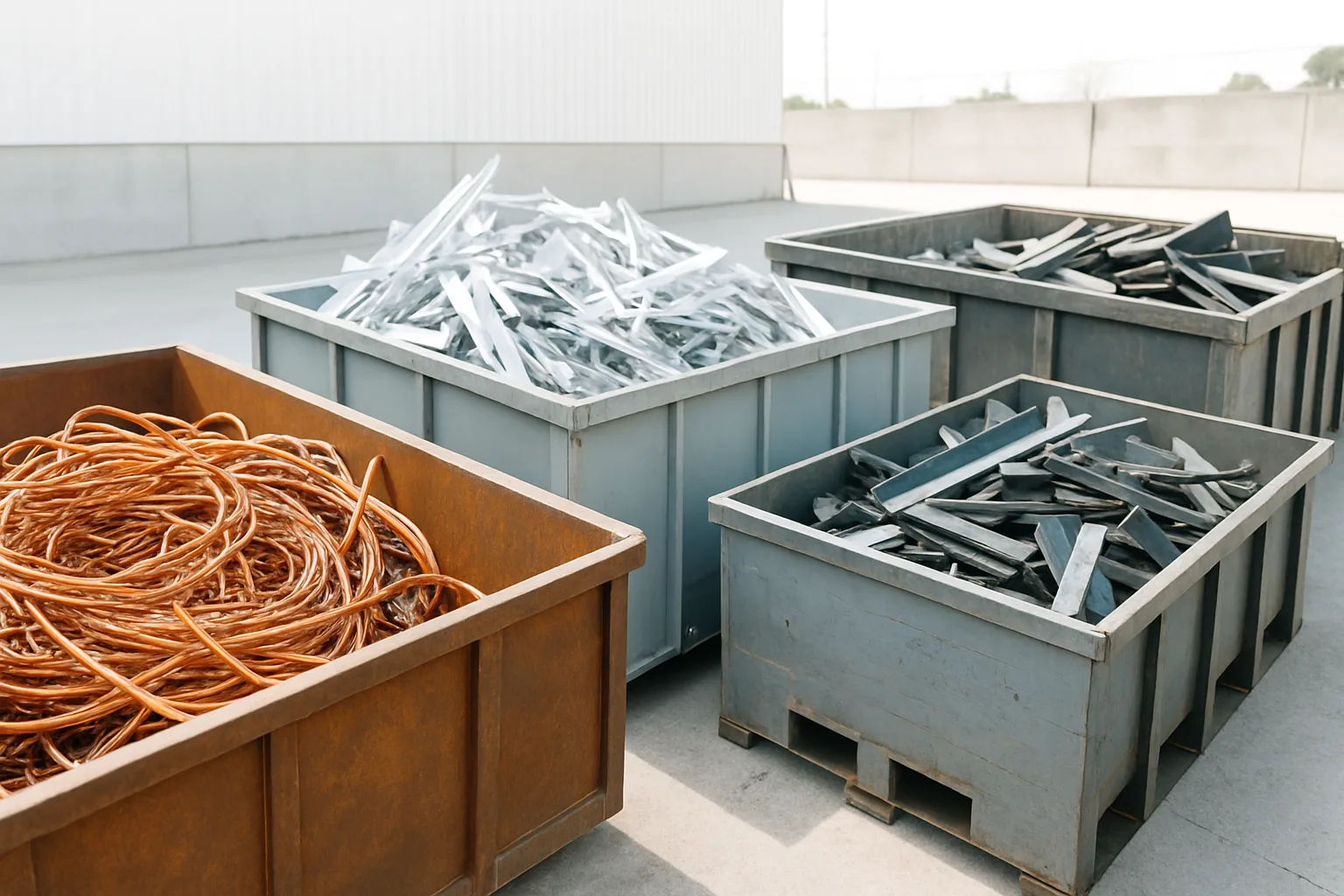
Most scrap yards pay you two very different rates depending on what you bring in — and a lot of sellers don't know why. The difference between ferrous and non-ferrous scrap metals isn't just technical jargon. It directly affects your payout, how your material gets sorted, and whether you're leaving money on the table every time you load up the truck.
If you're hauling metal in Cincinnati, Ohio, understanding this split is step one to getting smarter about your sales. Let's break it down plainly.
What Makes a Metal Ferrous or Non-Ferrous?
The word "ferrous" comes from the Latin ferrum, meaning iron. Simple rule: if a metal contains iron, it's ferrous. If it doesn't, it's non-ferrous. That's the whole distinction — but the downstream effects on pricing and demand are massive.
The easiest field test? Use a magnet. Ferrous metals stick. Non-ferrous metals don't. It's not 100% foolproof for every alloy, but it works for the vast majority of what you'll encounter in the field. A pocket magnet is one of the most useful tools any scrapper can carry.
- Ferrous examples: mild steel, cast iron, structural steel, stainless steel (some grades), wrought iron
- Non-ferrous examples: aluminum, copper, brass, bronze, lead, zinc, nickel, titanium
Stainless steel is a gray area — it contains iron but also chromium and nickel, which can affect its magnetic response and its value. Some grades are mildly magnetic, some aren't. Many yards test it separately and pay a premium over standard steel.
Why Non-Ferrous Metals Like Aluminum and Copper Get Paid at Higher Rates
Walk into any scrap yard and you'll see two very different scale prices posted. Steel and iron typically sit at the low end — measured in dollars per gross ton or cents per pound. Aluminum, copper, and brass are priced significantly higher, often by a factor of ten or more per pound.
The reason comes down to rarity, conductivity, corrosion resistance, and industrial demand. Copper wiring is the backbone of electrical infrastructure. Aluminum keeps aircraft light and beverage cans cheap to manufacture. These materials are harder to source and more expensive to produce from virgin ore, which makes recovered scrap valuable to mills and foundries.
If you're tracking the aluminum scrap price today, you already know those numbers move. Aluminum sheet, extrusions, cast, and clips all carry different rates. The form matters. A clean aluminum radiator will pay differently than a dirty casting with steel inserts. Knowing the categories your material falls into is how you negotiate with confidence instead of just accepting whatever number the yard posts.
For a live look at what the market is paying right now, check current scrap metal prices before you load the truck.
Ferrous Scrap: Lower Price Per Pound, But Volume Moves the Needle
Don't write off ferrous just because the per-pound rate is lower. Steel and iron are bought in bulk. Structural steel from a demolition job, automotive frames, appliances, rebar — these materials add up fast by weight. A full load of HMS (heavy melting steel) still puts real money in your pocket, especially if you're running a recycling yard or handling commercial volumes.
Ferrous scrap feeds electric arc furnaces at steel mills across North America. Demand is tied to construction cycles, auto production, and manufacturing output. When construction is hot, steel demand rises. When it slows, prices soften. Watching those signals helps you time your sales.
Common ferrous grades you'll encounter:
- HMS 1 & 2 (Heavy Melting Steel) — structural and plate steel, the workhorse category
- Shredded steel — processed through a shredder, typically from auto hulks and appliances
- Cast iron — engine blocks, radiators, old pipes; denser and pays slightly differently than mild steel
- Busheling — clean sheet steel, often from industrial stamping operations
- Rebar — construction steel; price varies by region and market conditions
Cincinnati yards handle heavy ferrous loads regularly given the region's manufacturing base. Ohio's industrial corridor generates consistent steel scrap — knowing where your material fits in the grading system helps you get paid accurately.
Non-Ferrous Pricing: Where the Real Money Per Pound Lives
If you're focused on maximizing return per pound, non-ferrous is where you want to be. Copper, aluminum, brass, and specialty metals like nickel alloys command significantly higher rates, and the spread between a poorly sorted load and a well-sorted load can be substantial.
Here's a quick overview of how non-ferrous categories stack up in terms of relative value:
- Copper — typically the highest-value common scrap metal; bare bright copper (clean, uncoated wire) pays the most, followed by #1 copper, #2 copper, and then insulated wire
- Aluminum — large volume, multiple grades; extrusions, sheet, cast, and MLC (mixed low-grade) each price differently
- Brass — yellow brass, red brass, and plumbing brass are common; often recovered from valves, fittings, and hardware
- Stainless steel — varies by nickel content and grade; 304 and 316 are common in food and industrial equipment
- Lead — batteries, wheel weights, pipe; handled with specific safety requirements
- Catalytic converters — a category on their own due to platinum group metals (PGMs) inside
Catalytic converters deserve a mention here because they're non-ferrous — but the value comes from the ceramic substrate inside, not the outer steel shell. If you're looking to sell catalytic converters online, platforms like North America's B2B scrap metal auction platform connect sellers with vetted buyers who actually bid competitively on cats. That's very different from accepting a single yard offer with no competition behind it.
How to Sort, Document, and Sell Smarter in Cincinnati
Sorting your material before you show up at the scale is one of the highest-return activities in scrapping. Mixed loads get downgraded. A load of copper wire that still has aluminum connectors attached won't pay copper rates — it'll pay mixed rate. A minute of separation at the shop can mean dollars more per pound at the yard.
Documentation also matters more than most sellers realize. For larger loads — especially non-ferrous — having photos, weights, and a clear inventory description gives buyers confidence. That confidence translates to stronger bids. If you're handling regular volume and want to get competitive offers instead of accepting a single price, read scrap metal pricing guides to understand how preparation affects your outcome.
Practical sorting steps before your sale:
- Use a magnet to separate ferrous from non-ferrous before anything else
- Strip insulation from copper wire where it's economically worthwhile
- Separate aluminum by grade — extrusions, sheet, and cast don't belong in the same pile if you want top dollar
- Remove steel bolts and fittings from aluminum or brass components
- Keep stainless separate from mild steel — it pays more and shouldn't be mixed in
- Document your catalytic converters by serial number or VIN if possible — it affects buyout value
In Cincinnati, Cincinnati scrap metal services are available for sellers who want local pricing benchmarks and connections to competitive buyers. Ohio's active recycling market means you have options — use them.
Using Competitive Platforms to Get Better Price Discovery on Non-Ferrous
The old way of selling scrap is calling one buyer, getting one number, and deciding whether to take it or leave it. For low-volume ferrous, that might be fine. But for non-ferrous loads — especially copper, aluminum, and cats — one call is leaving money on the table.
Price discovery only happens when multiple buyers compete. That's the core idea behind SMASH. Instead of one quote, vetted buyers bid against each other. Sellers see real market interest on their specific material, not a posted board rate that may or may not reflect what buyers actually want that week.
The aluminum scrap value today and the copper scrap price today both vary based on form, grade, volume, and regional demand. A platform that creates competition surfaces what buyers are actually willing to pay — not just what the first phone call gives you.
SMASH handles inventory documentation, photo uploads, and auto-invoicing. No subscription fees. The model is simple: SMASH only wins when the seller wins. If you're moving consistent non-ferrous volume and want competitive bids from vetted buyers, that's a better deal than a single cold call.
Whether you're just starting to separate your loads or you're running a full recycling operation in Ohio, the fundamentals don't change: know your material, sort it well, document it properly, and put it in front of more than one buyer. To find the best scrap metal prices today, start with the market data and go from there.
Disclaimer: Scrap metal prices fluctuate daily based on global commodity markets, regional demand, and material grade. Always verify current rates before selling. The figures and ranges referenced in this article are for general educational context only.
Frequently Asked Questions
Q: What is the easiest way to tell if scrap metal is ferrous or non-ferrous?
Use a magnet. Ferrous metals (steel, iron) will stick to it. Non-ferrous metals (aluminum, copper, brass) won't. It's not perfect for every alloy, but it works for the vast majority of materials you'll encounter in everyday scrapping. Keep a strong magnet in your truck or on the shop wall.
Q: Why does aluminum pay more than steel at the scrap yard?
Aluminum is a non-ferrous metal with higher industrial demand and a more energy-intensive primary production process. Recycled aluminum saves significant energy compared to smelting virgin ore, which makes recovered aluminum scrap genuinely valuable to manufacturers. Steel is more abundant and easier to produce, which keeps base prices lower per pound — though high volumes still add up.
Q: How do I find the best aluminum scrap price today in Cincinnati?
Check live pricing through market resources like best-scrap-metal-prices.com, and then compare what local Cincinnati yards are offering against that baseline. Sorting your aluminum by grade — extrusions, sheet, cast, and dirty aluminum are priced differently — helps you have an informed conversation at the scale rather than just accepting the first number you hear.
Q: Can I sell catalytic converters online from Ohio?
Yes. Online platforms that connect sellers with vetted buyers are a legitimate option for catalytic converters, especially for higher volumes. Cats contain platinum group metals (PGMs) and are priced based on make, model, and serial number — not just weight. Getting competitive bids from multiple buyers tends to produce better results than a single local offer, particularly for large or high-grade units.
Q: Does SMASH work for smaller sellers or just large recycling yards?
SMASH is primarily a B2B platform, so it's best suited for sellers moving consistent loads — recycling yards, auto dismantlers, industrial facilities, and commercial operations. If you're generating regular non-ferrous volume in Ohio, it's worth exploring how competitive bidding compares to your current single-buyer arrangement. No subscription fees means there's no cost just to find out what the market will actually pay.
Ready to stop guessing what your scrap is worth? Find the best scrap metal prices today at best-scrap-metal-prices.com — then put that knowledge to work the next time you head to the scale.
Follow SMASH on LinkedIn for scrap metal market insights, industry updates, and pricing trends across North America.