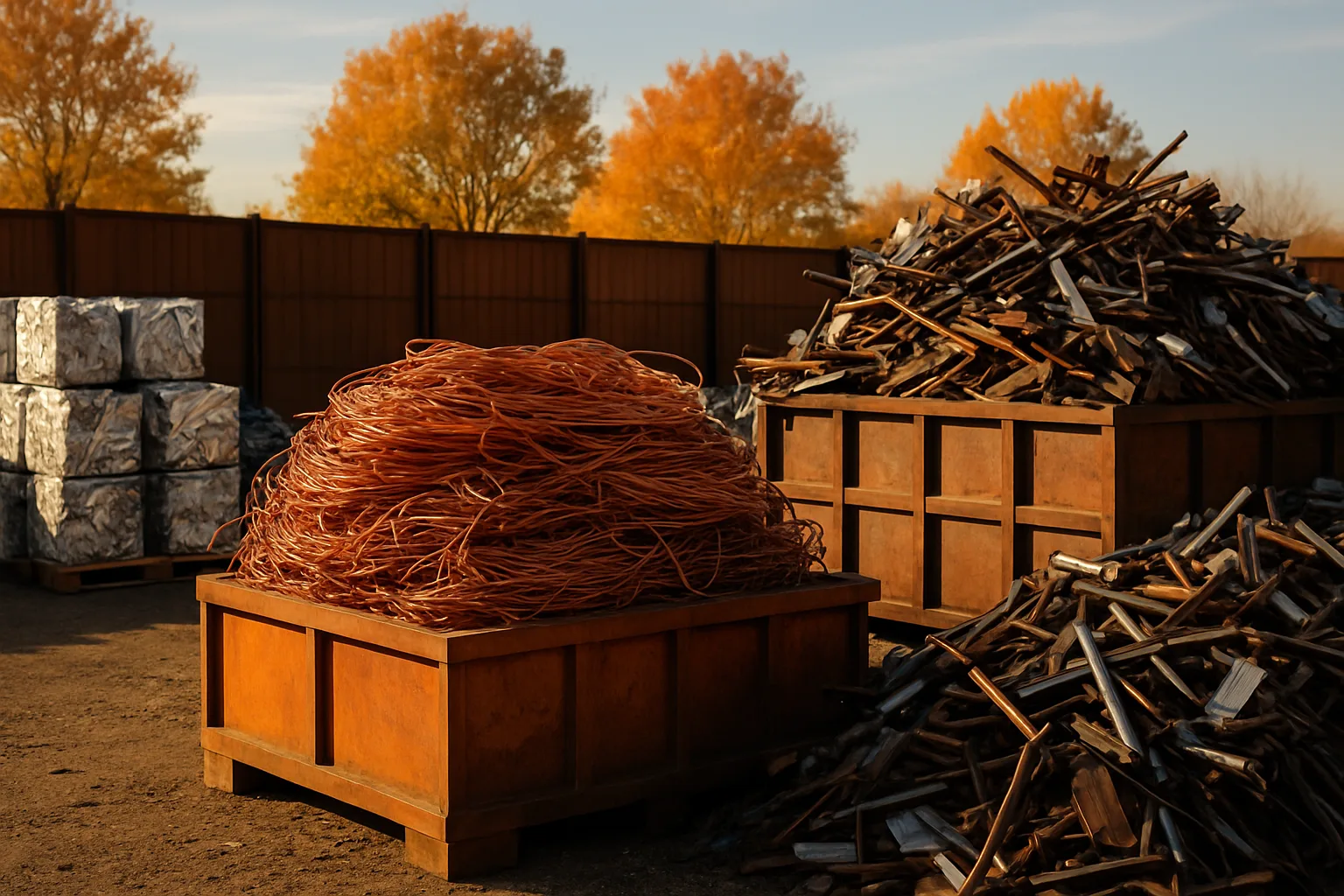
Copper Scrap Grades Explained — And Why the Grade You Sell Determines the Price You Get
Most scrap yards won't overpay for copper you bring in dirty, mixed, or misidentified. If you're walking in with a load of wire and calling it all "#1 copper," you're either getting laughed at or getting docked — sometimes both. Understanding copper scrap price today starts with understanding grades. The grade you assign your material is the single biggest lever you control in this transaction.
This guide breaks down every major copper grade, what buyers actually pay for each, and how to sort your loads so you're not leaving money on the table. Whether you're running a recycling yard in Colorado Springs or pulling wire from a demo job in Denver, the same rules apply.
Before we get into grades, one important note: copper prices move daily. Global demand, LME spot rates, and regional buyer competition all shift the number. Use this guide to understand the relationship between grades — then check current scrap metal prices before you load your truck.
---The Copper Grading Hierarchy: From #1 Bare Bright to Low-Grade Alloys
Copper isn't just copper. Buyers grade it based on purity, contamination, and form. Here's the full breakdown of what you're likely to encounter and how each grade stacks up on price.
Bare Bright Copper (the top of the stack)
This is the cleanest, highest-value copper you can sell. Bare bright is uncoated, unalloyed copper wire — no insulation, no solder, no paint, no fittings. It needs to be at least 1/16 inch in diameter. Think stripped electrical wire from a commercial renovation. This grade commands the highest price per pound in any yard across Colorado and the rest of North America.
#1 Copper
Unalloyed copper pipe and wire that's clean but doesn't meet bare bright standards. It can have minor oxidation but no paint, no solder, no insulation. Plumbing pipe from a remodel is a classic #1 source. Price lands just below bare bright — still strong, still worth sorting for.
#2 Copper
This is where most loads end up. Mixed copper with some oxidation, minor solder, light coatings, or contamination. Gutters, flashing, and job-site scrap often fall here. Expect a meaningful step down from #1 pricing — typically 10–20% depending on the buyer and the day's LME rate.
Insulated Copper Wire (ICW)
The grade depends entirely on the copper recovery percentage inside the insulation. High-grade ICW (like THHN wire or romex with good copper content) prices higher. Low-grade extension cord wire with thin copper cores prices much lower. Buyers either calculate a recovery percentage or run samples through a chopper. Know what you have before you negotiate.
Copper Alloys: Brass, Bronze, and Red Brass
These aren't pure copper — they're blends. Red brass (85%+ copper) prices close to #2 copper. Yellow brass runs lower. Bronze varies depending on the alloy. Don't lump these in with your copper loads. Separate them. Mixed loads of copper and brass get priced at the lower grade — always.
- Bare Bright: Highest purity, highest price
- #1 Copper: Clean, uncoated, minimal oxidation
- #2 Copper: Light contamination, oxidation, minor solder
- Insulated Wire: Price depends on copper recovery %
- Red Brass: High copper content, priced slightly below #2
- Yellow Brass / Bronze: Lower copper content, priced accordingly
What's Driving Copper Scrap Price Today in 2026
Copper doesn't exist in a vacuum. The price you get at a Colorado Springs yard today is shaped by forces that start thousands of miles away. In 2026, a few specific dynamics are pushing and pulling on copper values harder than usual.
Electrification demand is real and it's sustained. EV manufacturing, grid infrastructure buildout, and data center expansion all require significant copper. That structural demand keeps a floor under prices even when economic conditions soften in other sectors. It's not a short-term spike — it's a multi-year demand shift.
At the same time, tariff uncertainty is creating regional price distortions. Domestic scrap has gained relative value in some markets as imported refined copper faces pricing friction. That can benefit sellers in certain regions, though it also creates volatility week to week. The key takeaway: scrap metal prices today are more dynamic than they were even two years ago. Sitting on a load waiting for "the perfect price" has real cost.
Local buyer competition matters too. In markets like Colorado Springs where the buyer base is thinner than a major metro, you feel price swings more acutely. One dominant buyer can shade your price down simply because you don't have a benchmark. That's exactly the problem that platforms like SMASH Scrap — where verified buyers bid on your metal are built to solve. More buyers in the room means the market price actually reveals itself.
For ongoing market context and historical trend data, read scrap metal pricing guides that break down what's moved the market and where it's headed.
---How to Sort Copper the Right Way Before You Sell
Sorting takes time. It also makes money. Here's the simple math: a 500-pound load of mixed copper and insulated wire priced as #2 might net significantly less than the same material sorted into bare bright, #1, #2, and ICW sold separately. The spread between grades is real.
Here's a practical sorting approach for most sellers:
- Strip your wire first. Any wire thick enough to strip economically should be stripped before it hits the yard. Bare bright pricing versus ICW pricing can be a substantial gap.
- Pull out the fittings. Copper elbows and couplings often have solder. Don't mix them with clean pipe — they'll drop your whole load to #2.
- Separate the brass. Red brass, yellow brass, and bronze all have different values. Keep them in separate bins. Never combine them with copper loads.
- ID your wire grades. THHN, romex, service entrance cable, and low-grade extension cord wire all price differently. Keep them separate if you have volume.
- Document and photograph. Especially on larger loads, photos of your sorted material give buyers confidence. This matters more than most sellers realize — documented loads attract stronger bids.
Yards in Colorado Springs and across Colorado generally pay more for sorted, clean material — not because they're being generous, but because clean loads cost them less to process. That savings gets passed back to you in the price. Give them a reason to pay top dollar.
---Comparing Your Options: Yard Walk-In vs. Auction Platform for Copper Loads
For small loads — a few pounds of wire, a handful of fittings — walking into your local yard in Colorado Springs is perfectly reasonable. Quick transaction, cash in hand, done.
For larger loads, the math changes. When you're moving hundreds of pounds of copper or a mixed non-ferrous load with real value, a single-buyer transaction is a gamble. You're trusting that one yard is offering you the market price. They might be. Or they might not.
That's the core problem SMASH was built to solve. When you list a load on SMASH, vetted buyers across North America see it and bid. Competition surfaces the actual market price — not one yard's margin-protected offer. There's no subscription fee. SMASH only earns when you sell. If you're sitting on significant copper and wondering whether to sell scrap metal near me at the closest yard or test the broader market, an auction format gives you a real answer instead of a guess.
The difference isn't always dramatic. But it's consistent. And on a large copper load in a thin local market like some parts of Colorado, even a few cents per pound adds up fast.
To find the best scrap metal prices today, you need more than one data point. You need competition.
---Quick Reference: Copper Grade Comparison for Scrap Metal Sellers
Use this as a field guide when you're sorting a load or evaluating what a yard is quoting you. Prices fluctuate daily — this is about understanding relative value, not absolute numbers.
- Bare Bright Wire: Highest value. Clean, stripped, uncoated, 1/16"+ diameter.
- #1 Copper Pipe/Wire: High value. No insulation, minimal oxidation, no fittings with solder.
- #2 Copper: Mid-tier. Some oxidation, light contamination. Most mixed loads land here.
- THHN / Romex Wire: Good recovery rate, prices based on stripping value. Keep separate from low-grade wire.
- Low-Grade ICW: Extension cords, holiday lights, thin-gauge wire. Low copper recovery = lower price.
- Red Brass: Priced close to #2 copper. Good value — don't mix with yellow brass.
- Yellow Brass: Lower copper content. Priced meaningfully below red brass.
- Copper Transformers / Motors: Priced by recovery estimate. Know your yield before you sell.
When in doubt about a grade, ask the yard to show you how they're classifying it and why. A good yard will explain it. If they can't — or won't — that's worth noting before you unload your truck.
---Copper is one of the most valuable metals you'll handle in this business. Getting the grade right and the buyer right are the two things fully in your control. Sort well, document your loads, and don't let a single-buyer market set your price by default. Check what the market is actually paying — start at best-scrap-metal-prices.com and put competition to work for you.
Disclaimer: Copper scrap prices fluctuate daily based on LME rates, regional demand, and buyer competition. All price references in this guide are illustrative of grade relationships only. Always verify current rates before selling.
---Frequently Asked Questions
Q: What is the copper scrap price today in Colorado Springs?
Copper scrap prices in Colorado Springs vary by grade and shift daily with LME spot rates. Bare bright copper commands the highest price, while #2 copper and insulated wire price lower. Check current rates at best-scrap-metal-prices.com before you load your truck — yesterday's number isn't today's number.
Q: What's the difference between #1 and #2 copper scrap?
#1 copper is clean, uncoated, unalloyed pipe or wire with minimal oxidation and no solder or fittings. #2 copper has light contamination, oxidation, or minor coatings. The price gap between them is real — sorting your loads to hit #1 grade is worth the time on any load over 50 pounds.
Q: How do I find the best scrap metal prices near me in Colorado?
Start by comparing multiple buyers rather than defaulting to the closest yard. Local yards in Colorado Springs set their own buy prices, and competition is limited in smaller markets. Platforms like SMASH put multiple vetted buyers in competition for your load, which helps surface actual market pricing rather than a single yard's offer.
Q: Should I strip my copper wire before selling?
Generally yes, if the wire is thick enough to strip economically. Bare bright wire prices significantly higher than insulated copper wire because the buyer doesn't have to process the insulation. For thin-gauge wire where stripping by hand isn't practical, keep it separate and price it as the appropriate ICW grade.
Q: What affects copper scrap prices in 2026?
In 2026, key drivers include sustained electrification demand (EVs, grid buildout, data centers), ongoing tariff dynamics affecting domestic versus imported copper pricing, and LME spot rate fluctuations. Regional buyer competition — or lack of it — also affects what you actually see at the scale. More buyers bidding on your load means better price discovery.
---Stay sharp on where the copper market is moving — follow SMASH on LinkedIn for scrap metal market updates and industry insights: SMASH on LinkedIn.