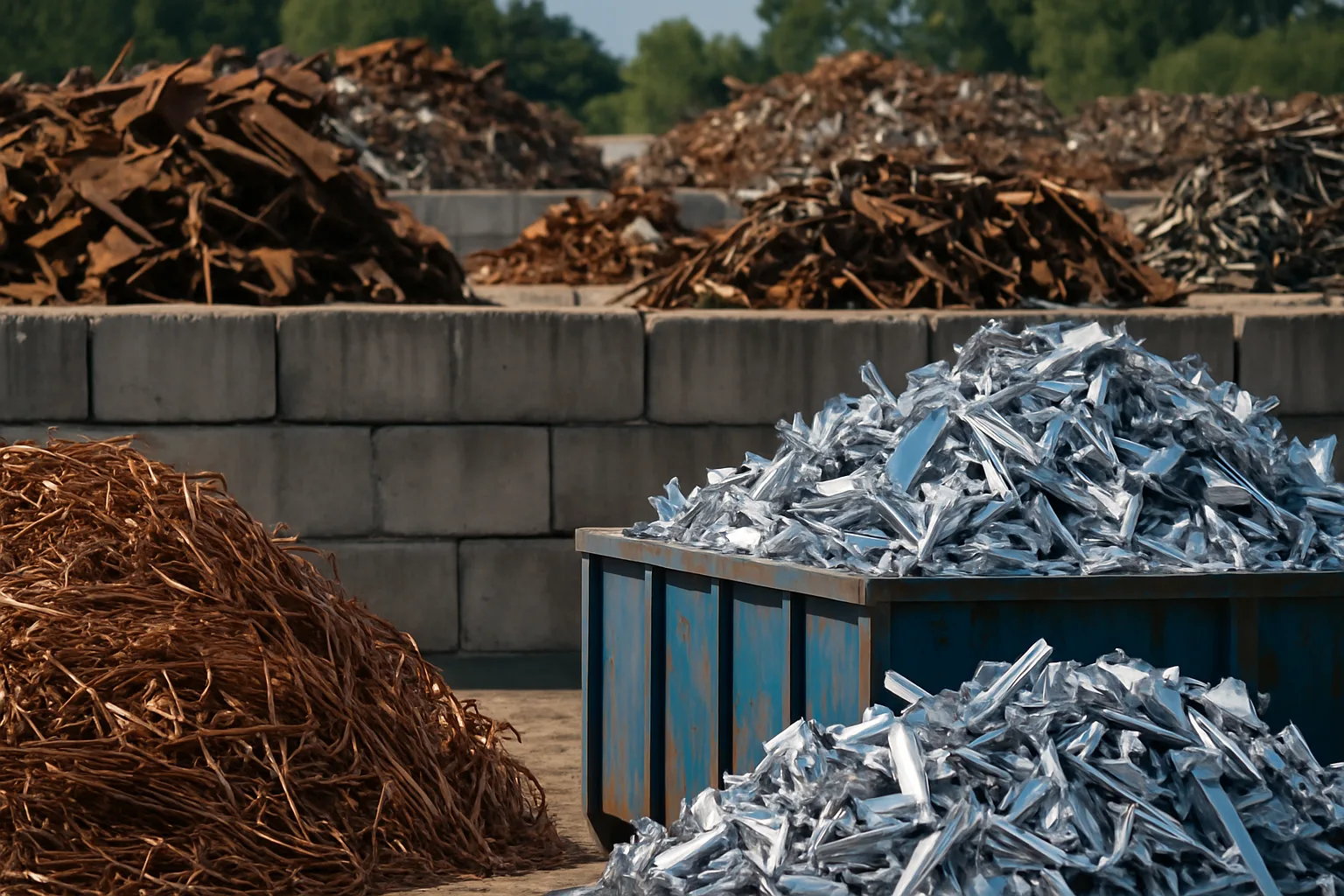
Ferrous vs. Non-Ferrous Scrap: Why the Difference Directly Affects Your Payout
Most sellers walking into a scrap yard for the first time treat metal like metal. It's all heavy, it's all recyclable, and it's all going into a pile somewhere. That assumption costs them money. The single most important factor in understanding scrap metal prices today is knowing whether what you're hauling is ferrous or non-ferrous — because the price gap between the two categories can be enormous.
In Cleveland, Ohio, where industrial output, automotive teardowns, and legacy manufacturing keep scrap volumes high year-round, knowing this distinction isn't just useful — it's the difference between a decent payday and leaving real money on the table.
What Ferrous Scrap Metal Actually Means
Ferrous simply means iron-containing. If a magnet sticks to it, you're almost certainly holding ferrous metal. Steel and cast iron are the most common examples you'll encounter at a scrap yard. Think automotive frames, appliances, structural beams, rebar, and sheet metal from old HVAC units.
Ferrous scrap moves in massive volumes across North America. Steel mills depend on it as a feedstock for electric arc furnaces, and the recycling rate for steel consistently outpaces virtually every other material. The trade-off? Ferrous prices per pound are typically much lower than non-ferrous metals. You compensate with volume. A full load of shredded steel from a Cleveland demolition site can still generate a meaningful payout — but you're playing a weight game, not a value-per-unit game.
Common ferrous scrap categories include:
- #1 Heavy Melt Steel (HMS) — thick-gauge clean steel, no coatings
- #2 HMS — thinner gauge, may include light gauge sheet and mixed steel
- Cast Iron — old radiators, engine blocks, cookware
- Shredded Steel — processed auto bodies and mixed ferrous
- Rebar and Structural Steel — from demolition or construction
Yard pricing on ferrous fluctuates with global steel demand. When mills slow down or import prices drop, your HMS rate drops with them. That's the market reality. Staying current on scrap metal prices today matters even more when you're moving ferrous loads, because margins are tighter and timing can make a meaningful difference.
What Non-Ferrous Scrap Metal Means — and Why It Pays More
Non-ferrous metals contain no iron. The magnet test is fast and reliable — if nothing sticks, you're likely looking at copper, aluminum, brass, lead, zinc, stainless steel, or a specialty alloy. These metals are denser in value per pound and command significantly higher prices at the yard.
In practical terms, a few hundred pounds of copper wire from a rewiring job can outpay a ton of mixed steel. That's not an exaggeration. Copper regularly trades at multiples of what you'd get per pound for heavy melt steel. Aluminum follows a similar pattern — cans are at the low end, but aluminum extrusion, copper-clad aluminum wire, and aircraft-grade alloys move into genuinely premium territory.
Key non-ferrous categories and what drives their pricing:
- Copper — bare bright wire, #1 copper pipe, #2 copper, insulated wire (pay varies by insulation percentage)
- Aluminum — extrusion, cast, sheet, MLC (mixed low copper aluminum), litho
- Brass — yellow brass, red brass, plumbing fixtures, shell casings
- Stainless Steel — 304 and 316 grades pay more; 430 is lower value
- Lead — batteries, wheel weights, pipe (strict handling protocols apply)
- Zinc — die-cast pieces, galvanized material (priced separately from clean zinc)
Non-ferrous pricing tracks global commodity markets closely. Copper prices, for example, react to Chinese manufacturing data, U.S. infrastructure spending, and energy market shifts. If you're sitting on a significant non-ferrous load in Cleveland and you're not watching the market, you're guessing at your own money.
How Cleveland's Scrap Market Reflects These Price Differences in Real Life
Cleveland isn't a random market. Ohio has one of the densest concentrations of manufacturing, automotive, and industrial activity in North America. That means more scrap generated, more buyers competing for quality material, and — for sellers who understand what they have — more opportunity to capture competitive pricing.
The ferrous market in Cleveland trends with what's happening at regional steel producers and with auto production cycles. When automotive plants run hard, shredded steel demand typically strengthens. When they slow down for retooling or model transitions, ferrous prices soften. Non-ferrous pricing in the Cleveland area follows global copper and aluminum benchmarks more than local steel dynamics — which means a seller with a load of clean #1 copper is effectively tapping into an international commodity price, not just a local yard rate.
The problem most sellers face — whether they're running Cleveland scrap metal services or working out of a small shop — is that they don't always know if they're getting the market rate or just the rate one buyer decided to offer them that morning. That single-buyer problem is exactly where platforms like SMASH help you compare scrap metal bids from verified buyers, turning a one-sided negotiation into an actual market.
Sorting Your Scrap Before You Sell: The Practical Upside
Here's where most sellers leave money behind: they don't sort. A mixed bin of ferrous and non-ferrous material gets priced at the lowest common denominator. The yard isn't going to sort it for you and then pay you premium on each piece — that cost comes out of your payout. Doing the work yourself pays dividends.
A basic sorting process that actually moves the needle:
- Run the magnet test first. Separate anything that sticks (ferrous) from anything that doesn't (non-ferrous). Takes five minutes. Worth real money.
- Grade your ferrous by thickness and cleanliness. #1 HMS versus #2 HMS pricing can vary. Clean, heavy, unpainted steel earns more.
- Identify your non-ferrous by type. Don't throw brass in with copper. Don't mix aluminum extrusion with cast. Each category has its own price tier.
- Strip insulation where practical. Insulated copper wire pays by the copper content. Bare bright wire pays more per pound. Stripping high-gauge wire yourself changes the math on a large load.
- Document what you have before you haul it. Weight estimates, photos, and a packing list give buyers more confidence and reduce the chance of a downgrade at the scale.
Photo documentation and proper inventory aren't just paperwork — they're leverage. When you can show a buyer exactly what's in a load before pickup, you remove uncertainty from their end. That matters when you're trying to find the best scrap metal prices today rather than just accepting whatever one yard happens to offer.
Why an Auction Platform Changes the Calculus for Both Ferrous and Non-Ferrous
The traditional scrap selling process looks like this: you call one yard, they give you a price, you take it or spend an afternoon calling around. Most sellers take it. The bid they get isn't the market — it's one data point, shaped by that buyer's position that day.
That's the problem SMASH was built to solve. SMASH is a scrap metal auction platform that puts your documented inventory in front of vetted buyers and lets competition determine the price. Ferrous loads, non-ferrous loads, mixed material — the format applies to all of it. More buyers seeing your load means better price discovery. That's not a marketing promise; it's how competition works.
No subscription fees. SMASH only earns when you sell. The platform handles auto-invoicing, and the buyer network has been vetted — which matters when you're moving significant loads and need the transaction to actually close cleanly. If you're in the Ohio market and you've been operating on single-buyer pricing, read scrap metal pricing guides that walk through how to benchmark what you're actually owed versus what you're being offered.
You already did the work sorting your material. You identified your copper, graded your HMS, documented the load. Let the market price it. That's the whole idea behind what SMASH scrap does — take your prepared inventory and create actual competition around it instead of a one-call guessing game.
Staying Current on Scrap Metal Prices in Ohio
Pricing on both ferrous and non-ferrous scrap shifts constantly. Copper reacts to daily commodity trading. Steel prices follow mill demand and import dynamics that can change week to week. A price you got quoted six weeks ago on aluminum extrusion may be meaningfully different from what the market offers today.
The practical answer is straightforward: check current scrap metal prices regularly, not just when you're ready to haul. Building a habit of market awareness — even a quick check weekly — gives you the context to know whether today is the right day to move a load or whether holding a week makes sense.
In a market like Cleveland, where scrap volume is high and buyers are genuinely competing for quality material, being informed is your edge. Knowing your ferrous from your non-ferrous is the starting point. Knowing what the market is paying right now is what turns that knowledge into a better payout.
If you're ready to stop guessing and start getting real competitive bids on your scrap material, the straightforward move is to get accurate data and put your loads in front of more than one buyer. Get the best scrap metal prices — check rates at best-scrap-metal-prices.com.
Disclaimer: Scrap metal prices fluctuate based on commodity markets, regional demand, and material grade. Always verify current rates before selling.
Frequently Asked Questions
Q: How do I know if my scrap metal is ferrous or non-ferrous?
Use a magnet. If it sticks, the metal contains iron and is ferrous — steel and cast iron are the most common examples. If nothing sticks, you're likely holding a non-ferrous metal like copper, aluminum, or brass. This one test is the fastest way to start sorting a mixed pile before heading to a scrap yard near you.
Q: What are scrap metal prices today for copper and aluminum?
Copper and aluminum prices shift daily based on commodity markets. Copper consistently commands a higher price per pound than aluminum, and within each category, grade matters significantly — bare bright copper pays more than insulated wire, and aluminum extrusion pays more than mixed aluminum. Check current scrap metal prices to see today's rates rather than relying on quotes from weeks ago.
Q: Is it worth sorting ferrous and non-ferrous scrap before selling?
Yes — and the payoff can be significant. Mixed loads get priced at the lowest tier to account for the sorting labor the yard has to absorb. Separating your material and grading it properly means each category gets priced on its own merits. For non-ferrous material especially, sorting can meaningfully change what you walk away with.
Q: Where can I sell scrap metal near me in Cleveland?
Cleveland, Ohio has a strong scrap ecosystem with multiple yards serving both residential and commercial sellers. Beyond finding a local yard, platforms like SMASH allow Cleveland sellers to put documented loads in front of vetted buyers competitively — rather than accepting a single yard's offer. For local pricing and service options, check out the Cleveland scrap metal services page.
Q: What is a scrap metal auction platform and how does it help sellers?
A scrap metal auction platform like SMASH connects sellers with multiple vetted buyers who compete on price for documented loads. Instead of calling one yard and accepting their offer, sellers list their inventory — with photos, weights, and material grades — and let competition determine the final price. There are no subscription fees on SMASH; the platform only earns when a sale closes.
Follow SMASH on LinkedIn for scrap metal market insights and industry updates: linkedin.com/company/scrap-metal-auction-sales-hub.
```