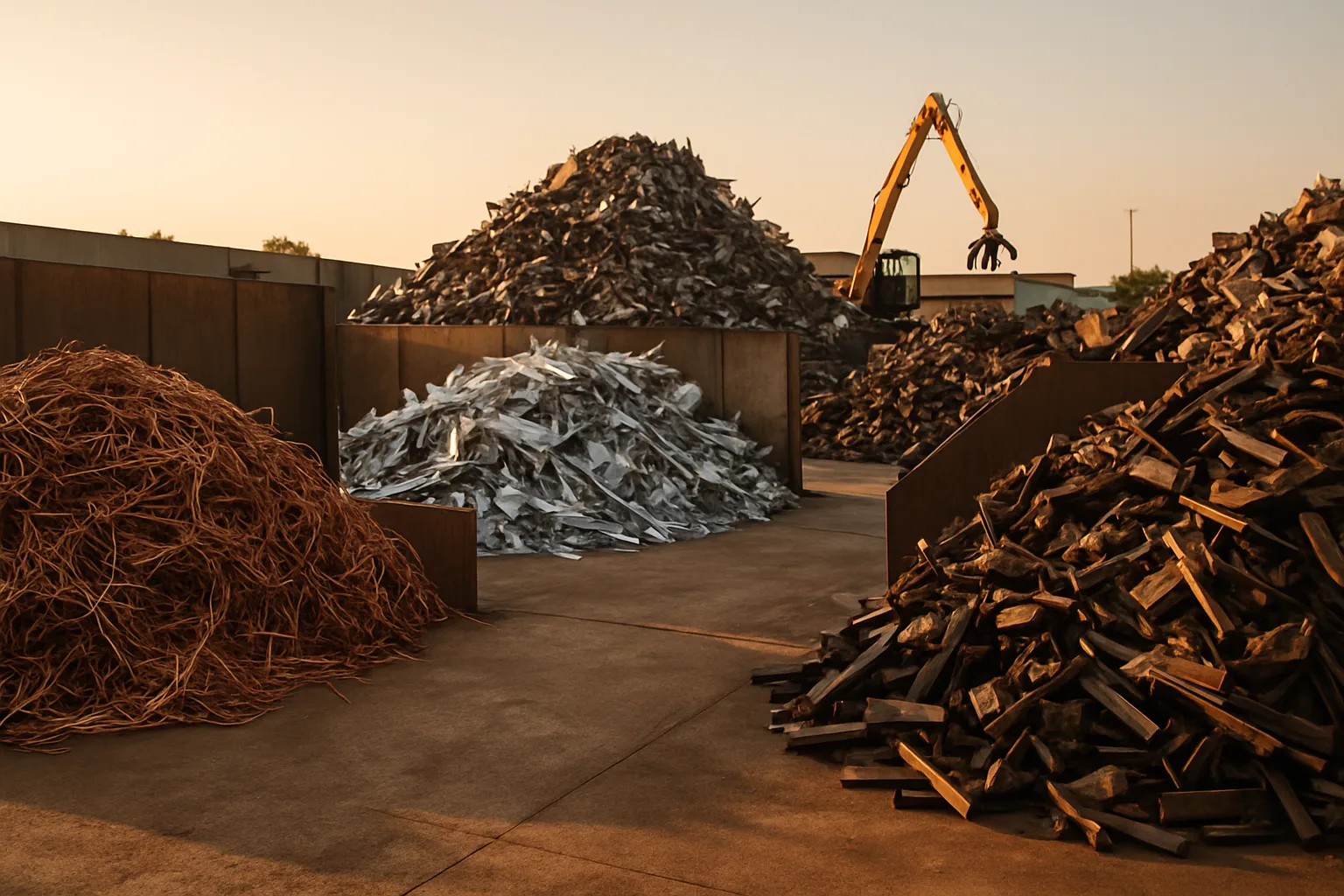
Most scrap yards in Flint, Michigan see the same mistake every week — someone hauls in a mixed load without sorting it first, then walks away leaving money on the table. Identifying your metals before you sell isn't just smart. It's how you stop guessing and start getting paid accurately. Knowing what you have is the first step toward understanding the steel scrap price today and every other metal in your pile.
This guide walks you through the practical, no-equipment-required methods for identifying common scrap metals — visually, by weight, and with a basic magnet. Whether you're clearing out a shop in Flint or sorting a mixed commercial load, these techniques apply to every yard in Michigan and across the country.
---Why Metal Identification Matters for Scrap Metal Prices Today
Scrap yards price by metal type. A mixed load gets treated as the lowest-value metal in the pile — or it gets sorted on the yard's time and you pay for that convenience through a lower payout. When you know what you have, you show up with leverage. You can check scrap metal prices today for each specific material and know whether the offer you're getting is fair.
The difference between ferrous and non-ferrous metal isn't cosmetic — it's economic. Copper, aluminum, and brass typically pay multiples more per pound than steel or iron. Handing over a mixed bin means the yard decides how to value it. You want to make that call yourself.
- Ferrous metals (iron, steel) — magnetic, generally lower value per pound
- Non-ferrous metals (copper, aluminum, brass, stainless) — not magnetic, generally higher value per pound
- Precious and specialty metals (catalytic converter cores, circuit boards) — require specific identification and often command separate pricing
Understanding these categories before you load the truck puts you in a stronger position at the scale.
---The Magnet Test: Your First Line of Metal Identification
A basic refrigerator magnet works. A stronger rare-earth magnet works better. This single test separates ferrous from non-ferrous metals and takes about three seconds per piece.
How to use it:
- Hold the magnet against the metal.
- Strong pull = ferrous (steel, iron, some stainless).
- No pull = non-ferrous (copper, aluminum, brass, most stainless, lead).
- Weak or inconsistent pull = could be stainless steel, which has its own pricing category.
One important note: not all stainless steel is magnetic. Austenitic stainless (304 grade, common in kitchen equipment) is largely non-magnetic. Ferritic stainless (400 series, common in automotive trim) will attract a magnet. If a shiny silver metal doesn't stick but looks like steel, you may be holding stainless — and stainless pays better than mild steel in most markets. Confirm with a visual check and, if you're unsure, ask your yard to test it properly.
The magnet test won't tell you everything. Use it as a starting filter, then layer in the visual checks below.
---Visual Identification Guide for Common Scrap Metals
Color, weight, and surface texture tell you a lot. Here's how to read each common metal with your eyes.
Copper
Fresh copper is a distinctive reddish-orange — there's no other common metal that matches it. Oxidized copper turns green or dark brown, but scratch the surface and you'll still see the red underneath. Copper is heavy for its size, dense, and flexible. It's found in electrical wire (strip the insulation — bare bright copper pays the best), plumbing pipes, and heat exchangers.
- Color: Red-orange (fresh) / dark brown or green (oxidized)
- Magnet: No pull
- Weight: Heavy and dense
- Common sources: Wiring, plumbing, HVAC coils, motors
If you're tracking the copper scrap price today per kg, copper grades matter significantly. Bare bright, #1 copper, #2 copper, and insulated wire all have different pricing tiers. Know which grade you have before you head to the yard.
Aluminum
Aluminum is light — noticeably lighter than steel or copper of the same size. It's silver-grey in color, dull rather than shiny, and tends to oxidize to a chalky white on the surface. Scratch it and you'll see bright silver underneath. It's not magnetic. Common forms include extrusions (window frames, door frames), cast aluminum (engine blocks, wheels), aluminum sheet (siding, gutters), and cans.
- Color: Silver-grey, dull surface
- Magnet: No pull
- Weight: Noticeably light
- Common sources: Window frames, engine parts, wheels, cans, siding
Cast aluminum vs. extruded aluminum sometimes price differently — cast tends to be lower because it's harder to process. If your load is all clean extrusion, say so.
Steel and Iron
Steel is the backbone of most scrap loads. It's grey, magnetic, heavy, and prone to rust. Mild steel is your standard structural material — beams, pipes, sheet metal, appliances. Cast iron is darker, more brittle, and heavier than steel. You'll find it in engine blocks, wood stoves, and old radiators.
- Color: Grey (steel) / dark grey to black (cast iron)
- Magnet: Strong pull
- Weight: Heavy
- Common sources: Appliances, structural steel, engines, farm equipment
The steel scrap price today fluctuates with manufacturing demand, so it's worth checking current scrap metal prices before you sell a large steel load. Even small shifts in the market affect what a heavy load is worth at the scale.
Brass
Brass is a copper-zinc alloy and looks like a dull gold or yellow-orange. It's heavier than aluminum, not magnetic, and often found in plumbing fittings, valves, keys, musical instruments, and decorative hardware. Don't confuse it with gold — brass is much more common and has a warmer, more muted tone.
- Color: Yellow-gold or dull yellow-orange
- Magnet: No pull
- Weight: Heavy, denser than aluminum
- Common sources: Plumbing valves, fittings, keys, light fixtures
Stainless Steel
Stainless is bright, shiny, and silver. Unlike mild steel, it resists rust — if a silver metal has no rust after years of exposure, it's likely stainless. As noted above, some stainless is magnetic and some isn't, so the magnet test alone won't give you a definitive answer. Surface finish and rust resistance are your best visual clues.
- Color: Bright silver, mirror or brushed finish
- Magnet: Varies (weakly magnetic to non-magnetic)
- Weight: Heavy, similar to steel
- Common sources: Kitchen appliances, food service equipment, automotive exhaust
How to Use a File Test and Spark Test for Harder Identification
When the magnet and visual checks aren't enough — especially with mixed or coated metals — two simple mechanical tests add another layer of accuracy.
File test: Drag a metal file across the surface. Soft metals like aluminum and copper file easily and quickly. Steel takes more effort. Lead files almost like chalk — it's unusually soft and extremely heavy for its size. If a file barely bites, you might have a hard alloy or tool steel.
Spark test (for steel only): Hold steel against a grinding wheel in a well-ventilated area. The spark pattern tells you the carbon content — high-carbon steel produces bright, branching sparks; mild steel produces a straighter, less intense stream. This is more useful for industrial sorting than everyday scrap, but knowing the difference can matter on specialty loads.
These two tests don't require any equipment you don't already have in a working shop. For yards and buyers operating in Michigan's competitive scrap market, this kind of upfront sorting makes the transaction faster and the pricing conversation easier.
---Sorted Metal Sells Better — Especially on a B2B Scrap Metal Marketplace
Identification isn't just for the yard scale. When you're selling larger commercial loads through a B2B scrap metal marketplace, proper identification and documentation directly affects buyer confidence — and buyer confidence drives competitive bids.
Platforms like SMASH Scrap — where verified buyers bid on your metal connect sellers with vetted buyers across North America. When you list a load with clear metal grades, weights, photo documentation, and accurate descriptions, buyers can bid with confidence. That competition is what produces better price discovery. Vague loads with unknown grades don't attract the same interest as properly documented inventory.
SMASH supports this process with built-in inventory tools, photo documentation, and serial tracking for specialty items like catalytic converter cores. The platform handles the buyer competition side — your job is to show up with sorted, identified material. If you want to read scrap metal pricing guides to better understand how grades affect pricing across metals, that context will help you list more effectively.
No subscription fees on SMASH. They win when you win — and a well-identified, well-documented load gives both sides the best shot at a strong outcome.
---What to Do in Flint and Michigan with Your Sorted Load
Flint has a strong industrial scrap base — manufacturing residuals, automotive components, structural steel, and electrical copper all move through the area regularly. Once you've identified your metals and know roughly what you're holding, you're in a position to find the best scrap metal prices today by checking current market rates before you commit to a buyer.
Michigan's scrap market responds to the same national pressures as everywhere else — steel mill demand, copper commodity swings, aluminum futures — but local volume and buyer competition affect what you actually get at the gate. Sorting your load and knowing your grades before you call a buyer isn't just prep work. It's negotiating leverage.
Whether you're a regular yard operator in Michigan or a first-time seller clearing out a commercial building, the process is the same: identify, sort, document, then sell into competition. That last step is where SMASH earns its place in the workflow.
Ready to stop guessing what your metal is worth? Check rates and get the best scrap metal prices at best-scrap-metal-prices.com.
Disclaimer: Scrap metal prices fluctuate daily based on commodity markets, regional demand, and material grades. Always check current rates before selling.
---Frequently Asked Questions
Q: What's the easiest way to tell if scrap metal is steel or aluminum?
Pick it up and use a magnet. Steel is heavy and magnetic. Aluminum is noticeably lighter and won't stick to a magnet at all. If the piece is large and light enough to handle easily, aluminum is likely. If it's heavy and the magnet grabs it firmly, you're holding steel.
Q: How does sorting my metals affect the steel scrap price today I get paid?
Yards price mixed loads at the lowest-value metal present or charge sorting fees that come off your payout. When you separate steel, copper, aluminum, and brass before arrival, each metal gets priced on its own merits. The difference between a sorted and unsorted load can be meaningful on a large haul.
Q: Where can I check scrap metal prices today in Flint, Michigan?
Best-scrap-metal-prices.com tracks current market pricing and gives you a benchmark before you head to the yard. You can also call local Flint yards directly to get their posted rates, but having a market reference point helps you evaluate whether you're being offered a fair price.
Q: Does copper grade really affect the copper scrap price today per kg?
Yes, significantly. Bare bright copper (clean, uncoated, unalloyed wire) pays at the top of the range. #1 copper (clean pipe and heavy gauge wire with no fittings) pays slightly less. #2 copper (with some oxidation, solder, or fittings) drops further. Insulated wire is priced based on estimated copper content after stripping. Know your grade and you'll know your price range.
Q: Can I sell sorted scrap metal through an online B2B scrap metal marketplace?
Yes — and for larger commercial loads, it's often worth it. A platform like SMASH lets vetted buyers across North America bid on your documented load, which can surface better pricing than a single local offer. Sorted, well-described loads with photos and weights attract more competitive bids than vague or mixed inventory.
---Stay current on scrap metal market trends and pricing shifts — follow SMASH on LinkedIn for industry updates and market insights delivered directly to your feed.