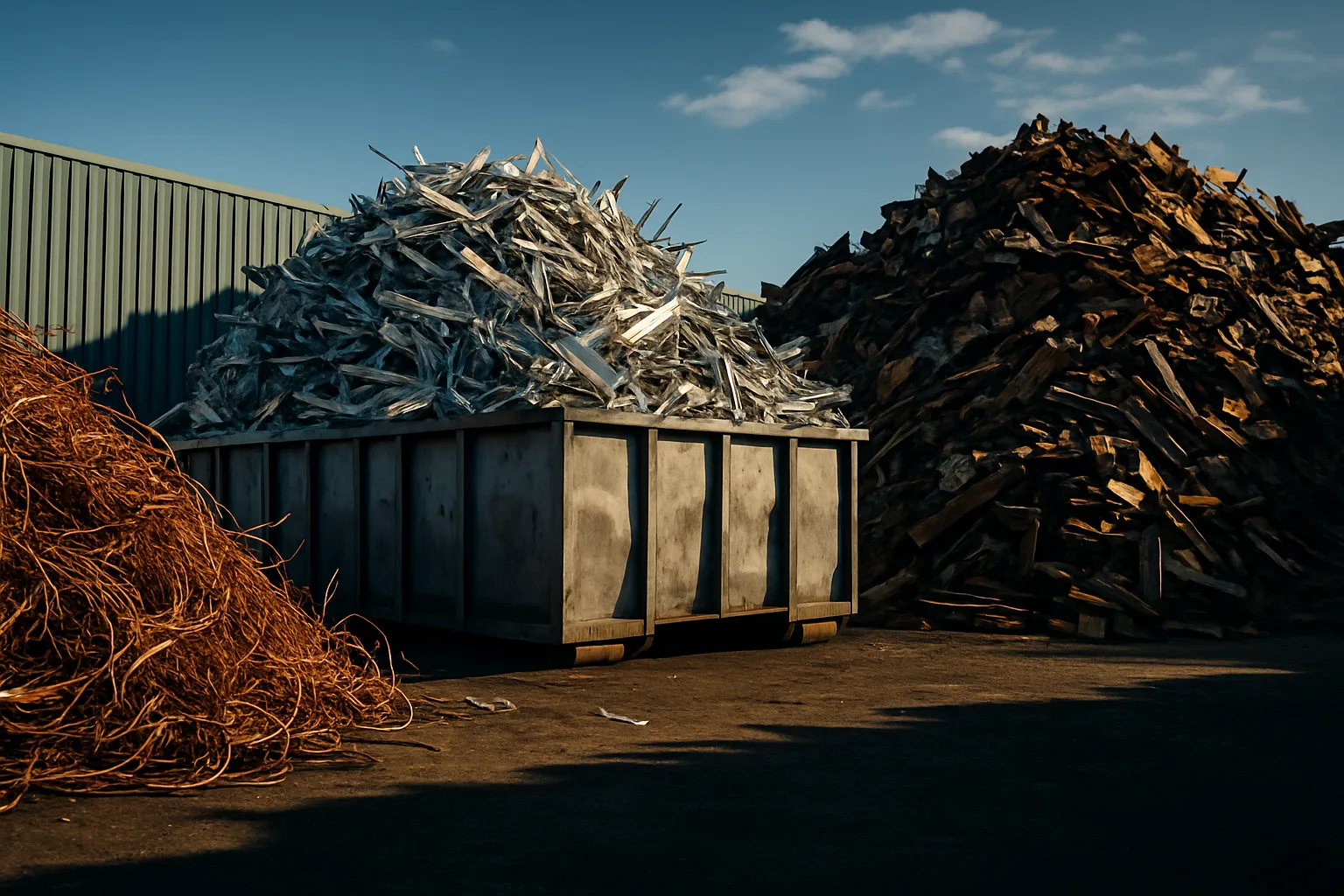
You're Leaving Money on the Table If You Can't Tell Aluminum from Steel
Most people sorting scrap in their garage or yard are making the same costly mistake: throwing mixed metals into one pile. That single habit can drop your payout by a significant margin. Knowing how to identify your metals — before you haul them anywhere — is the difference between getting the aluminum scrap price today and getting a blended, low-ball average on a mixed load.
This guide gives you the practical tools to sort your scrap correctly. A magnet, your eyes, and a few quick tests are all you need. We'll walk through the most common metals you'll encounter, how to tell them apart, and why it matters when you're trying to lock in the best scrap metal prices in Minneapolis and across Minnesota.
Whether you're clearing out a job site, cleaning a shop, or running a full recycling operation, proper identification puts more money in your pocket. Let's get into it.
The Magnet Test: Your First Line of Metal Identification
Before you touch a scale or call a yard, grab a strong magnet. This single tool instantly separates your metals into two categories: ferrous (contains iron, magnetic) and non-ferrous (no iron, not magnetic). Non-ferrous metals almost always command higher prices per pound. This one step alone reshapes how you approach every load.
Here's how the magnet test plays out in the field:
- Sticks hard: You're holding ferrous metal — most likely steel or cast iron. These are your lower-value materials but still worth sorting and selling in volume.
- Sticks weakly or barely: Could be certain stainless steel grades. Not all stainless is non-magnetic — austenitic grades (like 304 and 316) are non-magnetic, while ferritic grades will attract a magnet.
- Doesn't stick at all: You're in non-ferrous territory. Now you need to dig deeper — aluminum, copper, brass, and zinc all pass the magnet test, but they're priced very differently from each other.
Keep a dedicated magnet in your truck or sorting area. It costs next to nothing and saves you from misidentifying a load at the scale. Yards in Minneapolis and across Minnesota will pay you based on what you actually bring in — so know before you go.
Visual Identification: Reading Color, Weight, and Surface
Once you've done the magnet test, your eyes do the next round of work. Color, surface texture, weight-in-hand, and how the metal cuts or bends all give you reliable clues. Here's a breakdown of the metals you'll see most often:
Aluminum
Aluminum is lightweight, silver-grey, and dull compared to shinier metals. It won't rust — it oxidizes into a chalky white powder instead. When you scratch it, it leaves a grey mark. You'll find it in window frames, engine blocks, wheels, siding, gutters, and cans. The aluminum scrap price today varies by grade — clean sheet, cast, extrusion, and MLC (mixed low copper) aluminum all carry different rates. Separating your aluminum by grade before hitting a yard is how experienced sellers maximize their returns.
Weight is a fast tell: aluminum feels surprisingly light for its size. If you're holding something that looks metallic but weighs almost nothing, aluminum is your first guess.
Copper
Copper has a distinctive reddish-orange color when clean. As it ages, it develops a green patina (verdigris) that's unmistakable. It's dense, bendable, and one of the most valuable common metals in any yard. You'll find it in electrical wiring, plumbing pipe, motors, and transformers. Clean bright copper, #1 copper, #2 copper, and insulated wire all trade at different price points — know your grade before you sell.
Brass
Brass is a copper-zinc alloy. It's yellow-gold in color — warmer and more golden than steel, but not as red as copper. You'll find it in plumbing fittings, valves, shells, and hardware. It's heavier than aluminum and distinctly different in color from both copper and steel. When you cut it, the interior has that same yellow-gold tone throughout.
Steel and Cast Iron
Steel is your most common ferrous metal. It's grey, heavy, and the magnet sticks firmly. Cast iron is even heavier, more brittle, and often found in engine blocks, cookware, and old machinery. Both are sold by the ton and priced significantly lower per pound than non-ferrous metals — but volume adds up fast if you're running a larger operation.
Stainless Steel
Stainless is trickier. It's shinier than regular steel, resists rust, and as noted above, may or may not attract a magnet depending on grade. A weak pull or no pull combined with a bright, polished appearance points toward stainless. It commands a premium over regular steel, so sorting it separately is worth the extra step.
How Proper Sorting Directly Impacts the Best Scrap Metal Prices You Get
Here's the real-world impact of sorting versus not sorting. When you bring a mixed load to a yard, the buyer prices the entire load at the lowest-value metal in the mix. That means your copper and aluminum get priced at steel rates. Sorting takes time — but it's the highest-return activity you can do before you sell.
Platforms like SMASH make this work pay off even more. When you document your sorted inventory — by metal type, grade, and weight — vetted buyers can bid competitively on what you actually have. That's the opposite of dumping a mixed pile at one buyer's counter and hoping for a fair number. Compare scrap metal bids from verified buyers and see how competition changes your outcome.
For sellers in Minneapolis, understanding local yard pricing alongside what the market is offering regionally gives you real negotiating power. Minneapolis scrap metal services can connect you with current pricing so you're never guessing what your sorted load is worth before you haul it.
Secondary keywords matter here too: when people search how to sell scrap metal near me for cash, they often don't realize the first step is identifying what they actually have. Sorting is the foundation. Pricing comes after.
The Scratch and Weight Test: Going Beyond the Magnet
Some metals fool you visually. A few additional quick tests close the gap:
- Scratch test: Scratch the surface with a key or knife. The color of the underlying material often reveals the true metal. Aluminum stays grey. Copper shows red-orange underneath any patina. Lead shows bright silver-grey and is very soft — your key will sink in easily.
- Weight-in-hand test: For similar-sized pieces, copper and lead feel dramatically heavier than aluminum. If two pieces look the same but one is noticeably heavier, you're likely looking at copper versus aluminum.
- Bend test: Aluminum bends but can crack if forced sharply. Copper bends smoothly and stays bent. Lead is so soft it bends with almost no resistance. Steel requires real force and springs back more than non-ferrous metals.
- Sound test: Drop the piece on a hard surface. Aluminum has a duller thud. Copper rings more. Steel clangs. Not a definitive test, but useful as a secondary check.
These field tests take seconds once you've practiced them. Run through them on every new batch and you'll build a fast, reliable instinct for metal identification that saves you time at the yard and puts more cash in your pocket.
How SMASH and Online Platforms Help Minnesota Sellers Lock In Competitive Prices
Identifying your metals correctly is step one. Getting paid fairly for them is step two. Traditional scrap selling — one yard, one offer, no comparison — leaves you guessing whether you got the market rate. SMASH changes that dynamic with a vetted buyer network and auction-format selling that lets competition do the work.
When you sell scrap metal online through a competitive platform, you're not locked into whatever the local buyer decides to offer that morning. Documented loads with clear metal identification, photos, and accurate weights give buyers the confidence to bid higher. That's basic price discovery — more buyers, more competition, better outcomes for the seller.
For Minnesota sellers managing regular loads of aluminum, copper, or steel, the ability to find the best scrap metal prices today across multiple buyers is a practical advantage. You've done the sorting work. You've identified your metals correctly. Now make sure the selling side matches that effort.
No subscription fees. No guessing. When you're ready to move a load, SMASH is built for exactly this — vetted buyers, competitive bidding, and full transparency on what your sorted, documented metal is worth in today's market.
Read scrap metal pricing guides to stay current on what aluminum, copper, and steel are trading at across the US. Market conditions shift regularly in 2026, and knowing where prices are trending helps you time your sales intelligently.
If you're searching scrap metal near me open now in Minneapolis or anywhere in Minnesota, start by knowing exactly what you have. Sorted, identified metal gets you a faster, fairer transaction — at the yard or through an online auction platform.
Ready to get paid what your metal is actually worth? Check current scrap metal prices at best-scrap-metal-prices.com and take the guesswork out of your next sale.
Frequently Asked Questions
Q: How do I know if my metal is aluminum or steel before taking it to a scrap yard in Minneapolis?
Use a magnet first. Steel sticks firmly; aluminum doesn't attract at all. If the magnet doesn't grab, pick up the piece — aluminum is dramatically lighter than steel for the same size. In Minneapolis, most yards sort and weigh by metal type, so arriving with pre-sorted loads saves time and gets you a more accurate payout.
Q: What is the aluminum scrap price today in Minneapolis, Minnesota?
Aluminum prices fluctuate based on grade, market conditions, and local yard rates. Clean extrusions, cast aluminum, and sheet all price differently. Check current scrap metal prices at best-scrap-metal-prices.com for the most up-to-date rates. Always confirm with your local buyer on the day you plan to sell.
Q: Does separating my scrap metal by type really make a difference in payout?
Yes — and significantly. Mixed loads are priced at the lowest-value metal in the mix. Separating aluminum from copper from steel means each material gets priced at its actual market rate. The extra sorting time almost always pays off in a better per-pound rate across your entire load.
Q: How do I sell scrap metal online and get competitive prices?
Platforms like SMASH let you document your sorted load, list it for auction, and receive bids from vetted buyers across North America. Compare scrap metal bids from verified buyers to see how competitive pricing works in practice. You're no longer limited to one yard's offer on any given day.
Q: What's the easiest way to tell copper from brass when sorting scrap?
Color is your fastest tell. Copper is distinctly reddish-orange. Brass is yellow-gold — warmer and more golden in tone. If you scratch both, the color difference is even clearer on the fresh surface. Both are high-value non-ferrous metals, but they price differently, so sorting them separately before you sell is always worth the effort.
Disclaimer: Scrap metal prices fluctuate daily based on market conditions, metal grade, and regional demand. Always verify current rates with your buyer or at best-scrap-metal-prices.com before selling.
Follow SMASH on LinkedIn for industry updates, market insights, and scrap metal pricing trends straight from the yard floor.
```