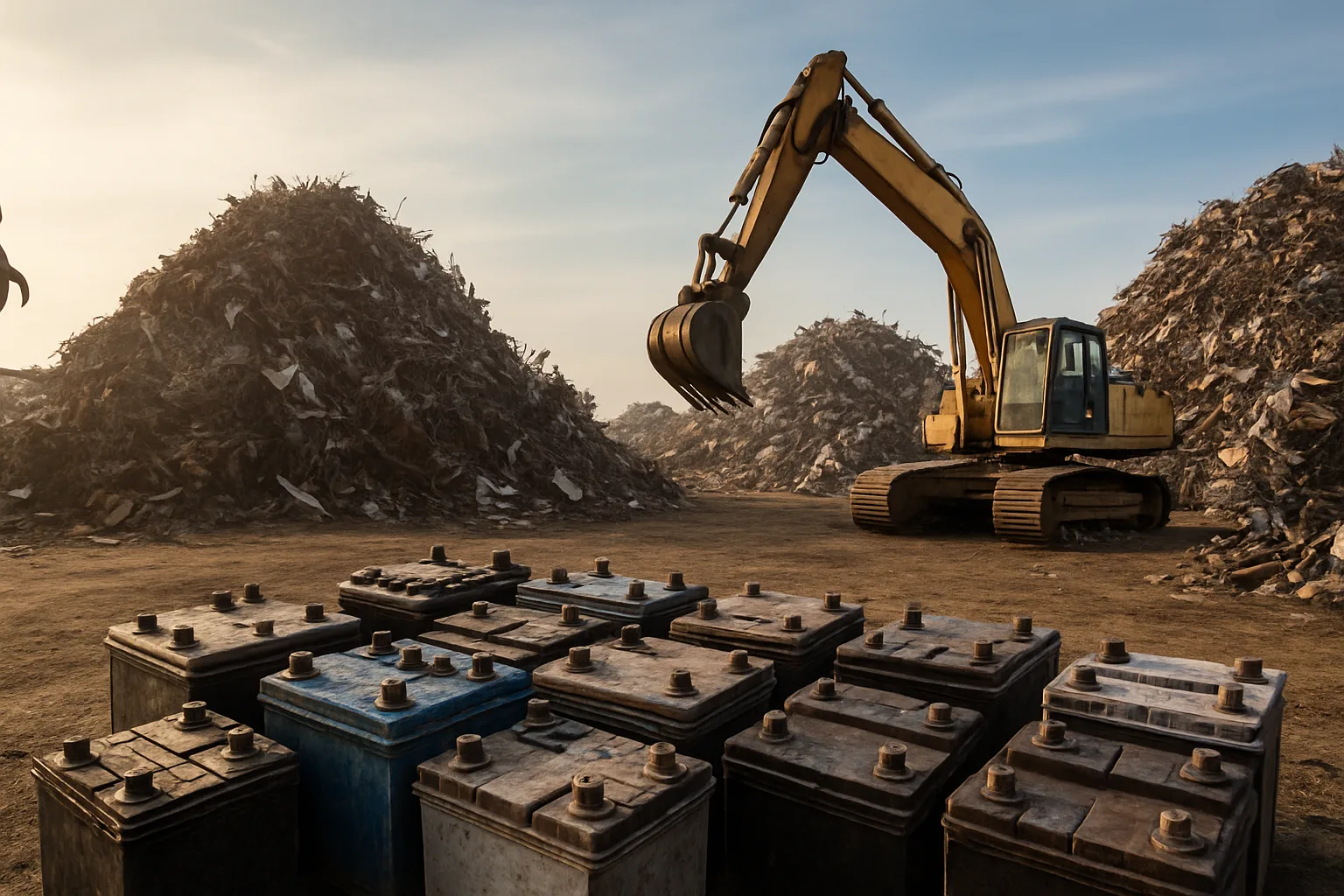
Dead car batteries sitting in your yard are worth more than you think — and most sellers leave money on the table by not knowing the real scrap value of lead-acid batteries. If you're looking to sell scrap metal Fort Wayne, old batteries are one of the most consistent, recyclable commodities you can bring to a yard. Lead prices fluctuate with global demand, but the value inside a spent battery never fully disappears.
This guide breaks down exactly what's inside a lead-acid battery, what drives its scrap value, how it compares to other metals you might be hauling, and how to make sure you're getting a competitive price — whether you're clearing out a single trunk or moving a commercial pallet load.
Disclaimer: All metal prices referenced in this article are general estimates for educational purposes. Scrap metal prices fluctuate daily based on market conditions. Always check current scrap metal prices before selling.
What's Actually Inside a Lead-Acid Battery — and Why It Holds Value
A standard 12-volt automotive lead-acid battery weighs between 30 and 50 pounds. Most of that weight is lead — plates, grids, and terminals that are fully recoverable through smelting. The rest is sulfuric acid and a polypropylene plastic case, both of which are also recyclable in a proper facility. Lead is one of the most recycled materials on the planet precisely because the recovery process is efficient and the output is near-pure.
Here's what you're working with inside a typical lead-acid battery:
- Lead plates and grids: The bulk of the battery's weight. Pure lead and lead alloy, both recyclable.
- Lead oxide paste: Active material on the plates. Still recoverable during the smelting process.
- Polypropylene casing: Recyclable plastic — some yards factor this into pricing, others don't.
- Sulfuric acid electrolyte: Neutralized or reclaimed at licensed recycling facilities.
- Lead terminals and connectors: High-purity lead — easy to recover.
The takeaway: when you haul a dead battery to a scrap yard, you're not selling garbage. You're selling a dense, recoverable lead product that feeds a global secondary smelting market.
Lead-Acid Battery Scrap vs. Other Common Metals — A Practical Comparison
If you're already hauling loads to a yard in Fort Wayne or anywhere in Indiana, you're probably mixing battery scrap with other materials. Understanding how lead stacks up against your other metals helps you sort smarter and negotiate better.
Here's a general comparison of scrap metals you might encounter in the same load:
- Lead (from batteries): Typically one of the lower per-pound prices compared to non-ferrous metals, but batteries are heavy. Volume makes up for the rate. Consistent demand from battery manufacturers buying recycled lead.
- Copper: Significantly higher per-pound value than lead. Copper wire, pipe, and fittings from the same automotive or HVAC teardown are worth separating and pricing separately. Copper price is a key driver in non-ferrous markets overall.
- Aluminum: Mid-range pricing. Aluminum scrap price today varies by grade — cast, sheet, extrusion, and wheels each price differently. Aluminum is lighter than lead, so weight-for-weight, copper still wins.
- Steel and iron: The lowest per-pound rate of the group, but often the highest volume. A full truck of steel still adds up.
- Whole vs. broken batteries: Some yards pay a flat per-battery rate for whole units. Others buy by weight. Ask both questions before you unload.
The practical move: don't mix your battery scrap in with your ferrous pile. Pull it out, weigh it separately, and get a per-pound quote specifically for whole batteries or broken lead. A yard that knows you're sorting correctly will treat you more seriously as a seller.
How to Get the Best Price When You Sell Scrap Metal Fort Wayne
Selling batteries at a single yard without checking rates elsewhere is the oldest mistake in the recycling business. One buyer, one quote, no leverage. You either take it or drive away — and most people take it. That's exactly the dynamic that platforms like smashscrap.com are built to disrupt.
If you want to sell scrap metal Fort Wayne and actually get a competitive number, here's the process that works:
- Know your weight before you go. Weigh your battery load at a public scale or on a truck scale before you hit the yard. Knowing your tonnage puts you in a stronger position.
- Call at least two yards. Ask specifically for the battery scrap rate — whole batteries, broken lead, or both. Don't settle for a general "non-ferrous" quote.
- Ask about core charges. If you're in automotive recycling, some buyers factor in core exchange credits on certain battery types. Ask directly.
- Document everything. Take photos of your load, keep your weight tickets, and confirm pricing before unloading. This matters for future negotiations and for any dispute.
- Use a competitive platform. SMASH puts your inventory in front of vetted buyers who compete for your load. More buyers means better price discovery — and you're not guessing what the market will pay.
Fort Wayne sits in a strong industrial corridor with real demand for scrap lead, aluminum, and ferrous materials. You're not in a thin market. Use that to your advantage and find the best scrap metal prices today rather than accepting the first number offered.
Why Lead Demand Stays Strong — and What Drives Price Swings
Lead-acid batteries aren't going away anytime soon. Despite the growth of lithium-ion in consumer electronics and EVs, lead-acid still dominates in automotive starting batteries, industrial backup power, and heavy equipment. That steady demand keeps the secondary lead market active and predictable compared to some other metals.
That said, prices do move. Here are the main factors that push lead scrap values up or down:
- Global lead mine output: When primary lead production falls short, recycled lead fills the gap — pushing prices up.
- Battery manufacturing cycles: Seasonal demand for automotive batteries (cold weather turnover, fleet replacements) spikes scrap battery collection in late fall and winter.
- Smelting capacity: If secondary smelters are at capacity, prices can soften as yards accumulate inventory. If they're running lean, buyers get competitive.
- Freight and logistics costs: Local yards in Indiana adjust their buy prices based on what it costs them to move material to processors. High freight = lower buy price at the yard level.
- Regulatory environment: Lead recycling is heavily regulated due to environmental rules. Facilities that handle it properly have real costs baked in — which affects the spread between what yards pay and what processors charge.
None of this is reason to hold your inventory forever hoping for a peak. Lead scrap is a volume game. Move it consistently, document it properly, and focus on getting a competitive buy price through multiple buyer access — not on timing the market perfectly.
Sorting Your Battery Load to Maximize What You Get Paid
Not all battery scrap is priced the same. How you present your load to a buyer — and how accurately you can describe what you have — affects the number you walk away with. Yards and buyers that are buying through a documented platform like SMASH want to see clear inventory data, not a vague "bunch of old batteries."
Here's how to sort and present your battery scrap for maximum value:
- Whole automotive batteries: Standard 12V car and truck batteries. Price typically quoted per battery or per pound. Most common category.
- Industrial batteries: Forklift, golf cart, and backup power batteries. Much heavier, often better per-pound rates. Price these separately.
- Broken batteries / drained lead: If batteries are cracked or you've already drained them, buyers may price this as broken lead rather than whole battery rate.
- Gel and AGM batteries: Some yards price these differently. Confirm before assuming the same rate as flooded lead-acid.
- Mixed non-ferrous alongside batteries: If you're also selling copper and aluminum with the same load, get line-item quotes for each. A bundled "non-ferrous" rate almost always undervalues your best materials.
Detailed inventory documentation — weights, counts, condition notes, photos — gives buyers more confidence. That confidence shows up in the bid. You can read scrap metal pricing guides to understand how documentation affects competitive pricing on different materials.
How SMASH Helps Fort Wayne Sellers Get More for Their Scrap
The problem with selling locally in any single market — Fort Wayne, anywhere in Indiana, or across the country — is that a single yard has no reason to offer you their best number. They know what the competition pays because they talk to each other. You often don't.
SMASH changes that. By putting your documented inventory — batteries, aluminum, copper, ferrous — in front of a vetted buyer network, you create real competition for your load. No subscription fees. No guessing. The platform only works when the seller wins.
For a consistent seller moving battery scrap regularly out of Fort Wayne, that means you're building a track record with documented loads, clean inventory data, and access to buyers who compete on price rather than counting on your inertia. That's a fundamentally different position than making the same phone call to the same yard every time.
If you're ready to stop guessing and start selling competitively, get the best scrap metal prices — check rates at best-scrap-metal-prices.com and see what your battery load is actually worth in today's market.
Frequently Asked Questions
Q: How much is a scrap lead-acid battery worth in Fort Wayne?
Prices vary based on current lead markets and individual yard rates. Most automotive batteries are priced per unit or per pound. Always call ahead to get the current rate before hauling, and compare at least two buyers to make sure you're getting a competitive number.
Q: Can I sell dead car batteries for cash in Fort Wayne, Indiana?
Yes. Most scrap yards in Fort Wayne and across Indiana accept lead-acid batteries for cash. Some have minimum quantities for certain rates. Bring a valid ID, know your weight, and ask specifically about the battery buy price rather than accepting a generic non-ferrous quote.
Q: How do I find out how to sell scrap metal near me for cash?
Start by searching for licensed scrap yards in your area and calling ahead to confirm they accept what you have. Better yet, use a platform like SMASH that connects sellers with vetted buyers and creates competition for your load — so you're not relying on a single yard's posted rate.
Q: Do scrap yards take batteries with the acid still in them?
Most licensed recycling facilities are equipped to handle batteries with the electrolyte intact. Do not drain batteries yourself unless you have proper containment — sulfuric acid is hazardous. Ask your yard about their intake process before you arrive.
Q: How does the aluminum scrap price today compare to lead scrap prices?
Aluminum generally trades at a higher per-pound rate than scrap lead, but lead-acid batteries are significantly heavier — so the total value of a battery load can still be substantial. If you're hauling a mixed load with both aluminum and batteries, get separate line-item quotes for each rather than letting a yard bundle them into a single non-ferrous rate.
Follow SMASH on LinkedIn for ongoing scrap metal market insights and industry updates: linkedin.com/company/scrap-metal-auction-sales-hub.
```