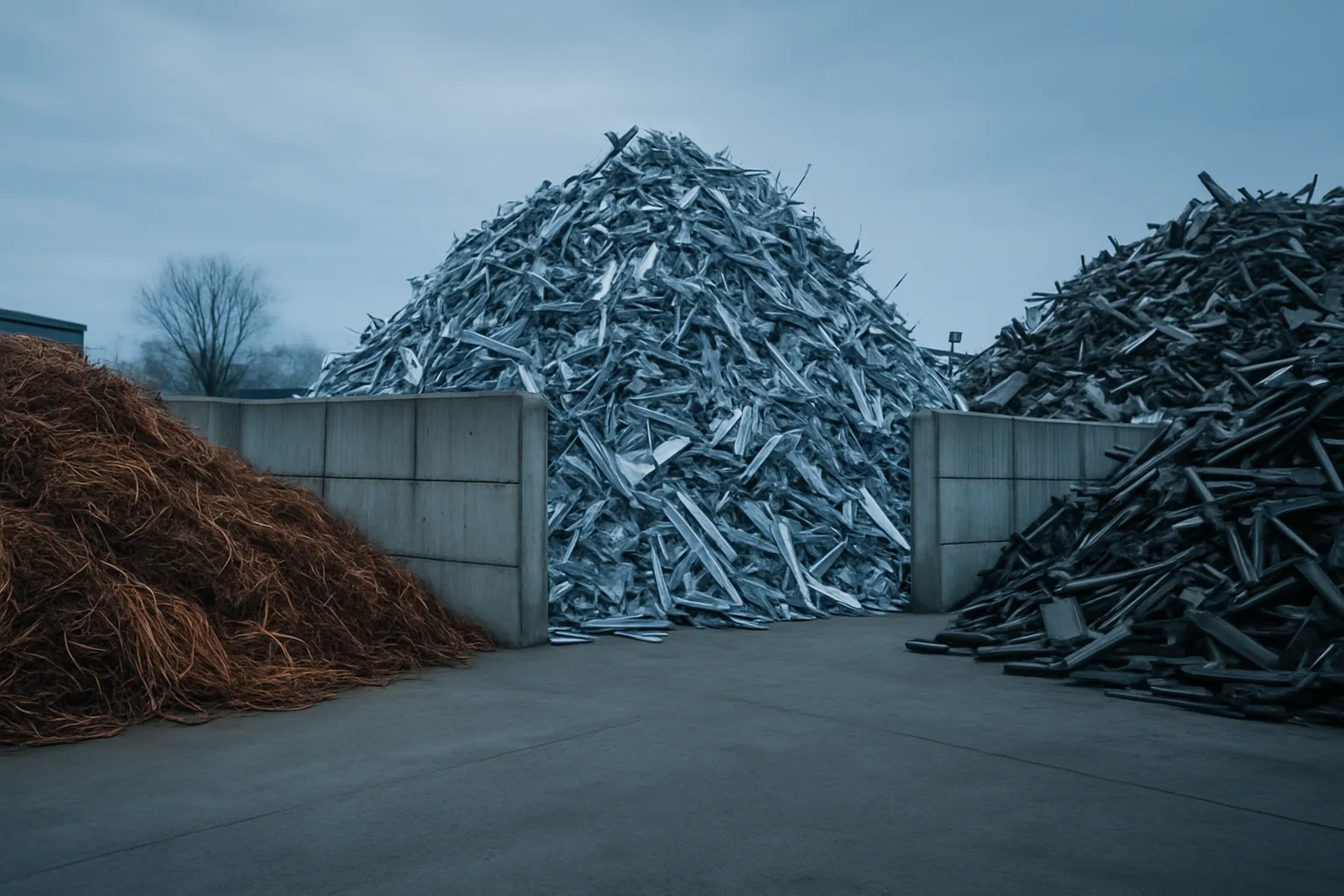
Small-Scale Scrap Collectors in St. Louis: How to Stop Leaving Money on the Table
Most small-scale scrap collectors in St. Louis are sitting on more value than they realize — and giving away a chunk of it every single week. You call one yard. They quote you a number. You take it. That's the whole process. No competition. No leverage. No way to know if that price was fair.
Here's the reality: the scrap market moves daily. Copper prices shift. Aluminum fluctuates. Steel responds to demand cycles nobody texts you about. If you're selling based on one buyer's quote, you're not selling scrap metal — you're donating the margin. This guide changes that. Whether you're hauling a pickup truck's worth of copper pipe or a trailer loaded with aluminum wheels, these tips help you earn more on every load.
Ready to find the best scrap metal prices today before your next run? Start there.
Sort First, Sell Second — Sorting Is Where the Real Money Hides
Throwing mixed metals in the same bin feels efficient. It's not. When you bring a mixed load to a yard, they grade it at the lowest common denominator. That mixed copper and aluminum? They price it like it's all aluminum. You lose the premium on your clean copper every single time.
Sorting is the single highest-return activity a small-scale collector can do. It costs you time, not money, and it directly increases what you walk away with. Here's how to break it down:
- Copper: Separate bare bright, #1 copper, #2 copper, and insulated wire. Each grade has its own price tier — and the gap between bare bright and insulated wire is significant.
- Aluminum: Break out cast aluminum (engine blocks, transmission cases) from sheet aluminum from extrusion. Same metal, different payouts.
- Steel and iron: Light iron, heavy melt, and prepared steel are priced differently. Know what you have before you arrive.
- Non-ferrous vs. ferrous: A magnet costs two dollars. Use it on everything. Non-ferrous metals pay dramatically more per pound.
- Catalytic converters: Never mix cats in with your general scrap. They carry their own value based on precious metal content and should be sold separately — ideally through a catalytic converter auction format where buyers compete for your lot.
Cleaner loads also photograph better, which matters more than ever now that platforms let you document inventory with photos and serial tracking before the sale even happens. Buyers pay more when they can verify what they're bidding on.
Know Your Numbers Before You Drive to the Yard
Walking into a scrap yard without checking current prices is like going to a car dealership without knowing the car's market value. You might get a fair deal. But you have no idea if you did.
Scrap metal prices today — copper price, aluminum price, steel price — are available and trackable. Make it a habit to check current scrap metal prices before every run. When you know what the market is paying, you can push back on a low quote or choose to hold a load until conditions improve.
A few things worth tracking as a regular collector in scrap metal recycling Missouri markets:
- LME copper price: The London Metal Exchange price sets the baseline. Domestic scrap copper follows it closely.
- Aluminum ingot pricing: Automotive-grade aluminum demand has stayed elevated. Wheels and engine components often command premiums.
- Steel scrap indices: Midwest steel pricing gets updated regularly — St. Louis sits in the middle of major manufacturing and construction demand corridors, which affects local yard prices.
- Catalytic converter PGM values: Platinum, palladium, and rhodium prices drive cat values. These move fast and independently from base metals.
You don't need to be a commodities trader. You just need to know today's ballpark before you accept today's quote. That knowledge is free. Use it.
Stop Relying on a Single Buyer — Competition Is Your Best Tool
This is the biggest shift small collectors can make. The old way of selling scrap — one yard, one phone call, take it or leave it — limits your earnings by design. The yard has no incentive to offer you their best price when they're the only option you're considering.
More buyers mean better price discovery. That's not a theory — it's how markets work. When multiple buyers compete for your load, the price reflects actual demand, not just what one buyer feels like paying that morning.
This is exactly where a B2B scrap metal marketplace changes the game. Platforms like SMASH Scrap — where verified buyers bid on your metal — connect sellers with vetted buyers across North America. Instead of calling around to three local yards and accepting the best of three quotes, you post your load and let buyers come to you. That's how you sell scrap metal for cash and actually know you got a competitive price.
For small-scale collectors in St. Louis, this kind of access used to be reserved for large commercial recyclers moving semi-trailer quantities. That's no longer true. Document your load, post it, and let the market do the work.
Document Every Load — It Pays Off More Than You Think
Good documentation does two things. It protects you legally. And it makes buyers more confident, which means higher bids.
If you're collecting catalytic converters, VIN lookup and serial tracking aren't optional extras — they're how you prove your inventory is legitimate. Buyers in a catalytic converter auction format are paying serious money. They want to know the cats are clean and properly documented before they commit. Sellers who provide photos, VINs, and accurate grades consistently outperform sellers who show up with a bag of unidentified cats and a hope.
For non-ferrous loads — copper, aluminum, brass — photo documentation shows grade quality. A photo of stripped bare bright copper versus a photo of insulated wire communicates grade faster than any description. Modern platforms build photo documentation and inventory tools directly into the listing process, so this doesn't need to be a separate step.
If you read scrap metal pricing guides regularly, you already know that documentation is consistently cited as one of the top factors in getting premium prices on any type of scrap. Buyers pay for confidence. Give it to them.
Build a Consistent Volume Strategy — Timing and Accumulation Matter
Small collectors often sell as they go — whatever fits in the truck, whenever they have time. That's understandable. But it's not always optimal. Here's how to think about it differently:
Selling in larger, consistent quantities gives you more leverage. A yard — or a marketplace buyer — is more interested in a 2,000-pound copper load than in three separate 600-pound visits. You also save on transportation costs per pound when you consolidate runs.
Consider these timing strategies when you sell scrap metal in St. Louis and across Missouri:
- Hold non-ferrous when prices are soft. Copper and aluminum don't degrade sitting in a clean, dry storage area. If prices are down 15%, waiting two weeks might be worth it on a meaningful volume.
- Move steel quickly. Steel takes up space, attracts rust, and the price rarely justifies long-term holding. Turn it over consistently.
- Batch your catalytic converters. Selling a single cat gets you one quote. Selling 20 cats through a catalytic converter auction gets you competitive bidding and far more buyer interest.
- Track seasonal patterns. Construction activity in Missouri ramps up in spring and summer. Demo and renovation scrap tends to increase — so does competition among buyers.
You don't need a warehouse. You need a strategy. Even small collectors with limited storage can accumulate strategically over a two-to-four-week window and move more meaningful loads.
Use the Right Platform for the Right Material
Not all scrap is sold the same way. Knowing which channel to use for which material type is part of maximizing your earnings in a B2B scrap metal marketplace environment.
For general ferrous loads — mixed steel, light iron, structural — local yards are often the most practical option. The math on transportation versus price improvement doesn't always favor a marketplace approach for low-margin, high-volume ferrous material. Move it locally, move it often.
For high-value non-ferrous — clean copper, aluminum extrusion, brass fittings — a competitive auction format consistently delivers better price discovery than a single-buyer quote. The margin difference on a 1,000-pound copper load can be meaningful when you're working with vetted buyers who are actively competing.
For catalytic converters, the answer is clear. A specialized catalytic converter auction with verified buyers who understand PGM assay values is where cats should go. Taking cats to a general scrap yard and accepting a flat quote almost always undervalues the material — especially for high-PGM units from newer vehicles.
Collectors in the St. Louis area have access to a strong local industrial base and active buyer networks. St. Louis scrap metal services can connect you with both local options and broader marketplace access when you're ready to scale up your approach.
No subscription fees. No guessing. When you win, the platform wins — that alignment matters when you're deciding who to trust with your loads.
You've put in the work collecting, sorting, and hauling. Make sure your selling strategy matches that effort. Get the best scrap metal prices on every load — check rates at best-scrap-metal-prices.com and know your market before your next run.
Disclaimer: Scrap metal prices fluctuate daily based on market conditions, commodity indices, and regional demand. Always verify current rates before selling.
Frequently Asked Questions
Q: What is a B2B scrap metal marketplace and how does it help small collectors?
A B2B scrap metal marketplace connects sellers directly with vetted buyers who compete for your loads through an auction format. Instead of relying on a single yard's quote, you get price discovery through real competition. For small collectors, this means access to the same buyer networks that large commercial recyclers use — without needing to move semi-trailer quantities.
Q: How do I sell scrap metal in St. Louis and get the best price?
Start by sorting your material by grade before you arrive at any yard or post to any platform. Check current market prices so you know what copper, aluminum, and steel are trading for today. For higher-value non-ferrous loads and catalytic converters, consider a marketplace platform where multiple buyers compete rather than accepting a single quote from one local yard.
Q: Are catalytic converter auctions worth it for small collectors with just a few cats?
It depends on volume, but batching converters over a few weeks before selling is a common strategy that increases buyer interest. A catalytic converter auction format works best when buyers can evaluate a meaningful lot — even a dozen cats can attract competitive bidding from verified PGM buyers who understand true market value better than a general scrap yard.
Q: What scrap metals are most valuable for collectors in Missouri right now?
Clean copper consistently leads in value per pound, followed by brass, aluminum extrusion, and stainless steel. Catalytic converter values depend heavily on PGM content, which varies by vehicle make and model. Steel and iron pay far less per pound but can add up in volume. Always check current prices — the market changes daily and what was top dollar last week may have shifted.
Q: Do I need a business account to use a scrap metal marketplace platform?
Most marketplace platforms designed for scrap are built for business-to-business transactions, but that doesn't mean you need a large operation to participate. If you're collecting and selling regularly — even as a sole operator — you qualify as a seller on most platforms. The key requirements are typically consistent volume, accurate inventory documentation, and compliance with local regulations around material sourcing.
Follow SMASH on LinkedIn for real-time industry updates, market trends, and scrap metal pricing insights: linkedin.com/company/scrap-metal-auction-sales-hub.
```