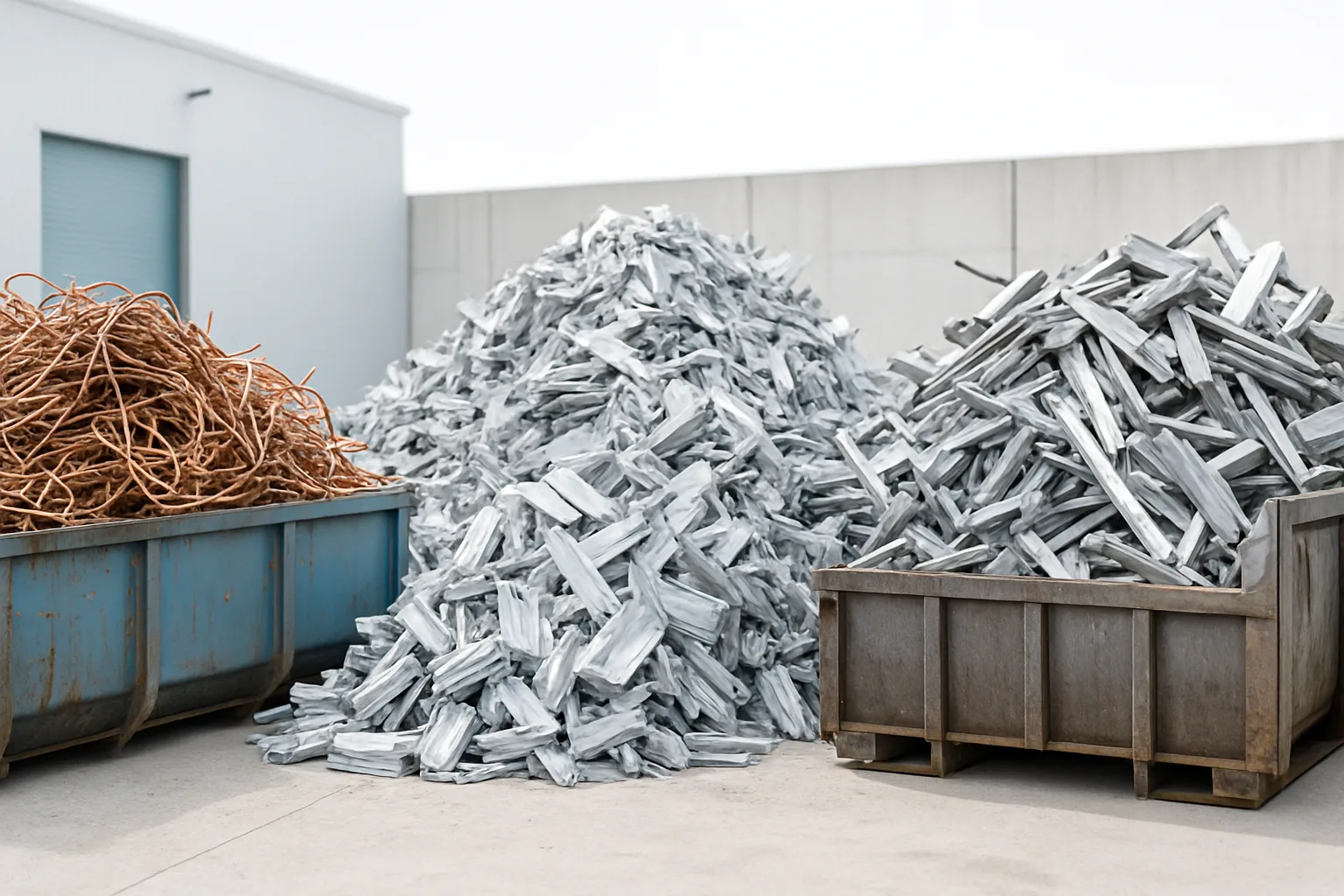
Most scrap sellers leave money on the table with stainless steel — not because they're careless, but because they don't know what they're holding. Stainless isn't one metal. It's a family of alloys, and the grade you bring to the yard determines your price more than almost any other factor. If you're hauling loads in Fort Wayne or anywhere across Indiana, understanding stainless grades is the difference between getting a fair price and getting the floor rate.
This week's market recap breaks down the major stainless steel scrap grades, what drives pricing in 2026, and how competitive auction platforms like SMASH Scrap — where verified buyers bid on your metal are changing the way yards and sellers get paid for specialty metals.
---Why Stainless Steel Scrap Grades Drive Pricing More Than Volume
With most ferrous metals, volume is king. More tonnage, better rate. Stainless steel breaks that rule. A 300-pound load of 316 stainless can be worth significantly more than a 500-pound load of 201 — because the nickel and molybdenum content in 316 makes it genuinely more valuable to the mill. Buyers aren't paying for weight. They're paying for chemistry.
The reason this matters right now: stainless demand from food processing, medical device manufacturing, and chemical processing facilities remains steady in 2026. Industrial buyers want specific alloys. When you can document what grade you have, you attract a different class of buyer — one who will pay a premium over spot because they know exactly what they're getting.
- Grade 304 — The workhorse. Kitchen equipment, sinks, appliances, food-grade tanks. High nickel content (8–10%), which drives value. Most common stainless you'll see.
- Grade 316 — Higher value. Adds molybdenum for corrosion resistance. Found in marine equipment, chemical processing, pharmaceutical gear. Expect a premium over 304.
- Grade 201 — Lower nickel, higher manganese. Cheaper alloy, lower scrap price. Often found in decorative trim, some appliance panels.
- Grade 430 — Ferritic, not austenitic. Magnetic. Lower nickel than 304. Common in kitchen appliances, automotive trim. Priced below 304.
- Grade 309 / 310 — High-temperature alloys. Less common as scrap, but valuable when you find them. Industrial furnace components, heat exchangers.
- 17-4 PH and other precipitation-hardened grades — Specialty aerospace and defense. Highest value, but rare in the general scrap stream.
The takeaway: before you load the trailer, identify what you have. A magnet test alone won't tell you the grade, but it will tell you whether you're looking at ferritic (magnetic, like 430) or austenitic (non-magnetic, like 304 and 316). From there, serial numbers, equipment tags, and XRF testing at the yard can confirm grade and unlock a better price.
---What's Moving Stainless Steel Scrap Prices in August 2026
Nickel prices remain the dominant driver of 304 and 316 stainless pricing. When the London Metal Exchange nickel price moves, your stainless scrap price moves with it — usually with a short lag. This is not unique to 2026, but what is notable this year is the continued volatility tied to global battery supply chains competing with stainless mill demand for the same nickel units.
Secondary factors hitting the market right now include energy costs at domestic mills, import/export flows on finished stainless sheet, and the ongoing consolidation among North American specialty recyclers. For sellers in Fort Wayne and across Indiana's industrial corridor, this means local yard prices for stainless can vary more than you might expect — even between yards a few miles apart. That spread is exactly why competition matters.
To check current scrap metal prices in your area before you haul, pay attention to published broker indices and regional yard postings. Don't assume last week's price is this week's price. Stainless, unlike steel shred or HMS, moves with commodity indices that can shift mid-week.
Disclaimer: All scrap metal prices fluctuate based on market conditions, regional demand, and metal grade. Verify current rates directly with your yard or buyer before committing to a load.
---Sorting and Documenting Your Stainless Load to Maximize Price Discovery
Here's where most sellers — even experienced ones — leave money behind. Mixed stainless loads almost always get priced at the lowest grade in the pile. A buyer who can't confirm grade separation defaults to the safe (for them) number. You end up eating the spread on your 316 because it's co-mingled with 430 trim.
Sort before you ship. It sounds basic, but it changes your outcome. Separate your austenitic from your ferritic grades using a magnet. Keep your 304 food equipment away from your decorative 201 panels. If you have any 316 from lab or marine equipment, isolate it completely — it deserves its own line item.
Documentation closes the deal at a higher number. Here's what sharp sellers bring to the table:
- Grade markings or tags — Equipment tags, weld wire labels, mill certificates if you have them
- Photo documentation — Timestamped photos of the sorted load before pickup
- Source information — Restaurant teardown, hospital equipment, food processing line — context builds buyer confidence
- Weight estimates by grade — Even rough estimates let buyers price more accurately and competitively
- XRF test results — If your yard or a third party has run an XRF analyzer on the material, include those numbers
Platforms like SMASH build this documentation logic directly into the listing process. Photo uploads, grade fields, source notes — all structured so buyers can bid with confidence instead of applying a discount for uncertainty. Better documentation creates real competition. Competition can help reveal the market.
---How Scrap Metal Recycling in Indiana Compares on Specialty Metals
Indiana has a strong industrial base — automotive, manufacturing, food processing — which means stainless scrap flows consistently. Fort Wayne alone sits at the intersection of significant food and beverage production and heavy equipment manufacturing, both of which generate 304 and 316 scrap regularly. That's an advantage for local sellers who know how to position their loads.
The challenge in scrap metal recycling in Indiana, as elsewhere, is that specialty metals like stainless often get priced through a single relationship — one buyer, one phone call, one number that may or may not reflect what the market would actually pay. That's the old way. It worked well enough when information was hard to access. In 2026, it costs sellers money they don't have to leave behind.
If you want to understand where your stainless load fits in the broader market, the first step is getting more than one data point. Find the best scrap metal prices today by comparing regional rates, and consider whether your load is large enough or documented enough to attract competitive bids rather than a single offer.
For context on how copper, aluminum, and other non-ferrous metals are trending alongside stainless, read scrap metal pricing guides that track weekly market movements across metal types. Understanding how the copper scrap price today relates to broader non-ferrous sentiment helps you time larger stainless loads when buyer appetite is strongest.
---When to Use an Auction Platform for Stainless Steel Scrap
Not every load needs an auction. A mixed bag of low-grade stainless trim from a home renovation doesn't warrant the setup time. But if you're moving a significant load — 2,000 pounds or more of sorted, documented 304 or 316 — a competitive auction format almost always beats a single-buyer phone call.
Here's the logic: stainless buyers are specialized. A yard running a catalytic converter auction alongside specialty metal lots attracts exactly the kind of vetted, motivated buyers who understand alloy value. When three or four qualified buyers compete on the same documented lot, price discovery happens in real time. You're not guessing what the market will pay. You're watching it happen.
SMASH is built for exactly this scenario. Vetted buyers, competitive bidding, auto-invoicing, no subscription fees. The platform only wins when you win. For a Fort Wayne recycler moving specialty metals regularly, that alignment of incentives matters. You're not paying a monthly fee to maybe get a better price. You're paying nothing upfront and letting competition do the work.
More buyers means better price discovery. That's not a marketing line — it's how markets work. And stainless steel, with its grade complexity and nickel-linked pricing, benefits from that competition more than almost any other scrap category.
---Frequently Asked Questions
Q: How do I know what grade of stainless steel scrap I have?
Start with a magnet test — ferritic grades like 430 are magnetic, while austenitic grades like 304 and 316 are not. Beyond that, look for equipment tags, grade stamps, or markings on the original material. For certainty, many yards offer XRF (X-ray fluorescence) testing that identifies alloy composition on the spot. Knowing your grade before you arrive gives you a stronger negotiating position.
Q: Why are scrap metal prices different from yard to yard in Fort Wayne?
Each yard has different operating costs, buyer relationships, and inventory needs. A yard that moves a lot of stainless to a regional mill may offer a stronger rate than one that has to broker it further. Regional supply and demand, transportation costs, and the buyer's current inventory all affect the number you're quoted. That's why getting more than one price — or using a competitive platform — matters.
Q: Is 316 stainless worth significantly more than 304 as scrap?
Generally yes, because 316 contains molybdenum in addition to higher nickel content, making it more valuable to mills and specialty buyers. The premium varies based on current nickel and molybdenum spot prices, but expect a meaningful difference per pound when both grades are properly identified and documented. Mixed or unverified loads typically get priced at the lower grade.
Q: What's the best way to get competitive scrap metal prices in Indiana?
Compare quotes from multiple yards, check published market indices, and for larger or specialty loads, consider an auction platform where vetted buyers compete directly on your material. Platforms like SMASH bring structured competition to the stainless and specialty metal space, which helps ensure the price you get reflects actual market demand rather than a single buyer's offer.
Q: Does the copper scrap price today affect stainless steel pricing?
Not directly — stainless pricing is driven primarily by nickel, not copper. However, broad non-ferrous market sentiment often moves together. When copper prices are strong, it usually signals healthy industrial demand, which tends to support stainless pricing as well. Tracking multiple metal prices gives you a better picture of where the overall recycling market is heading.
---If you're moving stainless steel scrap in Fort Wayne or anywhere across Indiana, the grade is your leverage. Sort it, document it, and let competition work for you. The old way — one buyer, one call, one number — costs you every time the market is in your favor. To stay current on where stainless and other metals are trading, find the best scrap metal prices today before your next load moves.
Follow SMASH on LinkedIn for weekly market insights, pricing trends, and scrap industry updates: SMASH on LinkedIn.