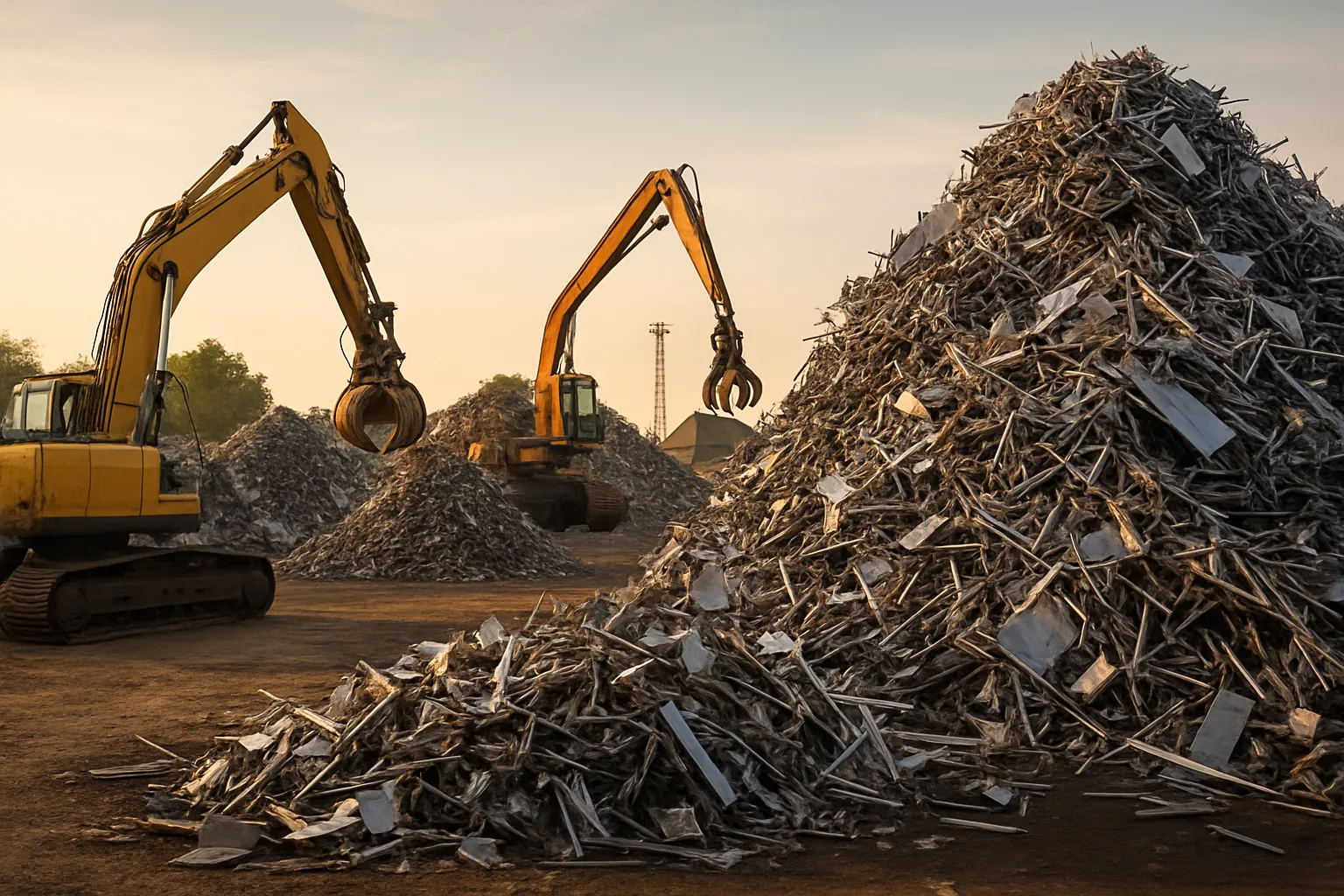
Stainless Steel Scrap Grades Explained: What You're Actually Sitting On
Most yards leave money on the table every week because they don't know the difference between a 304 and a 316. That's not a small distinction — it can mean a significant gap in what buyers will pay per pound. If you're doing scrap metal recycling in Warren and you're lumping all your stainless together into one bin, you're almost certainly underpricing your material.
Stainless steel isn't one thing. It's a family of alloys, each with a different nickel and chromium content, each with a different market value. The grade determines the price. Full stop. This week's market recap breaks down the grades that matter most, what buyers are actually looking for in 2026, and how to make sure you're getting paid for what you've got — not a blended average that benefits the buyer, not you.
Want to skip ahead and find the best scrap metal prices today before you haul your next load? Do that first. Then come back and learn why your stainless grade matters more than the weight on the scale.
The Grades That Drive Stainless Steel Scrap Prices
There are dozens of stainless alloys in circulation, but the scrap market really trades around a handful of grades. Knowing these cold gives you an edge at the window — and a real edge when you're negotiating with buyers across multiple yards.
304 Stainless Steel is the most common grade in the recycling stream. Kitchen equipment, food processing machinery, automotive trim, medical instruments — it's everywhere. It contains roughly 8–10% nickel and 18–20% chromium. Because it's abundant and consistent, buyers know exactly what they're getting, and it trades actively.
316 Stainless Steel adds molybdenum to the mix, typically 2–3%. That makes it more corrosion-resistant and more valuable. You'll find it in marine hardware, pharmaceutical equipment, and chemical processing lines. If your yard is pulling material from industrial decommissions, you may have more 316 than you realize. It consistently commands a premium over 304 — don't let it get mixed in.
201 Stainless Steel is the low-nickel substitute. Manufacturers use it to keep costs down, and it shows up in consumer goods, decorative trim, and cheaper food service equipment. Lower nickel content means lower scrap value. Mixing 201 with 304 drags your price down fast.
Other grades worth knowing:
- 303 and 304L: Minor variants of 304, generally trade at similar levels
- 310 and 330: High-temperature alloys, less common but higher value when found in industrial settings
- 400 Series (410, 430): Ferritic and martensitic grades — magnetic, lower nickel, lower price. Don't let these get mixed with 300-series material.
- 17-4 and other precipitation-hardened grades: High-value aerospace and tooling material — if you're pulling these from a decommission, test before you sell
A magnet won't tell you everything, but it tells you something. 300-series stainless is generally non-magnetic. 400-series is magnetic. That's a fast first sort on the floor before you get to an XRF gun.
How Nickel Prices Move Stainless Scrap Values in 2026
Stainless scrap pricing doesn't live in a vacuum. It tracks global nickel markets more closely than almost any other ferrous category. When nickel runs up, 304 and 316 scrap values follow. When nickel pulls back, you feel it at the window.
In 2026, nickel supply dynamics remain a real factor. Indonesian production, battery demand from EV manufacturers, and global inventory draws all create volatility. That's not noise — it's data that changes what your next load is worth. Keeping an eye on LME nickel prices gives you context for why your yard's scrap metal prices today moved between last week and this week.
The practical takeaway: stainless isn't a set-it-and-forget-it material. Grade it, document it, and time your sales when the market gives you a window. Platforms like SMASH let multiple vetted buyers bid on your material, which means price discovery reflects actual market demand — not just what one buyer is willing to offer on a Tuesday morning phone call.
Disclaimer: Stainless steel scrap prices fluctuate based on grade, condition, market conditions, and buyer demand. Always check current scrap metal prices before selling or committing to a transaction.
Why Grade Separation Matters for Yards in Warren and Across Michigan
Here's the operational reality. If you're running a yard in Warren, Michigan, you're pulling stainless from a dense mix of industrial sources — automotive suppliers, food processing facilities, medical device manufacturers, and HVAC contractors. That's a wide range of grades showing up in a single week. If your intake process doesn't sort them, your buyers will sort them for you — and they won't pay you 316 rates for a mixed load.
Grade separation starts at intake. Train your drivers and counter staff to flag anything that looks like it came from a food processing or pharmaceutical line — that's almost always 304 or 316. Automotive trim and exhaust hardware is often 409 or 439, which trades closer to carbon steel than 300-series stainless. These categories should never share a bin.
Michigan yards that invest in an XRF analyzer — or partner with a buyer who brings one — see immediate returns. You stop arguing about grade at the scale and start quoting specific alloys with confidence. That's a better conversation for everyone.
If you want to understand how best scrap metal prices in Michigan are set and what's driving differences between yards, read scrap metal pricing guides that break down the factors beyond just the spot price.
How to Document and Sell Stainless Scrap for the Best Price
Buyers pay more for certainty. That's the clearest principle in scrap. A load with verified grade documentation, photos, and accurate weights closes faster and at a better number than a vague "mixed stainless" offer. This applies whether you're selling one pallet or a full truckload.
Here's what strong stainless documentation looks like:
- XRF test results or mill certs — if you have them, attach them. Buyers don't have to guess, so they don't have to discount for risk.
- Clear photos by grade — separate piles, separate images. Don't send a blurry heap shot and expect premium rates.
- Accurate weights by grade — total weight of the load matters less than weight per grade. A mixed-weight breakdown tells buyers exactly what they're bidding on.
- Source information where available — material from a pharmaceutical decommission or food processing plant signals quality to industrial buyers.
- Condition notes — clean, oily, painted, or mixed with other alloys. Flag it upfront or expect it to come up in negotiation.
SMASH's platform is built for exactly this kind of documented listing. Photo documentation, inventory tracking, and serial or grade-level detail go directly into the listing. Multiple vetted buyers see the same information and compete — that's how you get real price discovery instead of one buyer's lowball offer. If you're selling stainless regularly out of Warren or anywhere else in the Midwest, that format works in your favor.
The old way — one call, one quote, take it or leave it — leaves money in the buyer's pocket. Competition reveals what your material is actually worth. Find the best price for your scrap on SMASH and see what documented, graded stainless looks like in a competitive format.
Weekly Market Recap: What Stainless Scrap Sellers Should Watch This Week
As of this week, stainless scrap demand remains solid across industrial and manufacturing end-use sectors. Automotive supply chain activity in Michigan continues to generate both ferrous and non-ferrous scrap flows, with stainless showing up across grades. Industrial decommissioning projects — a consistent source of higher-grade 316 and specialty alloys — have been active in the Great Lakes region heading into summer.
Key factors to watch heading into late June 2026:
- Nickel spot price movement: Any upward momentum in LME nickel translates directly to 304 and 316 bid improvements. Watch the weekly trend, not just the daily close.
- Export demand signals: Asian demand for U.S. stainless scrap has been a factor in 2026 pricing. Export-oriented buyers tend to pay more aggressively when the dollar is favorable.
- Copper scrap prices in Warren: Non-ferrous markets often move together. Strong copper scrap prices in Warren can signal broader industrial demand and active buying across categories including stainless.
- Seasonal demand patterns: Summer construction and manufacturing activity typically supports scrap flows. More active buying means more competition — use it.
Bottom line this week: if you've got graded, documented stainless sitting in inventory, now is not the time to call one buyer. Put it in front of multiple buyers and let the market tell you what it's worth.
Stay current on pricing movement, find the best scrap metal prices today, and make sure your next stainless sale reflects the grade you're actually holding — not a mixed-load average that works against you.
Frequently Asked Questions
Q: How do I tell if my stainless steel scrap is 304 or 316 grade?
Visual inspection alone won't do it — 304 and 316 look nearly identical. An XRF (X-ray fluorescence) analyzer is the most reliable field tool for grade identification. Some scrap yards in Warren and across Michigan have XRF units on-site. If yours doesn't, ask your buyer or consider a third-party testing service before selling a large load of suspected 316 at 304 rates.
Q: Why is my stainless steel being priced like regular steel at some yards?
If your stainless is magnetic, the yard may be classifying it as 400-series or even carbon steel — both of which trade at much lower prices than 300-series stainless. Confirm the grade before selling. Magnetic stainless (like 410 or 430) is still worth more than carbon steel, but significantly less than 304 or 316. Grade clarity protects your payout.
Q: What are typical scrap metal recycling options in Warren, Michigan for stainless steel?
Warren has strong access to industrial scrap buyers given its proximity to automotive and manufacturing operations across Southeast Michigan. Beyond local yard options, platforms like SMASH let you list graded stainless and receive competitive bids from vetted buyers across North America — useful when local bids don't reflect actual market value.
Q: How often do stainless scrap prices change?
Stainless scrap prices can shift weekly or even daily, driven largely by LME nickel prices, domestic demand, and export activity. Never assume last month's quote is still valid. Always check current rates before committing to a sale — especially on larger loads of 316 or specialty grades where the price gap matters most.
Q: Is it worth separating stainless grades before I sell, or will the yard do it?
Separate it yourself. Yards that sort for you almost always compensate at the lowest grade in the mix to protect their margin. A few minutes of sorting at intake — or better documentation at pickup — can meaningfully improve your return per pound on a graded 304 or 316 load compared to a blended "stainless mixed" rate.
Get the best scrap metal prices — if you've got stainless graded and ready to move, don't settle for one call and one quote. Check rates, compare buyers, and make your material work harder at best-scrap-metal-prices.com.
Stay ahead of scrap metal market shifts — follow SMASH on LinkedIn for weekly industry updates, pricing insights, and non-ferrous market commentary.