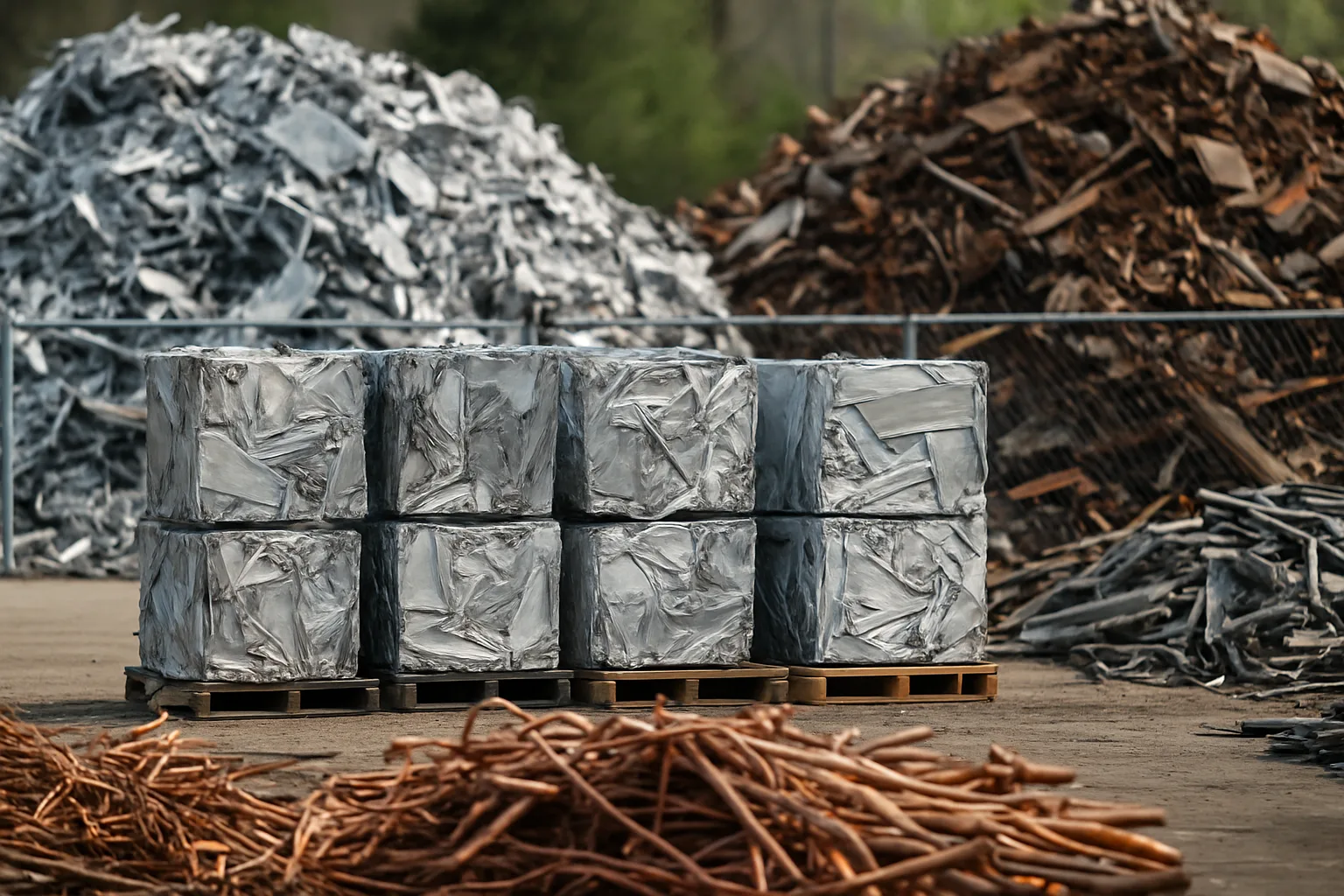
Most Yards Leave Money on the Table When They Sort Aluminum — Here's How to Stop
Aluminum is not a single commodity. It's a family of alloys, grades, and forms — and if you're selling it all as one mixed pile, you're almost certainly getting paid less than it's worth. In the Atlanta area, where manufacturing scrap, HVAC equipment, and automotive cores flow through recycling yards daily, the difference between sorted and unsorted aluminum loads can be significant. Knowing your grades isn't just bookkeeping. It's the foundation of how you find the best scrap metal prices today.
This post breaks down the most common aluminum scrap grades, explains what buyers actually pay for, and shows how using a B2B scrap metal marketplace puts competitive pressure on pricing — the kind of pressure that a single phone call to a single buyer simply can't replicate.
Why Aluminum Grades Matter More Than Most Sellers Realize
Walk into any busy scrap yard in Georgia and you'll find aluminum in a dozen different forms: clean extrusions, cast transmission housings, painted siding, litho sheet, turnings soaked in coolant, and crushed cans. Each of those has a different alloy profile and a different market value. Buyers price based on what they can actually use — and contamination, coatings, and mixed alloys all drive that number down.
Here's the core issue: when you mix high-value clean extrusion with painted or coated material and sell it as one load, you get paid the average — or worse, the lowest common denominator. Buyers price mixed loads for what they have to do to process them, not for what the best pieces are worth. Sorting takes time, but it's one of the highest-return activities a yard can do before a sale.
The most commonly traded aluminum grades in the U.S. scrap market include:
- 1100 / EC (Electrical Conductor) — High-purity aluminum used in wire and cable. Commands a strong premium when clean and separated.
- 6061 / 6063 Extrusion — The workhorses of the aluminum scrap world. Clean extrusions, free of inserts, plastic, or paint, are among the most consistently priced grades.
- Cast Aluminum — Engine blocks, transmission cases, wheels. Lower grade than wrought, but high volume in automotive-heavy markets like Atlanta.
- MLC (Mixed Low Copper) — Painted, coated, or mixed extrusion. Gets a significant haircut versus clean material.
- Turnings and Borings — Generated by machining operations. Heavily discounted when wet or mixed with iron fines. Dry and screened turnings recover much better.
- Litho Sheet — Printing plate material. Clean, consistent, and often sought after by specialty buyers.
- UBC (Used Beverage Cans) — Consumer-facing recycling. High volume but lower per-pound return compared to industrial grades.
Understanding where your material falls on this spectrum is step one. Step two is making sure the right buyers actually see it — which is where most yards in Georgia are still leaving money behind.
The Old Way of Selling Aluminum — and Why It Caps Your Price
The traditional approach to selling a load of aluminum scrap looks something like this: you call one or two buyers you've worked with for years, describe the load, and accept an offer. It's fast, it's comfortable, and it's costing you. Not because those buyers are dishonest — but because a single offer isn't a market. It's a guess, and the guess is always tilted in the buyer's favor.
Without competition, buyers don't have to sharpen their pencils. They can price conservatively, account for uncertainty about your material, and offer a number that protects their margin rather than reflecting actual demand. If you've ever sold a load and later wondered whether you left money on the table, you probably did.
The fix isn't to become a metals trader or spend hours on the phone. The fix is to put your material in front of multiple vetted buyers at the same time and let them compete. That's exactly what a scrap metal auction platform like SMASH is built to do. More buyers means better price discovery. Competition can help reveal the market — instead of hiding it behind a single offer.
How to Document Aluminum Loads to Get Top Bids on a B2B Scrap Metal Marketplace
When you list a load on a B2B scrap metal marketplace, buyers can't walk your yard. They're bidding based on what you show them. That means documentation isn't a formality — it's how you earn buyer confidence and higher bids. A well-documented load tells a buyer they can trust what they're getting, which means they don't have to build a risk buffer into their offer.
For aluminum loads specifically, strong documentation includes:
- Clear photos from multiple angles — Show the top, sides, and a close-up of a representative sample. If you're selling turnings, show the screening and moisture condition.
- Grade identification — Label it clearly. "Clean 6063 extrusion, no inserts" is worth more than "mixed aluminum extrusion" even if the material is identical, because the description removes doubt.
- Weight and lot size — Estimated net weight, how the load is packaged (loose, baled, or in gaylords), and whether you have a certified scale ticket.
- Contamination disclosure — If there's minor contamination (some paint, small plastic clips), disclose it. Buyers who know what they're getting bid with confidence. Buyers who find surprises don't come back.
- Packing lists and BOLs where applicable — For larger commercial loads, these documents matter to buyers doing their own compliance checks.
Platforms like SMASH support photo documentation, serial tracking, and structured inventory tools that make this process repeatable. You build a listing template once, and every future load of the same grade takes minutes to post. If you're selling Atlanta scrap metal services through SMASH, that documentation travels with the load and builds your reputation as a reliable seller over time.
Aluminum Pricing Signals to Watch in Georgia's Market — July 2026
Aluminum prices move with LME benchmarks, U.S. Midwest premiums, and regional supply-and-demand dynamics. In mid-2026, aluminum has remained a closely watched commodity given ongoing shifts in domestic manufacturing capacity and continued pressure on lightweight material sourcing from the automotive and aerospace sectors. Georgia's industrial base — particularly the corridor between Atlanta and Savannah — generates consistent aluminum scrap from HVAC manufacturing, auto parts, and construction activity.
What that means in practice: buyers in this region are active and competing for quality material. Clean extrusion and cast automotive aluminum from Georgia yards are genuinely wanted. That's leverage — if you use it. Sitting on one buyer relationship means you may not be seeing what the market would actually pay for your material today. To check current scrap metal prices and understand where the market sits before you sell, use a pricing resource that reflects real regional data, not just spot prices from six weeks ago.
Disclaimer: Scrap metal prices fluctuate based on LME benchmarks, regional demand, and market conditions. Always verify current rates before finalizing any transaction.
From Confusion to Confidence: Using SMASH to Sell Aluminum Scrap
A yard operator in the Atlanta area recently described their process before switching to a structured auction approach: "We'd call the same two buyers, take the best number, and move on. We didn't know if it was a good number or not. It was just the number we got." That's not a bad business — it's just an incomplete one.
SMASH is built for exactly this situation. No subscription fees. You list your material, vetted buyers compete, and you decide whether to accept an offer. The platform handles auto-invoicing so paperwork doesn't slow down the transaction. There's no guessing about who you're dealing with — buyers are vetted before they ever see your listings.
For yards running regular aluminum loads — weekly or even daily — this approach compounds over time. Better price discovery on each load, documented transaction history, and a buyer pool that knows your material and your grading standards. That's how scrap metal recycling Georgia operations build real margin, not just volume.
If you want to understand how other sellers are structuring their loads and what's working in the current market, read scrap metal pricing guides that break down grade-specific trends and best practices. And when you're ready to stop accepting the first number you hear, sell your scrap metal on the SMASH marketplace and see what competition actually looks like.
Knowing your aluminum grades is the starting point. Getting them in front of the right buyers — at the same time, with documented loads that earn confidence — is how you turn that knowledge into top dollar. The market is there. The buyers are there. The platform exists. Start using it.
Get the best scrap metal prices — check rates at best-scrap-metal-prices.com and see what your aluminum is actually worth in today's market.
Frequently Asked Questions
Q: What is the difference between clean aluminum extrusion and mixed low copper aluminum?
Clean aluminum extrusion (typically 6061 or 6063 alloy) is free of coatings, inserts, plastic, and non-aluminum attachments. Mixed low copper (MLC) material includes painted, coated, or blended extrusion that requires more processing. Buyers consistently pay a premium for clean material because it reduces their processing cost and delivers more predictable alloy content.
Q: How does a B2B scrap metal marketplace improve the price I get for aluminum?
A B2B scrap metal marketplace puts your load in front of multiple vetted buyers simultaneously, creating competition for your material. Instead of accepting a single offer with no comparison point, you see what the market will actually pay. More buyers means better price discovery — and documented loads give buyers the confidence to bid aggressively.
Q: Where can I sell aluminum scrap in Atlanta, Georgia?
Atlanta has a strong network of scrap yards and regional buyers actively purchasing aluminum grades. Beyond local yard drop-offs, platforms like SMASH connect Atlanta-area sellers with vetted buyers across North America, often reaching buyers who specifically need the grades you're running. This expands your market beyond geography.
Q: Do I need to sort aluminum before selling, or can I sell it mixed?
You can sell mixed aluminum, but expect a significant discount compared to sorted, graded material. Buyers price mixed loads to account for processing uncertainty and alloy variability. If you have the capacity to separate clean extrusion from cast, and dry turnings from wet, sorting almost always improves your return — sometimes substantially.
Q: What documentation do buyers expect when purchasing scrap metal loads on an auction platform?
Quality buyers expect clear photos from multiple angles, a grade description, estimated weight, and any relevant contamination disclosure. For larger loads, packing lists and scale tickets add confidence. On platforms like SMASH, structured listing tools make this documentation straightforward and reusable across similar loads.
Follow SMASH on LinkedIn for ongoing scrap metal market insights, pricing trends, and industry updates that help you sell smarter.
```