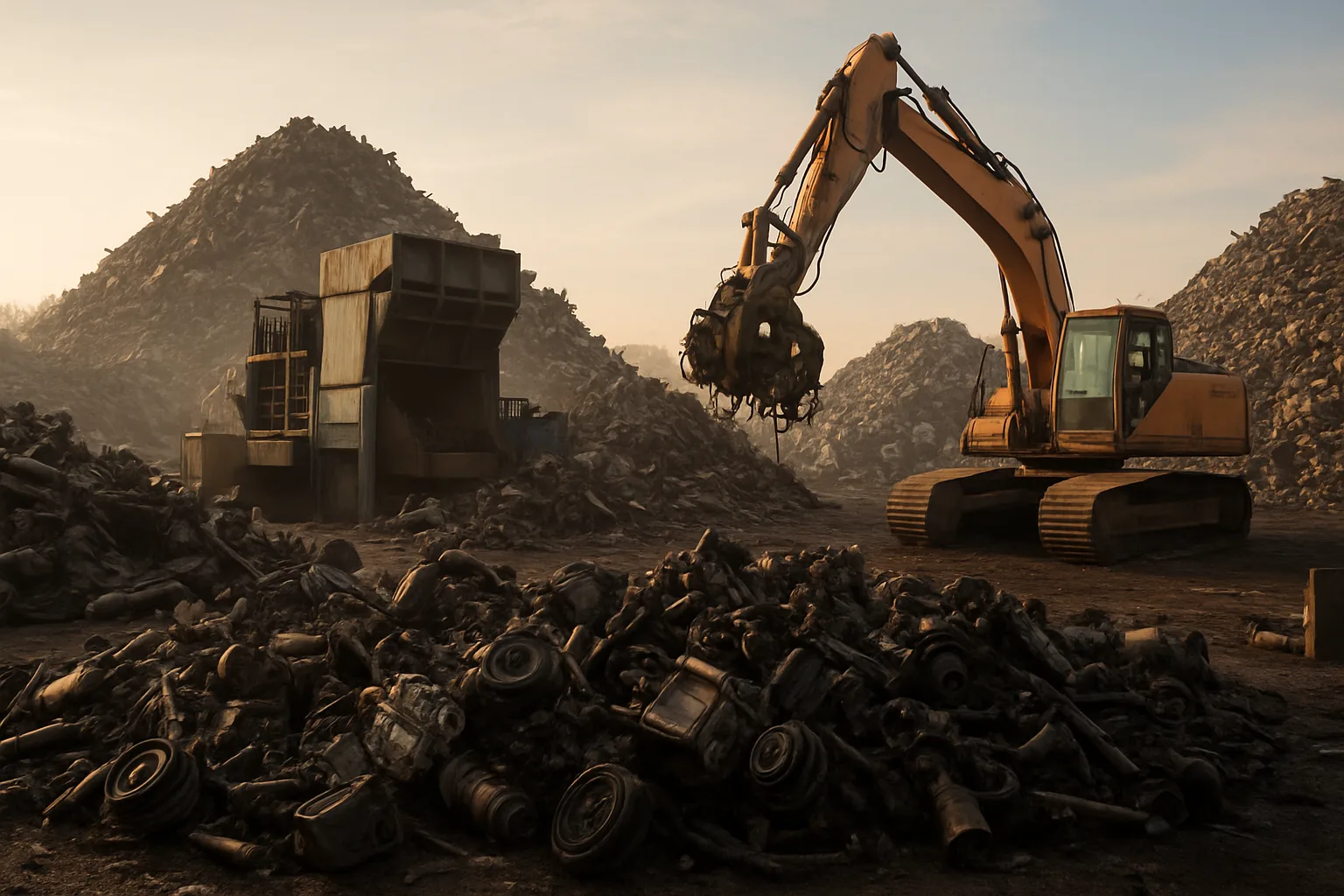
Most people have no idea what happens to a radiator after it leaves a junkyard. It doesn't just disappear — it gets stripped, sorted, and turned back into raw material that feeds manufacturing lines across the country. If you're sitting on a pile of old auto parts in Los Angeles and wondering what they're worth, understanding the recycling process puts real money in your pocket.
Scrap metal recycling Los Angeles is a serious business. Southern California yards process millions of pounds of auto parts every year. Radiators, alternators, starters, motors, and more — each one contains recoverable metals with real market value. The trick is knowing what's inside them and how to get paid fairly for what you've got.
What's Actually Inside Auto Parts — and Why It Matters for Scrap Metal Prices
Auto parts aren't single-material items. They're engineered assemblies that combine multiple metals, plastics, and composites. When you strip them down to their metal content, you're separating materials with very different price points. That separation work — whether you do it yourself or a yard does it — directly affects what you get paid.
Here's a breakdown of what's inside the most common auto parts people bring to yards:
- Radiators: Older radiators are typically copper and brass — high-value non-ferrous metals. Newer vehicles use aluminum cores with plastic end tanks. An aluminum radiator sells for a fraction of what a copper/brass unit fetches, so knowing which one you have matters before you load the truck.
- Alternators: These contain copper windings, aluminum housings, and steel components. Yards usually buy them as "whole units" or "electric motors." The copper inside is what drives the value, but you're often selling the whole assembly unless you're willing to break it down yourself.
- Starters: Similar to alternators — copper windings, steel and aluminum casing. Sold by the pound as electric motors at most California yards.
- Copper wiring and wire harnesses: Pure copper wire is among the most valuable scrap you can bring in. Insulated wire pays less than bare bright copper, but it's still worth stripping if volume justifies the labor.
- Steel brackets and housings: The lowest value category, but volume adds up fast. Even low-grade steel has a price per pound when you're dealing with a full engine bay's worth of hardware.
The copper content in alternators and starters is exactly why copper scrap prices Los Angeles fluctuate alongside what yards offer for electric motors. When copper price today moves up, the price per pound on motors follows — sometimes same-day at a busy yard. Check current scrap metal prices before you haul anything to make sure you're selling at the right time.
How Radiators Are Recycled — Step by Step
A radiator's journey from your vehicle to a metal product is more involved than most sellers realize. Understanding the process helps you understand why preparation — even basic prep — translates to a better price at the scale.
- Collection and sorting: Yards separate copper/brass radiators from aluminum units immediately. These go to different buyers and different downstream processors, so mixing them in a load causes grading problems.
- Draining and depollution: Any coolant residue gets removed. California environmental regulations require proper fluid handling before processing, so yards factor that compliance cost into pricing.
- Stripping plastic end tanks: On copper/brass radiators, plastic components get cut away. A "clean" copper/brass radiator — stripped of plastic and steel — commands a significantly better price per pound than a dirty unit. Some yards do this themselves and pay less. Others want you to prep it.
- Shredding or baling: Clean copper/brass gets baled for direct smelting. Aluminum radiators go through a shredder. The output gets sorted by eddy current separators and other equipment that isolates non-ferrous metals at the processing facility.
- Smelting and refining: The final step. Copper comes out as wire bar or cathode. Aluminum gets cast into ingots or billet. These materials re-enter the supply chain and end up back in new vehicles within months.
The economics are straightforward. A copper/brass radiator has meaningful metal value. An aluminum one has less, but it's still worth bringing in — especially in volume. If you're doing scrap metal recycling in Los Angeles, sorting your radiators before you arrive at the yard saves you from taking a blanket "mixed" price on everything. Read scrap metal pricing guides to understand how grading affects what you actually get paid.
Alternators, Starters, and Electric Motors — Getting the Best Scrap Metal Prices California Has to Offer
Electric motors — the category that includes alternators and starters — are one of the most consistently valuable categories at California yards. The copper windings inside create real demand from non-ferrous buyers. But the price you get depends heavily on how you present the material.
Most sellers bring in whole, unbroken units. That's fine. Yards price them per pound as "electric motors" — a catch-all grade that accounts for the mixed content. The price reflects an average copper yield after shredding. If you want to extract more value, breaking the units open and pulling the copper windings yourself gets you a price closer to copper wire grade rather than motor grade. That gap can be meaningful when you're moving significant weight.
A few things to keep in mind:
- Wet or oil-contaminated motors typically get docked or rejected at some yards. Clean units sell better.
- Large industrial motors from commercial vehicles or equipment pay better rates per pound than small automotive starters. Copper density is higher in larger units.
- When copper scrap price today is running high, it pays to check multiple buyers. Price variance between yards in Los Angeles on the same grade of electric motors can be real — don't assume the closest yard is the best yard.
This is where platforms like SMASH change the math entirely. Instead of calling one yard and accepting their posted motor price, find the best price for your scrap on SMASH and let vetted buyers compete for your load. Competition reveals the market. That's the difference between guessing at a price and actually knowing what your material is worth.
Catalytic Converters — The High-Value Auto Part That Demands Documentation
No conversation about auto parts recycling is complete without covering catalytic converters. These sit at the top of the auto scrap value chain thanks to platinum group metals (PGMs) — platinum, palladium, and rhodium — embedded in the ceramic substrate. The prices per unit vary wildly depending on vehicle make, model, and converter type.
If you want to sell catalytic converters online, documentation matters more in 2026 than it ever has. California has some of the strictest seller verification requirements in the country. Yards require proof of ownership, vehicle VINs, and photo documentation before purchasing converters. That's not just policy — it's state law, and violations carry serious consequences for sellers and buyers alike.
For legitimate sellers — auto dismantlers, licensed recyclers, and salvage operations — proper documentation actually works in your favor. It qualifies you for better buyers and better prices. Platforms designed for documented, vetted transactions like SMASH are built specifically for this environment. Serial tracking, photo documentation, and VIN lookup features mean your converter loads are fully traceable and compliant from the moment you list them.
The best scrap metal prices California sellers see on converters come from buyers who trust the documentation and can act fast on clean, verified loads. That trust translates directly into price.
How to Maximize What You Get Paid for Auto Parts Scrap in Los Angeles
The yards in Los Angeles are competitive, but that competition only helps you if you show up prepared. Selling auto parts scrap well isn't complicated — it just requires a bit of discipline before you load the truck.
Here's what separates sellers who consistently get strong prices from those who take whatever the first yard offers:
- Sort before you go. Copper/brass radiators separate from aluminum. Electric motors stay together. Steel brackets are their own pile. Mixed loads get priced at the lowest common denominator.
- Strip what you can. Pulling plastic end tanks off radiators, removing aluminum housings from copper-rich motors — even basic prep bumps the grade and the price.
- Know what you have before you quote it. Find the best scrap metal prices today so you're not negotiating blind. Real market data gives you a baseline.
- Use competitive buyers. One phone call to one yard is the old way. SMASH connects your inventory to vetted buyers across the market. More buyers means better price discovery. That's not a marketing line — it's how auctions work.
- Document everything. Photos, weights, packing lists. Buyers pay more when they're confident in what they're getting. Documentation is credibility, and credibility is money.
Whether you're an auto dismantler moving truckloads of motors every week or a shop clearing out a bin of used alternators, the fundamentals are the same. Sort it, prep it, price it, and sell it to the buyer who pays the most — not the one who answers the phone first.
If you want to sell scrap metal for cash at rates that reflect what the market actually offers in Los Angeles and across California, start with good pricing data and end with competitive buyers. That combination is what SMASH is built for. You can also explore Los Angeles scrap metal services to see what local options look like for your specific materials.
Good pricing data and honest competition are what drive fair outcomes in this market. Get the best scrap metal prices — check rates at best-scrap-metal-prices.com before your next load moves.
Disclaimer: Scrap metal prices fluctuate daily based on commodity markets, regional demand, and material grade. Always verify current rates before selling.
Frequently Asked Questions
Q: What is the scrap value of a copper/brass radiator in Los Angeles?
Copper/brass radiator prices vary based on current commodity markets and the condition of the unit. Clean, stripped copper/brass radiators — with plastic end tanks removed — command a higher price per pound than dirty or mixed units. Check current rates at best-scrap-metal-prices.com before heading to the yard, since prices move with the copper market.
Q: Can I sell auto part scrap like alternators and starters directly in Los Angeles without a dealer license?
In most cases, yes — individual sellers can bring used auto parts to scrap yards in Los Angeles without a dealer license. However, California has strict requirements around catalytic converters, which require proof of ownership and vehicle documentation. For high-volume sellers or dismantlers, a licensed recycler or auto dismantler status may apply different rules. Always confirm requirements with the specific yard before your first visit.
Q: How do I know if my radiator is copper/brass or aluminum before I bring it in?
Copper/brass radiators are typically found in older vehicles — generally pre-1990s — and have a distinctly yellowish or reddish metallic core. Aluminum radiators are silver-grey and far lighter for the same size unit. If you're unsure, check your vehicle's year and make online or simply ask the yard when you call ahead with your load details.
Q: What's the best way to get competitive scrap metal prices in Los Angeles instead of just accepting one yard's offer?
Stop calling one buyer and accepting the first number you hear. Platforms like SMASH let vetted buyers compete for your load, which means price discovery happens through competition rather than through whoever picks up the phone. More buyers bidding on your documented inventory consistently produces better outcomes than a single negotiation.
Q: Are catalytic converter sales regulated in Los Angeles in 2026?
Yes. California enforces strict documentation requirements for catalytic converter sales, including proof of vehicle ownership, seller identification, and in many cases VIN verification. These rules apply at licensed scrap yards throughout Los Angeles. Selling through a platform that supports VIN lookup and serial tracking helps ensure compliance and gives legitimate sellers access to better-paying buyers.
Follow SMASH on LinkedIn for ongoing scrap metal market insights, pricing trends, and industry updates.