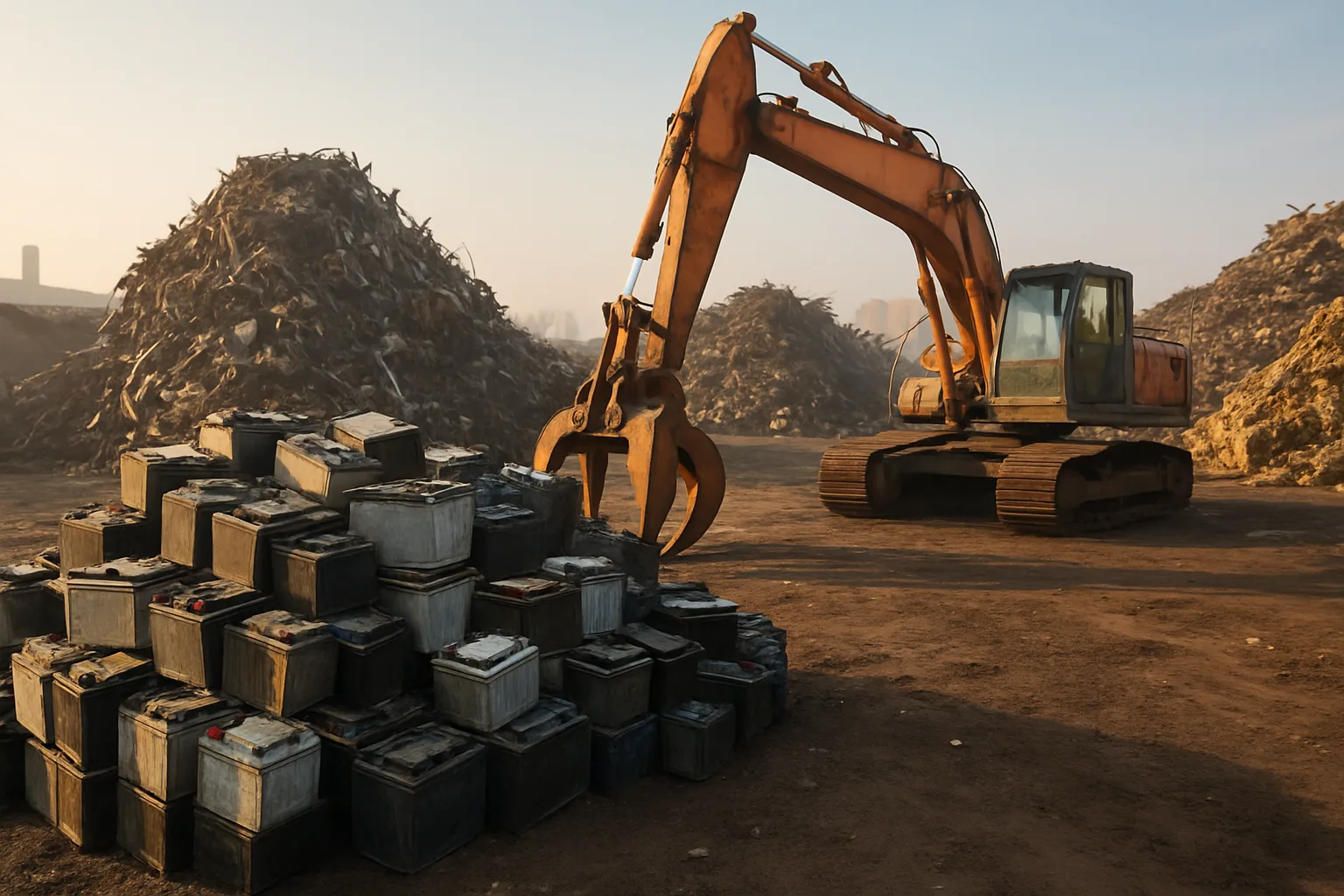
Most sellers fixate on copper and aluminum — but sitting in your yard right now, lead-acid batteries could be generating serious cash that you're leaving on the table. Lead scrap consistently trades as one of the heavier-value base metals, and with recycling regulations tightening across the country in 2026, understanding what your batteries are actually worth has never mattered more. If you've been searching for the aluminum scrap price today without thinking about your battery pile, you're only solving half the puzzle.
Newark yards see a steady flow of lead-acid batteries — from auto shops, fleet operators, solar installations, and warehouses running forklifts. The metal inside those cracked black cases is worth real money. But getting paid fairly depends on knowing the market, documenting your load, and putting it in front of more than one buyer. That's exactly what this guide covers.
What Makes Lead-Acid Batteries Valuable Scrap
A standard 12-volt automotive battery weighs between 30 and 50 pounds. Most of that weight is lead — plates, terminals, and connectors — surrounded by a polypropylene case and sulfuric acid electrolyte. When you recycle it, processors recover the lead, the plastic, and in some operations, the acid. Nothing goes to waste, which is why lead-acid batteries have one of the highest recycling recovery rates of any consumer product.
The lead content is the primary value driver. Lead prices fluctuate with global demand — EV battery storage systems, construction, and telecommunications backup power all consume refined lead. When those sectors are active, scrap lead prices move up. When they contract, prices soften. Watching lead spot prices alongside your best scrap metal prices Newark search gives you a better picture of what to expect at the scale.
- Lead plates: The heaviest and most valuable component
- Lead terminals and connectors: High-purity lead, easy to recover
- Polypropylene case: Recycled separately — adds marginal value
- Electrolyte acid: Neutralized and processed; not typically a revenue source for the seller
Industrial batteries — think forklifts, golf carts, and UPS systems — are significantly heavier than automotive units. A single forklift battery can weigh 1,500 to 3,000 pounds. If you're moving those regularly, lead scrap becomes a major revenue line, not a side item. Make sure you're tracking weight accurately and building documentation before you sell.
Lead Scrap Prices vs. Aluminum Scrap Price Today — Know Both Numbers
If you're only tracking the aluminum scrap price today, you're leaving part of your margin on the floor. Lead and aluminum both matter to a mixed-load yard, and they respond to different market forces. Aluminum tracks closely with energy prices and manufacturing demand. Lead tracks with battery manufacturing cycles and infrastructure investment. In mid-2026, both metals are worth watching — but they don't move together.
For sellers in Newark and across New Jersey, the practical move is to price each material category separately before you aggregate a load. Bundling everything together and accepting a yard's blended rate almost always means someone's eating your margin — and it's not the buyer. To find the best scrap metal prices today, you need per-material visibility, not a single blended number.
Here's how to think about your battery load:
- Weigh batteries separately from other scrap
- Count and classify by type (automotive, industrial, AGM, gel)
- Photograph the load before transport
- Get at least two bids — one phone call is never enough
- Check current lead prices before you accept any offer
Platforms like find the best price for your scrap on SMASH put your documented load in front of vetted buyers who compete for it. That competition is what drives price discovery. One buyer on the phone with no pressure to move has no reason to offer you a strong number. Multiple buyers in an auction environment do.
New Jersey Regulations on Lead-Acid Battery Recycling
New Jersey has strict rules around lead-acid battery handling — and ignoring them is expensive. The state follows federal guidelines under the Universal Waste Rule, which classifies spent lead-acid batteries as universal waste when managed for recycling. That status comes with specific storage, labeling, and transport requirements.
Key compliance points for New Jersey sellers in 2026:
- Storage limits: Small-quantity handlers can store up to 5,000 kg of universal waste on-site. Large-quantity handlers face stricter timelines and notification requirements.
- Labeling: Containers must be clearly marked "Universal Waste — Lead-Acid Batteries" or similar approved language.
- Leaking batteries: Must be placed in a closed, labeled secondary container immediately. Spilled electrolyte is a hazardous waste issue — not a universal waste issue.
- Transport: Must go to a permitted recycler or universal waste handler. Verify your buyer's credentials before you move the load.
- Record keeping: Track shipments, weights, and destinations. Documentation protects you if there's ever a compliance question.
Newark scrap operations moving any volume of batteries need a compliance workflow — not just a truck and a price. If your buyer can't confirm they're a permitted handler, find another buyer. The liability isn't worth a marginal price difference. Good documentation also supports your sale — vetted buyers on platforms like SMASH expect it, and it actually helps you get stronger bids.
How to Get Better Prices for Lead Scrap in Newark
Getting the best price for your battery load isn't complicated. It requires preparation, documentation, and competition. Yards that skip steps one and two almost always get undercut at step three. Here's how the smart sellers in Newark operate.
Step 1: Sort and weigh before you call anyone. Commingled loads give buyers an excuse to discount. Clean, sorted, weighed batteries tell a different story. Your price starts going up the moment your documentation goes up.
Step 2: Photograph everything. Photo documentation builds buyer confidence, especially on industrial batteries where condition matters. Cracked cases, terminal corrosion, and obvious damage affect value — but so does showing a buyer a clean, well-maintained load. Platforms that support photo uploads create a more accurate auction environment.
Step 3: Get multiple bids. This is where most sellers leave money. One call to one local yard is not price discovery — it's one person's offer. The sell scrap metal online model exists specifically because getting competitive bids used to require a dozen phone calls. Now you can list a load and let buyers come to you.
Step 4: Know your minimum. Before you accept any bid, know what the current lead price implies for your load weight. If you're not sure how to calculate it, read scrap metal pricing guides that walk through the math. Knowing your floor prevents you from accepting a weak first offer out of urgency.
For Newark sellers looking to sell scrap metal for cash efficiently, the combination of clean documentation and competitive bidding is the most reliable path to a strong outcome. SMASH's auction model was built exactly for this — vetted buyers, transparent bidding, no subscription fees. You only pay when the load sells.
What Newark Scrap Sellers Often Miss About Battery Pricing
Battery scrap pricing has nuances that catch sellers off guard. Not all lead-acid batteries trade at the same rate. Here's what affects your per-pound or per-unit price:
- Battery type: Flooded lead-acid, AGM (absorbed glass mat), and gel batteries have different lead content percentages and different processing costs. Buyers price them accordingly.
- Condition: Intact, uncharged batteries are easiest to handle. Leaking or severely corroded units require more processing and may be priced lower or refused.
- Volume: Larger loads generally earn better per-unit rates. If you're holding batteries waiting to accumulate a bigger load, make sure your storage is compliant first.
- Market timing: Lead prices move. A load sold during a demand spike earns more than the same load sold in a flat market. Tracking the trend matters.
- Buyer competition: Single-buyer scenarios consistently underperform. This isn't speculation — it's basic economics. Competition produces better prices.
If you've been calling the same yard for years without shopping your load around, you've likely been paying a loyalty tax with no loyalty discount. Newark has enough buyer activity to support real competition. Use it. To check current scrap metal prices and understand where lead sits in the market today, make it a weekly habit — not a one-time lookup before a sale.
SMASH connects sellers with vetted buyers across North America, which means your Newark battery load gets seen by more than the handful of yards within driving distance. That reach translates directly into more competitive bids and better scrap metal near me for cash prices outcomes.
Building a Lead Battery Recycling Workflow That Pays
One-off battery sales are fine. But if you're running a yard, an auto shop, or a fleet operation in Newark, building a repeatable workflow is where real money accumulates. Here's what a solid operation looks like:
- Designate a compliant storage area — labeled, contained, inspectable
- Log incoming batteries — count, type, condition, date received
- Set a volume threshold for selling — don't move a single battery when you can move a pallet
- Document each load with photos and weight tickets
- Run competitive bids before every sale — no exceptions
- Track your sale prices over time — spot your own trends
This kind of workflow turns a passive revenue stream into an optimized one. The sellers who consistently get the best scrap metal prices New Jersey buyers are offering aren't luckier — they're more organized. Documentation, volume, and competition are the three levers you control. Pull all three.
Whether you're new to recycling batteries or you've been doing it for years, connecting with Newark scrap metal services that understand local compliance and market conditions makes a real difference. And if you want to take your pricing further, SMASH puts your load in front of buyers who compete for it — no guessing, no single-buyer pressure, no subscription fees.
When you're ready to sell, start by knowing your numbers. Get the best scrap metal prices — check rates at best-scrap-metal-prices.com before your next load moves.
Frequently Asked Questions
Q: How much is a lead-acid battery worth as scrap in Newark today?
Prices fluctuate with the lead market and vary by battery type, weight, and condition. Automotive batteries are priced differently than industrial or AGM units. Always check current lead prices and get multiple bids before selling — a single yard quote is rarely the best number available.
Q: How does the aluminum scrap price today affect my battery sale?
Lead and aluminum are separate markets that don't move in sync. If you're selling a mixed load that includes both aluminum and batteries, price each material category separately before agreeing to any blended rate. Bundling without separation almost always benefits the buyer, not you.
Q: Can I sell scrap metal online in New Jersey, including lead-acid batteries?
Yes. Platforms like SMASH allow you to list documented loads — including battery scrap — and receive competitive bids from vetted buyers. You'll still need to comply with New Jersey's universal waste transport requirements, but the pricing and bidding process happens online, which typically generates better outcomes than single-buyer phone calls.
Q: Do I need special permits to sell lead-acid batteries as scrap in Newark?
Sellers typically operate under the Universal Waste Rule rather than full hazardous waste permits, as long as batteries are being managed for recycling and storage limits are respected. However, your buyer — the processor — must be a permitted handler. Always verify credentials before transferring a battery load.
Q: How many batteries should I accumulate before selling for the best scrap metal prices?
Volume generally improves your per-unit rate. Most sellers find that accumulating a pallet or more before going to market produces better outcomes than moving single units or small quantities. Just make sure your storage setup is compliant while you build up inventory — labeled, contained, and within your permitted quantity limits.
Stay current on lead prices, aluminum scrap price today trends, and market shifts by following SMASH on LinkedIn — practical scrap metal market insights for yard operators and sellers across North America.
Disclaimer: Scrap metal prices fluctuate daily based on market conditions, location, load quality, and buyer demand. All price references in this article are general in nature. Always verify current rates before making selling decisions.