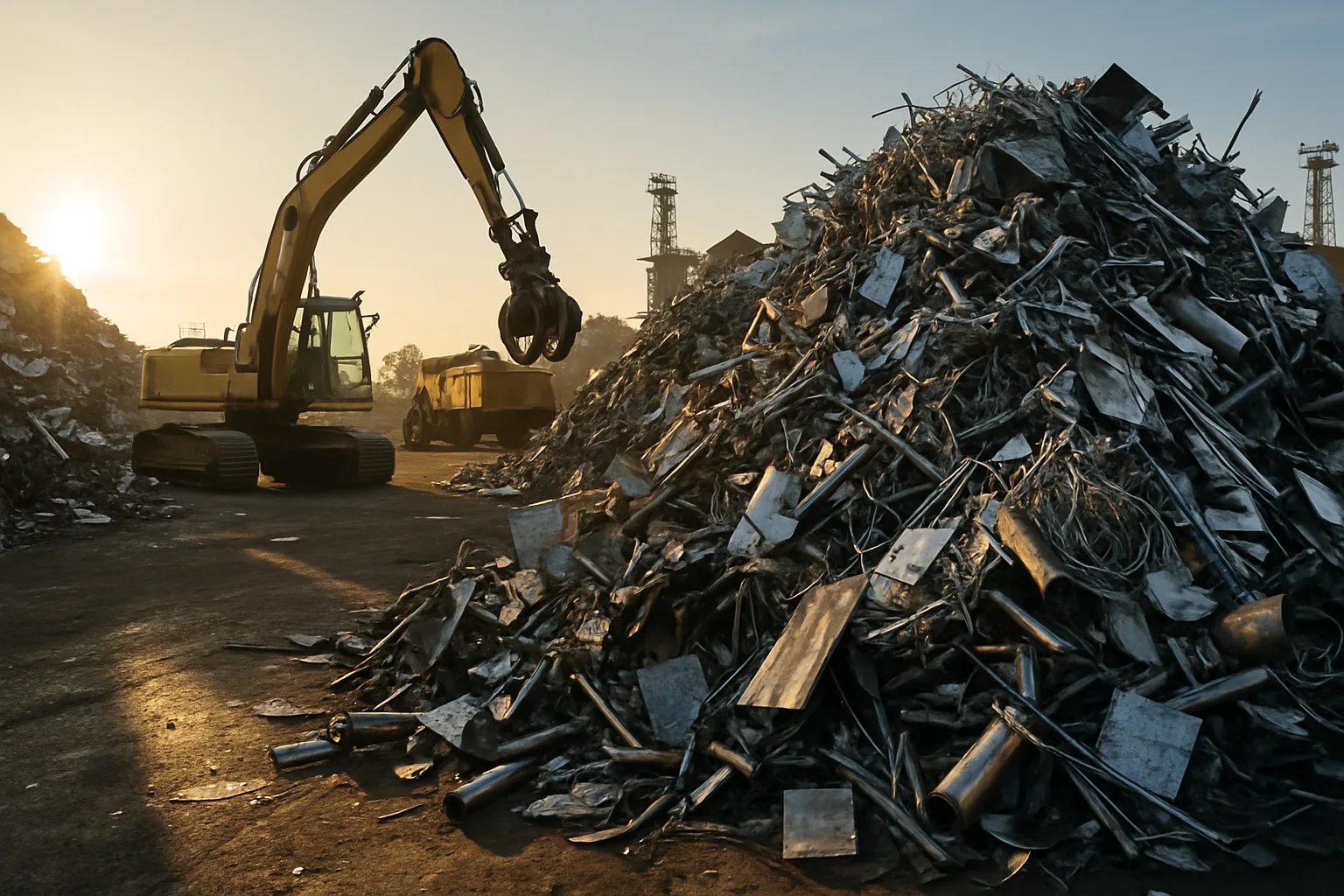
Stainless steel sits in your yard right now, and most sellers have no idea what grade they're holding — or what it's actually worth. That gap costs money. Knowing the difference between a load of 304 and a load of 316 can mean a significant swing in your payout, and in a market where scrap metal prices today shift with global demand and raw material costs, leaving that spread on the table is a real loss.
This guide breaks down stainless steel scrap grades, what drives pricing, and how sellers in Minneapolis and across Minnesota can use better information to get better results. We'll also cover where the copper scrap price today fits into the broader non-ferrous picture — because non-ferrous pricing and stainless steel often move in related directions, both tied to nickel, copper, and molybdenum content.
Want to skip straight to current rates? find the best scrap metal prices today and see what the market is showing right now.
What Makes Stainless Steel Different From Regular Scrap Steel?
Regular carbon steel is iron plus carbon. Stainless steel is iron plus chromium — at minimum 10.5% chromium by mass — which gives it corrosion resistance and a higher scrap value than standard ferrous material. That chromium content is part of why stainless commands a premium over structural steel scrap.
But chromium is just the baseline. The alloy composition varies significantly by grade, and those differences determine what a buyer will pay. Scrap yards don't buy "stainless steel" as a single category. They buy specific grades — or they test and sort it themselves, which affects how much they offer you.
The key alloying elements that drive stainless scrap value:
- Nickel (Ni): The biggest price driver. Grades with higher nickel content command higher prices because nickel is expensive and tightly tracked on global exchanges.
- Molybdenum (Mo): Present in grades like 316, adds corrosion resistance and value.
- Chromium (Cr): Present in all stainless grades — baseline value contributor.
- Manganese (Mn): Found in 200-series grades as a nickel substitute — generally lower value.
If you're selling stainless without knowing the grade, you're handing the buyer an information advantage. That's the old way. The SMASH way starts with documentation and grade identification before the load goes to market.
The Major Stainless Steel Scrap Grades — and What They Pay
Grades are divided into series: 200, 300, and 400. Each series has different alloy chemistry and a different scrap value. Here's what you need to know about each.
300 Series — The High-Value Standard
The 300 series is the most common stainless steel in industrial, food service, and manufacturing applications. It's austenitic, meaning it's non-magnetic (though some work-hardened pieces can show slight magnetism). These grades contain significant nickel, which is what pushes their scrap price above other series.
- Grade 304 (also called 18/8): 18% chromium, 8% nickel. The most widely produced stainless grade in the world. Found in kitchen equipment, food processing, chemical tanks, and structural components. Scrap buyers pay a solid premium for clean, identified 304.
- Grade 316: Adds 2-3% molybdenum to the 304 base. Used in marine, pharmaceutical, and chemical environments where extra corrosion resistance matters. Higher alloy content means higher scrap value than 304.
- Grade 316L and 304L: "L" designations mean low carbon. Similar chemistry, similar scrap value to their standard counterparts — buyers generally treat them comparably unless the load is very large and carefully documented.
- Grade 321 and 347: Stabilized grades with titanium or niobium additions. Less common, but buyers who process specialty alloy will pay accordingly.
400 Series — Ferritic and Martensitic Grades
The 400 series contains chromium but little or no nickel. That's the key difference. These grades are magnetic, which makes field identification straightforward. The trade-off is that without nickel, the scrap value drops substantially compared to 300 series material.
- Grade 409: Low chromium (10.5-11.75%), no nickel. Used heavily in automotive exhaust systems. Common in yards — value is closer to a clean ferrous premium than a non-ferrous rate.
- Grade 430: Higher chromium (16-18%), still no nickel. Found in appliances and decorative trim. Better value than 409, but still well below 300 series.
- Grade 410 and 420: Martensitic grades, used in cutlery and fasteners. Moderate chromium, minimal nickel.
200 Series — The Nickel Substitute
The 200 series replaces nickel with manganese and nitrogen as austenite stabilizers. These grades were developed partly to reduce dependence on nickel. The result is a lower scrap value — manganese isn't worth what nickel is. If your load tests as 200 series when you expected 300 series, your payout will reflect that difference. Grade identification before you sell matters here more than almost anywhere.
How Stainless Steel Scrap Pricing Actually Works
Stainless scrap isn't priced off a simple posted rate the way copper or aluminum might be at a local scrap yard near me open now. It's priced off the alloy surcharge index — specifically the nickel surcharge, which tracks the London Metal Exchange (LME) nickel price. When LME nickel rises, 304 and 316 scrap prices follow. When nickel drops, so does your stainless payout.
This is why a load of 304 stainless scrap doesn't have a single fixed price. The buyer calculates it based on:
- Current LME nickel price — the primary driver for 300 series
- Grade purity and contamination — mixed or contaminated loads get discounted
- Form of the material — turnings, solids, clips, and sheet all carry different processing costs
- Volume — larger loads typically attract better offers
- Documentation — identified, documented, photo-verified loads give buyers confidence and reduce their risk, which translates to better bids
That last point is where platforms like SMASH create real value. When you find the best price for your scrap on SMASH, documented inventory — with photos, weights, and grade identification — goes in front of multiple vetted buyers simultaneously. Competition between those buyers does the work of price discovery that a single phone call to one local yard simply can't replicate.
Speaking of non-ferrous pricing — the copper scrap price today is relevant context even when you're selling stainless. Both markets respond to global manufacturing demand, energy costs, and supply chain shifts. If copper is running strong, it often signals healthy industrial demand across the board, which tends to support stainless alloy pricing too. check current scrap metal prices to see how the broader non-ferrous market is moving today.
Selling Stainless Steel Scrap in Minneapolis and Minnesota
Minneapolis is a strong market for stainless steel scrap. The Twin Cities metro has significant food processing, medical device manufacturing, and industrial fabrication — all heavy users of 304 and 316 stainless. That means yards handling scrap metal recycling Minneapolis see consistent stainless volume and, in most cases, have buyers who understand the grades and pay accordingly.
If you're in greater Minnesota — outside the metro, dealing with agricultural equipment, dairy processing lines, or food-grade fabrication scrap — you may have strong stainless volume but fewer local buyers competing for it. That's where an auction-based approach changes the math. A load of clean 316 stainless from a dairy operation in outstate Minnesota shouldn't be priced at whatever one local buyer offers. It should go to a competitive market.
Practical steps for Minneapolis and Minnesota sellers:
- Use a magnet to separate 400 series (magnetic) from 300 series (non-magnetic) before you call anyone.
- Keep turnings separate from solids — they have different values and different buyers.
- Document weight, grade (if known), and condition with photos before the load moves.
- Don't mix grades. Mixed stainless gets priced at the lowest common denominator.
- Check posted rates — read scrap metal pricing guides to understand what the current market supports before you negotiate.
For larger loads or specialty grades, Minneapolis scrap metal services through platforms like SMASH connect you to buyers who specifically want identified, documented stainless — and compete for it.
Common Mistakes That Cost Sellers Money on Stainless Scrap
Grade confusion is the most expensive mistake. Selling 316 as mixed stainless — because you didn't test or document it — means the buyer prices it at the lower mixed rate and pockets the difference. That's money you earned and gave away.
Contamination is the second big one. Carbon steel hardware, bolts, or attachments left on stainless material drag the whole load's value down. Buyers who process mixed loads factor in the sorting cost. Clean loads get clean prices.
Other common errors:
- Selling turnings wet or oily — buyers discount heavily for contamination and moisture weight.
- Mixing 200 and 300 series — visually they can look similar, but XRF testing at the yard will catch it, and the load gets repriced downward.
- Calling one buyer and accepting the first number — this is the core problem SMASH was built to solve. One call is not price discovery. It's price acceptance.
- Not knowing current market conditions — if you don't know where LME nickel is trading this week, you can't evaluate whether the offer on the table is fair.
Better information, better documentation, and buyer competition — those three things consistently produce better outcomes. That's not a sales pitch. That's just how markets work.
Disclaimer: Scrap metal prices fluctuate daily based on commodity markets, regional supply and demand, and material condition. Always verify current rates before selling.
If you want to stay ahead of the market, get the best scrap metal prices by checking rates at best-scrap-metal-prices.com — and make sure every load you sell is going into a competitive process, not just a one-buyer phone call.
Follow SMASH on LinkedIn for ongoing scrap metal market insights, pricing updates, and industry news across North America.
Frequently Asked Questions
Q: How does the copper scrap price today affect stainless steel scrap pricing?
They're separate markets, but both respond to the same underlying signals — global manufacturing activity, energy costs, and industrial demand. When copper prices are strong, it often reflects healthy industrial output, which tends to support demand for stainless alloys as well. Tracking the copper scrap price today gives you useful context even when you're primarily selling stainless.
Q: What is the most valuable grade of stainless steel scrap?
Generally, 316 and 316L stainless commands the highest prices due to its molybdenum and nickel content. Clean, identified, documented 316 in solid form will typically outperform 304 at any given buyer. Specialty grades like 317 or high-nickel alloys can go even higher, but they require buyers who specifically process specialty material.
Q: How do I identify stainless steel grades before selling in Minneapolis?
A basic magnet test separates ferritic 400 series (magnetic) from austenitic 300 series (non-magnetic). For definitive grade identification, an XRF (X-ray fluorescence) analyzer gives you alloy composition on the spot. Many larger scrap yards in the Minneapolis metro have XRF equipment — ask before you deliver if grade verification is important for your load.
Q: Are there scrap yards near me open now that specialize in stainless steel in Minnesota?
Several yards in the Twin Cities metro and greater Minnesota handle stainless regularly, given the region's food processing and manufacturing base. For specialty grades or large loads, an auction platform like SMASH opens your material to vetted buyers beyond your immediate geography — often producing better offers than a single local yard can provide.
Q: Does mixing stainless grades hurt my payout?
Yes, significantly. Mixed stainless gets priced at the lowest grade in the mix — buyers aren't going to sort it for you at full value. Keeping 304, 316, and 400 series separated before you sell is one of the highest-ROI steps you can take. Twenty minutes of sorting can mean a meaningful difference in your final check.