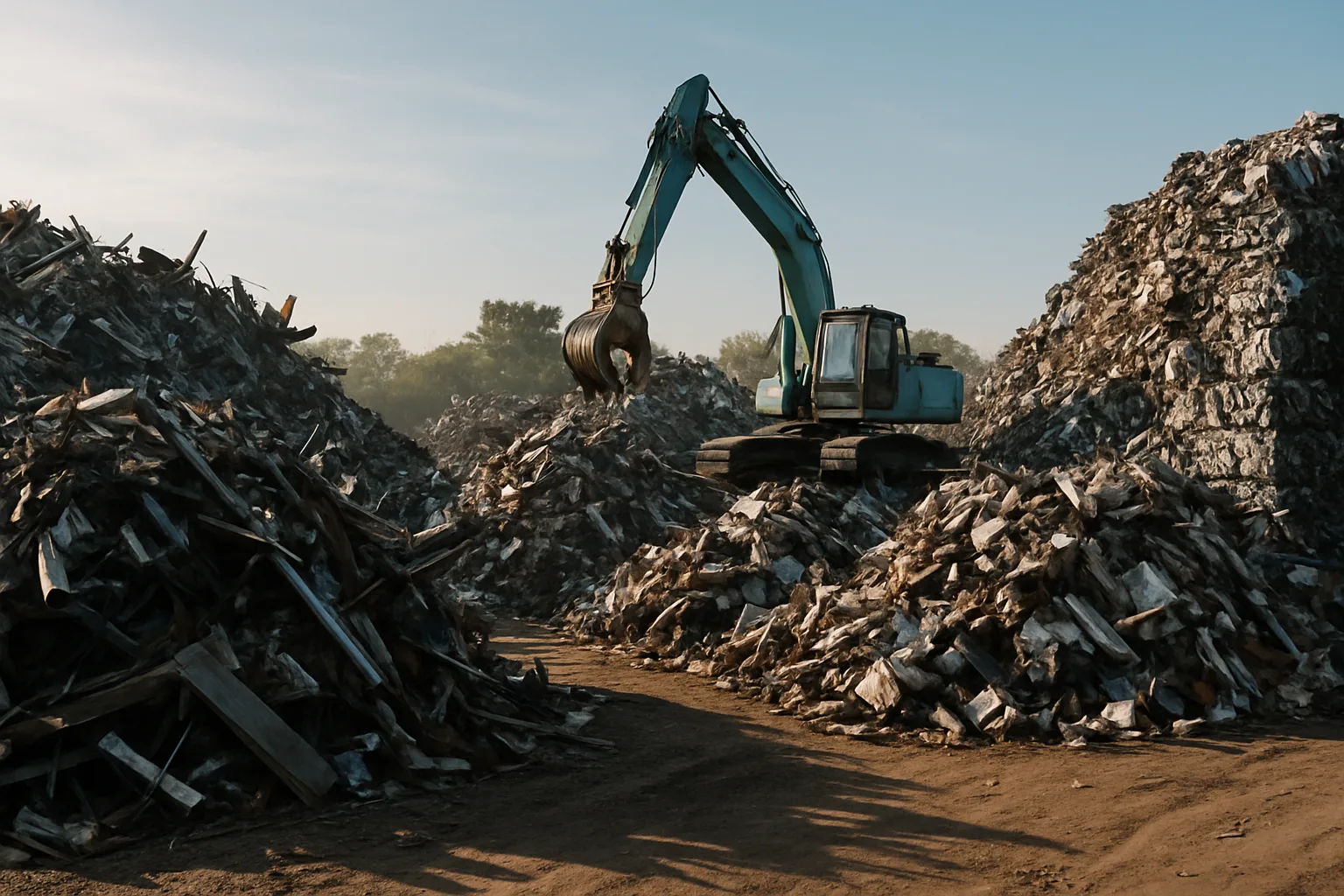
Construction Sites Are Sitting on Serious Metal — Here's What It's Worth in 2026
Most people walk past a demolition site and see rubble. Experienced scrap sellers see something different: rebar, structural steel, copper wiring, aluminum framing, and cast iron pipe — all of it recoverable, all of it sellable. If you're not tracking the steel scrap price today before you haul a load, you're leaving real money on the table.
Construction and demolition (C&D) activity across Colorado has stayed active through 2026. Infrastructure upgrades, commercial teardowns, and residential development continue to generate large volumes of mixed metals. Colorado Springs alone has seen ongoing work across its industrial corridors and aging commercial districts — which means yards in the region are processing significant C&D loads on a regular basis.
This guide breaks down what metals come out of these sites, how to value them accurately, and how platforms like SMASH give sellers a better path to competitive pricing than a single phone call ever will.
What Metals Does a Construction or Demolition Site Actually Produce?
C&D sites are among the most metal-rich sources in the scrap industry. The mix varies depending on building age, construction type, and what the structure was used for. But in general, you can expect a combination of ferrous and non-ferrous material coming off any significant teardown.
Here's what shows up most consistently:
- Structural steel: Beams, columns, and decking from commercial and industrial buildings. Heavy, bulky, and often graded by cleanliness and alloy.
- Rebar: Pulled from concrete demolition. Rebar pricing tracks closely with the steel scrap price today, and dirty or concrete-encrusted material takes a discount.
- Copper wiring and pipe: Found in electrical systems and plumbing. One of the highest-value metals on any load — copper price swings make it worth tracking daily.
- Aluminum: Window frames, curtain wall systems, HVAC components, and roofing. Aluminum price and aluminium scrap value per kg both depend heavily on alloy grade and contamination level.
- Cast iron and ductile iron: Older buildings yield a lot of this — drain lines, boiler components, radiators.
- Stainless steel: Less common but higher value. Kitchens, labs, and industrial facilities are the best sources.
- Brass and bronze: Fixtures, valves, and hardware. Small volume, strong per-pound value.
Knowing what you have before you price it matters. A load of clean structural steel prices very differently from a mixed pile of painted steel, rebar, and cast iron. Buyers pay for certainty, and sellers who document their loads carefully get better offers.
Steel Scrap Price Today: What Drives the Numbers on C&D Material
The steel scrap price today isn't a single number. It's a range that shifts based on grade, form, regional demand, and mill buying activity. For C&D sellers in Colorado Springs and across Colorado, a few factors tend to move the needle more than others.
Mill demand cycles are the biggest driver. When domestic steel mills ramp production, they need more scrap feedstock. That pulls prices up. When mills cut back — seasonally or in response to slower construction orders — scrap prices follow. In 2026, watch mill utilization rates as a leading indicator before you commit large loads to a buyer.
Grade matters more than most sellers realize. The difference between a load of clean #1 HMS (heavy melt steel) and a pile of #2 mixed ferrous can be significant per gross ton. Concrete contamination, attached hardware, and painted or coated material all push material into lower grades. A few hours sorting on-site can meaningfully change what you get paid.
Regional logistics also play a role. Yards in Colorado Springs have their own cost structures. Freight to mills, yard capacity, and local competition among buyers all shape what you see on the scale ticket. That's exactly why comparing offers across multiple buyers — rather than defaulting to one — gives you a cleaner read on what your material is actually worth.
For a real-time read on scrap metal prices today, check current scrap metal prices before you book your next load.
Scrap Metal Inventory Management on Active C&D Sites
This is where most sellers leave money behind. Hauling mixed, undocumented loads off a demolition site is the fastest way to get downgraded at the scale. Buyers discount anything they can't verify. Sloppy inventory means lower offers — every time.
Strong scrap metal inventory management starts on-site, not at the yard. That means separating metals as you strip them, labeling loads by grade, and documenting what you've got before it ever hits a trailer. For larger C&D projects, this process directly impacts your margin at the end of the job.
A practical on-site inventory process looks like this:
- Separate ferrous from non-ferrous immediately. Mixed loads lose value fast. Keep copper, aluminum, and steel in different containers from the start.
- Clean material as you go. Strip copper wire where possible. Remove fittings from aluminum. Pull rebar away from concrete chunks before loading.
- Photograph everything. Timestamped photos of sorted material give buyers confidence and reduce disputes at the yard.
- Log weights by category. Even rough estimates on-site help you validate scale tickets and catch discrepancies.
- Track lot origins. For large commercial teardowns, knowing which floor or system a load came from helps with grading and documentation.
Platforms like SMASH are built around this discipline. The inventory tools let you document loads with photos and notes before they go to auction — which means buyers bid with more confidence, and you get offers that reflect the actual quality of your material, not a worst-case guess.
Why Competitive Bidding Matters More on High-Value C&D Loads
A single phone call to one buyer is a guess, not a price. You have no idea if that number is the market — or just what that one yard wants to pay today. For small loads, the delta might be minor. For a full demolition project with mixed non-ferrous, structural steel, and copper? The difference between one offer and four competitive bids can be significant.
This is where the SMASH scrap metal auction model makes practical sense. Instead of calling one buyer, you list your load. Vetted buyers across the network see it and bid against each other. Competition can help reveal the market. More buyers means better price discovery. You see actual demand for your material — not just what one contact felt like offering that morning.
There are no subscription fees. SMASH only wins when the seller wins. That's a different model than hoping your regular buyer is having a good day when you call. To get competitive bids for your scrap metal, the process starts with listing your load and letting the market respond.
For sellers in Colorado Springs managing C&D contracts — where loads are large, grades are mixed, and margins on the project depend on metal recovery — getting the best possible price on every load isn't optional. It's how you stay profitable.
Non-Ferrous Recovery: Copper, Aluminum, and What They're Worth
Ferrous makes up the bulk of most C&D loads by weight. But non-ferrous is where the value concentrates. A relatively small volume of copper or clean aluminum can outweigh tons of structural steel in terms of dollars recovered.
Copper remains one of the most price-sensitive metals in the scrap market. Electrical infrastructure, plumbing systems, and HVAC components in older commercial buildings can yield meaningful copper volume. The copper price moves with global market dynamics — keep an eye on LME benchmarks and domestic demand trends before selling large quantities.
Aluminum from construction sources varies widely. Extruded aluminum from window systems or curtain wall tends to be cleaner than cast aluminum from mechanical systems. Aluminium scrap value per kg depends heavily on alloy and contamination. Clean, sorted aluminum gets a meaningfully different price than mixed architectural aluminum with paint, glass, or hardware attached.
Whether you're selling in Colorado Springs or anywhere across Colorado, the principle is the same: sorted, documented non-ferrous gets better offers than mixed mystery loads. Read scrap metal pricing guides to understand how each metal grade is evaluated before you commit your next load.
Turning C&D Scrap Into Real Revenue: The Seller's Checklist
If you're managing scrap recovery on an active demolition project, the difference between a mediocre outcome and a strong one usually comes down to process. Here's a practical checklist before your next load goes to a buyer:
- Know what grades you have — don't guess, sort and confirm
- Photograph loads before they leave the site
- Check the steel scrap price today and current non-ferrous benchmarks
- Don't call one buyer — get multiple offers wherever possible
- Use SMASH to list loads and let vetted buyers compete for your material
- Verify scale tickets against your on-site weight estimates
- Track sale prices by load so you build a real data baseline over time
The yards in Colorado Springs — and buyers across the broader Colorado market — are competitive. You have leverage when you show up with documented, sorted material and real pricing data. Use it.
Ready to stop guessing what your loads are worth? Find the best scrap metal prices today and take the first step toward price transparency on every load you sell.
Disclaimer: Scrap metal prices fluctuate daily based on market conditions, grade, volume, and regional demand. Always verify current rates before committing to a sale. Prices referenced in this article are directional only and not guaranteed offers.
Frequently Asked Questions
Q: What is the steel scrap price today in Colorado Springs?
Steel scrap prices change daily based on mill demand, grade, and regional buyer activity. There is no single fixed number — #1 HMS, #2 HMS, rebar, and shredded steel all price differently. Check with local yards in Colorado Springs and compare against national benchmarks before selling. Using a platform like SMASH gives you multiple offers so you can see where the real market sits.
Q: What metals from a demolition site are worth the most?
Copper consistently delivers the highest value per pound, followed by clean aluminum, brass, and stainless steel. Structural steel and rebar generate significant volume but at lower per-pound rates. Sorting your material on-site and separating high-value non-ferrous from bulk ferrous is the most effective way to maximize total recovery value.
Q: How do I get the best scrap metal prices today on a mixed C&D load?
Sort your load by grade and metal type before it goes to a buyer. Document with photos and weight estimates. Then get multiple bids rather than accepting the first offer — competition between buyers is the most reliable way to improve price discovery. SMASH facilitates exactly that process with its vetted buyer network and auction format.
Q: Does concrete contamination on rebar affect the scrap metal price?
Yes, significantly. Concrete-encrusted rebar gets graded down at most yards because it adds non-metal weight and processing cost. Clean rebar prices at a higher rate. If you have the capacity to knock concrete off rebar on-site, it almost always pays off in a better scale ticket price.
Q: Is scrap metal inventory management worth the extra effort on small loads?
For very small loads, the time investment might not pencil out. But on any significant C&D project — where you're pulling multiple grades of ferrous and non-ferrous over several days or weeks — documented, sorted inventory directly affects what buyers offer. The yards paying the best scrap metal prices consistently reward sellers who show up prepared.
Stay current on scrap metal market trends and industry insights by following SMASH on LinkedIn — practical updates for sellers who want to stay ahead of the market.