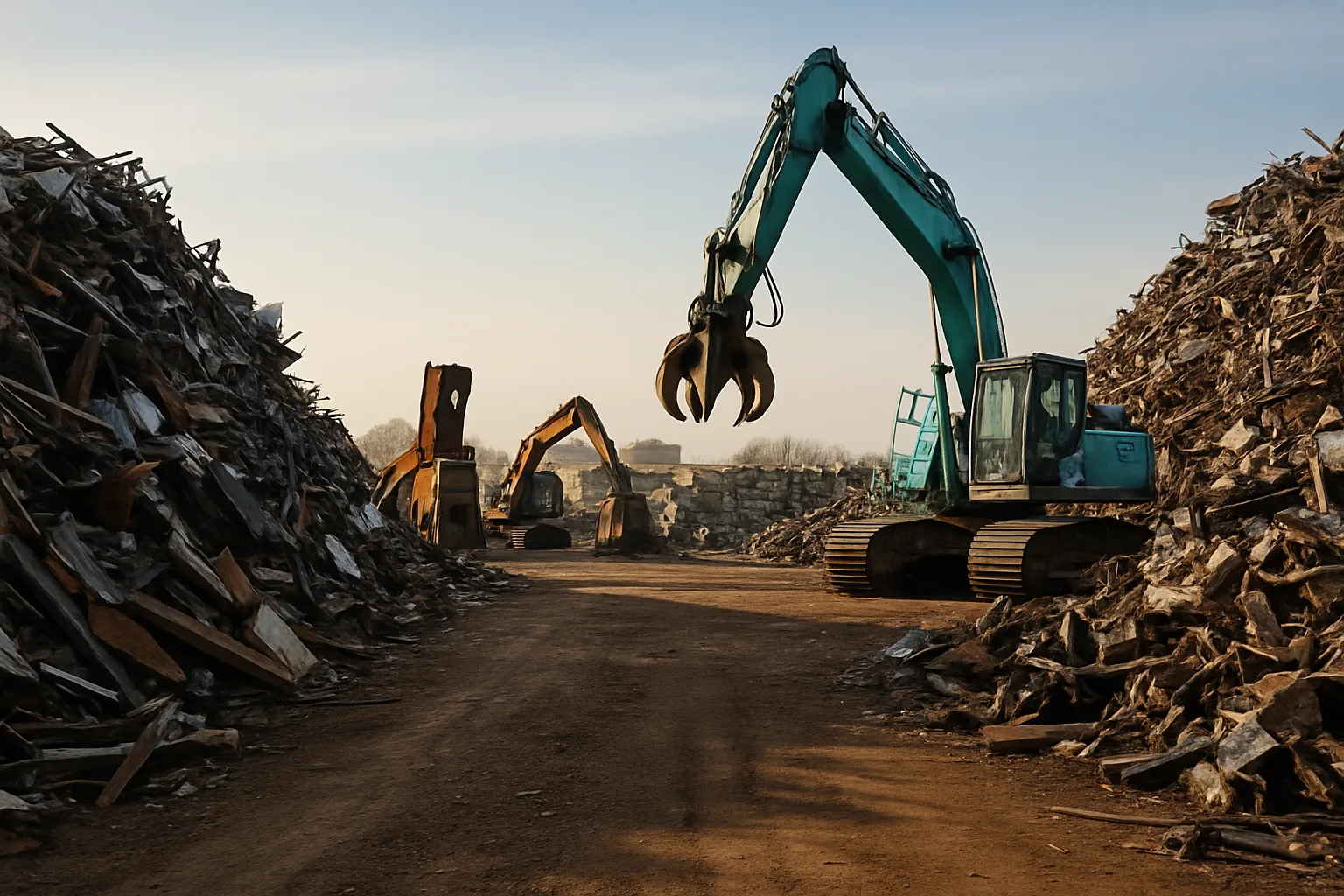
Construction Sites Are Sitting on a Metal Goldmine — Are You Collecting It?
Every demolition swing and every new build leaves something behind. Rebar, copper wiring, aluminum framing, structural steel — construction and demolition sites generate more recoverable scrap metal than almost any other source in North America. Yet a huge chunk of that material gets buried in dumpsters, hauled to landfills, or sold off to the first buyer who shows up with a truck. That's money left on the table, every single time.
If you're running a recycling yard near a major construction corridor — or you're a contractor trying to figure out what your leftover material is actually worth — this is the breakdown you need. We'll cover what C&D sites produce, how to price it right, and how a B2B scrap metal marketplace can close the gap between what you're getting and what the market will actually pay.
Want to skip ahead and find the best scrap metal prices today? The data is there. But read this first — context matters when you're pricing loads off a demo site.
What Construction and Demolition Sites Actually Produce
Not all C&D scrap is created equal. A commercial teardown in downtown Joliet looks nothing like a residential renovation in the suburbs. The material mix changes depending on building age, construction type, and how carefully the site crew separates as they go. Knowing what you're looking at before you bid on a load — or haul one — saves time and protects your margins.
Here's what shows up most consistently across C&D sites in Illinois and across the wider Midwest:
- Structural steel and I-beams — Heavy, bulky, and usually straightforward to price. Most goes as #1 or #2 HMS (heavy melt steel). Volume is the play here.
- Rebar — Pulled from concrete slabs and foundations. Usually grades as #1 or #2 steel depending on contamination. Watch for concrete still attached — it kills your weight ticket.
- Copper wire and pipe — The most valuable material on most sites. Older commercial buildings especially carry serious copper content in wiring, HVAC lines, and plumbing. Bare bright, #1 copper, and #2 copper all price differently — significantly differently.
- Aluminum framing, windows, and siding — Common on commercial and industrial teardowns. Clean aluminum prices well. Mixed or painted material moves at a discount.
- Cast iron and ductile iron — Pipes, fittings, radiators in older structures. Heavier than it looks. Worth separating from steel.
- Stainless steel — Shows up in commercial kitchens, food processing plants, and industrial builds. Always worth segregating — it trades at a premium over carbon steel.
- HVAC and mechanical equipment — Condensers, coils, motors, and ductwork contain a mix of copper, aluminum, and steel. Whole units, compressors, and electric motors each price differently.
The common thread? Separation is value. A yard or contractor who takes the time to sort copper from steel, and aluminum from mixed debris, walks away with significantly more per ton than someone dumping it all in one bin. That principle holds whether you're processing loads in Joliet or anywhere else in Illinois.
Why C&D Scrap Pricing Is More Complicated Than It Looks
Scrap metal prices shift constantly. Copper, aluminum, and steel all respond to global demand, energy costs, tariff changes, and domestic production cycles. In mid-2026, steel markets are navigating ongoing pressure from North American manufacturing demand while non-ferrous metals like copper remain sensitive to infrastructure spending and energy transition buildout. None of that is predictable on a week-to-week basis.
For C&D scrap specifically, pricing complexity goes even deeper. You're often dealing with mixed grades, contaminated material, and inconsistent volumes. A single demo project might generate twenty tons of HMS steel and a few hundred pounds of insulated copper wire. Those two materials require different buyers, different logistics, and different conversations. If you're calling one buyer for all of it, you're almost certainly leaving money behind on at least one of those grades.
This is where the old single-buyer model breaks down fast. One phone call, one offer, one price — with no way to know if that number reflects the actual market. The better move is to check current scrap metal prices before you negotiate anything, so you walk in with real data rather than a gut feeling.
Disclaimer: Scrap metal prices fluctuate daily based on market conditions. Always verify current rates before buying or selling any load.
How Illinois Construction Activity Drives Regional Scrap Supply
Illinois is one of the most active construction states in the Midwest. Chicago's ongoing infrastructure work, suburban commercial development, and industrial corridor activity across Will County — which includes Joliet — all generate consistent scrap metal flow throughout the year. Joliet in particular sits at a major logistics intersection, with rail access and highway infrastructure that makes it a natural hub for scrap movement.
Will County has seen steady growth in both residential and light industrial construction over the past several years. That volume means recycling yards in and around Joliet are regularly processing C&D-sourced material. For sellers, that's a competitive market — multiple buyers, active demand, and enough volume that price discovery actually functions. For buyers, it means supply is there if you're positioned to access it efficiently.
The challenge for contractors and demo crews is that they often don't have a consistent channel to the best buyers. They sell to whoever's nearby, whoever answers the phone, or whoever they've always used. That habit costs money — especially on larger loads where even a small per-pound difference adds up fast across tons of copper or aluminum. Illinois sellers who want to do better need a more systematic approach to how they bring loads to market.
Why a B2B Scrap Metal Marketplace Changes the Math for C&D Loads
Here's the fundamental problem with C&D scrap sales: they're inconsistent in volume, variable in grade mix, and often time-pressured by project timelines. That combination puts sellers at a disadvantage when dealing with single buyers. The buyer knows you need to move the material. You don't always know what it's worth to the full market.
A B2B scrap metal marketplace like SMASH flips that dynamic. Instead of one phone call to one buyer, your load goes in front of multiple vetted buyers simultaneously. Competition for your material creates real price discovery. You stop guessing and start seeing what the market will actually pay.
SMASH is built specifically for this kind of structured, documented sale. Photo documentation, serial tracking, inventory tools, and VIN lookup for any vehicles in the mix — all of it reduces friction and builds buyer confidence. More confidence means stronger bids. Auto-invoicing handles the paperwork after the auction closes. No subscription fees means the model only works when you do. smashscrap.com has the full breakdown on how it works for sellers.
For yards processing C&D loads in Joliet and across Illinois, the platform gives you reach beyond your local buyer network. And for contractors looking to sell directly rather than through a middleman, it's access to buyers you'd never have called on your own.
How to Maximize What You Get From a C&D Load
Before you list or sell anything, do the work on your end. The more organized your load, the better your result — on any platform, with any buyer.
- Sort before you sell. Separate copper grades, pull aluminum from steel, isolate stainless. Mixed loads price at the lowest common denominator.
- Document what you have. Photos of the material, estimated weights by category, and any equipment details help buyers bid with confidence. Vague listings get low bids.
- Know your grades. Bare bright copper is not the same as #2 copper wire. Clean aluminum is not the same as breakage. Learn the grade names buyers use — it's the language of the trade.
- Time your sales when possible. C&D projects sometimes give you lead time. If you know a demo is coming, watch the market trend on copper and steel. You won't always have flexibility, but when you do, it matters.
- Use market data before you negotiate. You can read scrap metal pricing guides to understand the benchmarks before any conversation with a buyer. Walking in informed is always better than walking in blind.
None of this is complicated. It's just discipline. Yards and contractors who treat C&D scrap like a real commodity — not an afterthought — consistently outperform those who don't.
Weekly Market Snapshot: What's Moving This Week
For the week of June 7, 2026, C&D-sourced scrap categories are seeing steady activity across the Illinois market. Steel demand from domestic mills remains solid heading into summer construction season, which keeps HMS prices relatively stable. Non-ferrous interest — particularly on copper and aluminum — is being watched closely as infrastructure project activity in the Midwest sustains demand from regional buyers.
If you're sitting on a mixed C&D load right now, the market is active. That doesn't mean every load sells fast or at peak price — it means buyers are engaged and competition is real. That's exactly the environment where an auction-format platform delivers the most value. When buyers are competing, sellers win.
The bottom line this week: don't rush a sale without checking the market. The difference between a strong week and a slow one can be meaningful per ton — especially on copper. If you have a load ready to move in Joliet or anywhere in Illinois, put it in front of multiple buyers before you accept a number from just one. You can get the best scrap metal prices by using every tool available — best-scrap-metal-prices.com and platforms like SMASH give you the data and the competition to make that happen.
Frequently Asked Questions
Q: What types of scrap metal are most valuable from a construction or demolition site?
Copper is consistently the highest-value material — bare bright and #1 copper especially. Clean aluminum and stainless steel also price well above carbon steel. Structural steel and rebar generate the most volume but usually at lower per-pound rates. Sorting by grade before you sell will always improve your outcome.
Q: How does a B2B scrap metal marketplace work for selling C&D loads?
A B2B scrap metal marketplace connects sellers directly with multiple vetted buyers through a competitive auction format. You document your load, list it on the platform, and buyers bid. Competition drives better price discovery than a single-buyer negotiation. SMASH handles documentation, buyer vetting, and auto-invoicing — no subscription fees required.
Q: Where can I sell scrap metal in Joliet, Illinois?
Joliet has local yard options, but your best price often comes from reaching buyers beyond your immediate area. Platforms like SMASH let you sell scrap metal in Joliet by connecting you with vetted buyers across North America — not just whoever's closest. More buyers means more competition for your load.
Q: How often do scrap metal prices change?
Scrap metal prices can change daily, driven by commodity markets, energy costs, global demand shifts, and domestic mill activity. Copper and aluminum are especially volatile. Always check current rates before committing to a price — what was accurate last week may not reflect today's market.
Q: Does it matter how I separate my C&D scrap before selling?
Yes — significantly. Mixed loads price at the lowest grade in the mix. A load that's mostly #1 copper but contains insulated wire will price like insulated wire if it's not sorted. Taking the time to separate grades, pull out contaminants, and document what you have gives buyers the confidence to bid higher. Clean, documented loads outperform mixed, vague ones every time.
Stay sharp on market moves — follow SMASH on LinkedIn for weekly scrap metal market insights and industry updates: linkedin.com/company/scrap-metal-auction-sales-hub.
```