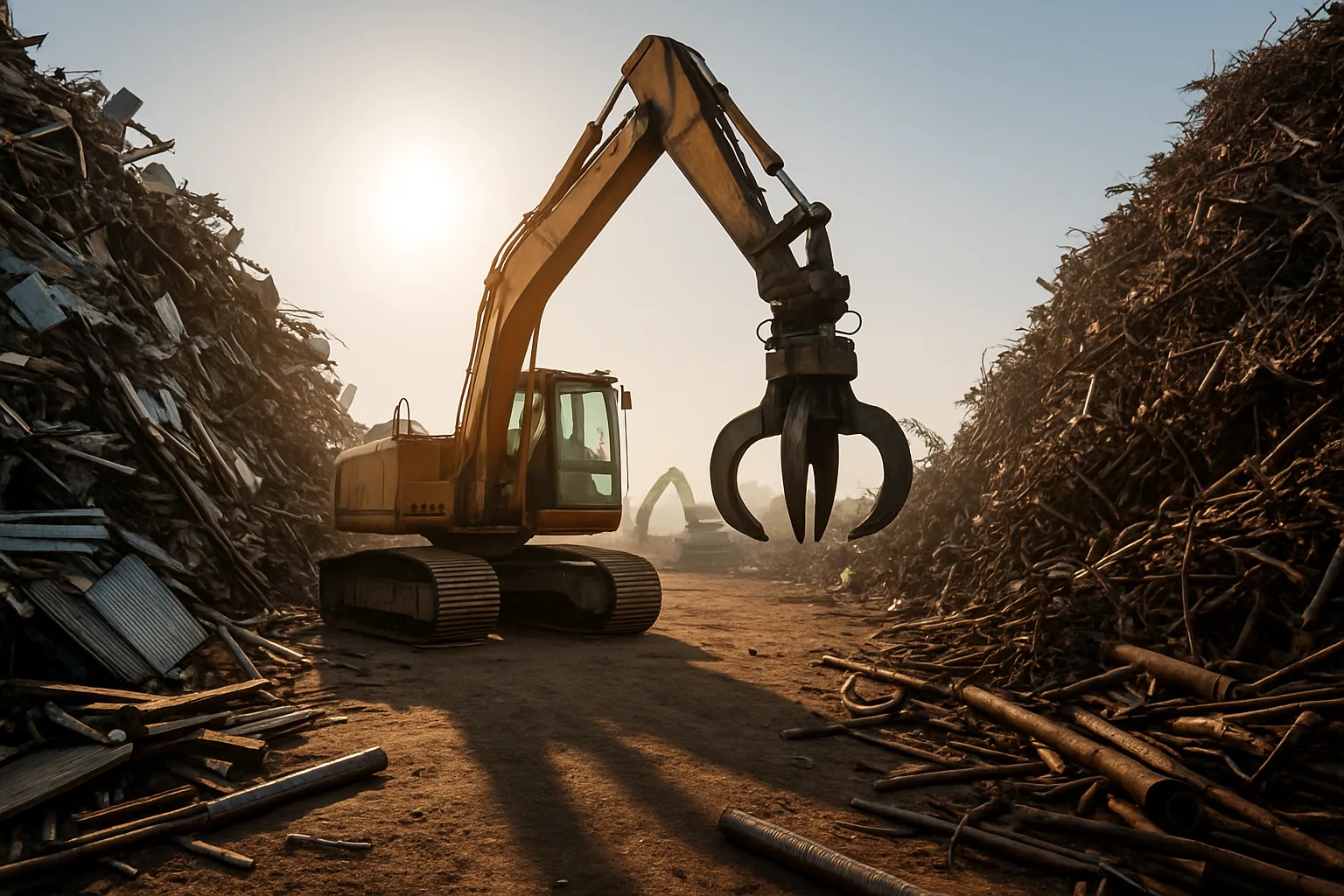
Most sellers treat a pile of scrap like it's all the same. It isn't. Steel and iron look similar, weigh heavy, and both get hauled to the yard — but the price gap between them can catch you off guard if you don't know what you're looking at.
Understanding that gap is one of the fastest ways to stop leaving money on the table. Scrap metal prices today reflect real differences in how these materials are processed, what mills need, and how much demand exists at any given moment. If you're hauling mixed loads and guessing at value, you're flying blind.
This article breaks down exactly why steel and iron scrap price differently, what that means for your bottom line, and how sellers in Worcester and across Massachusetts are using smarter tools to get better returns on every load.
Steel vs. Iron Scrap: Why the Price Gap Exists
The short answer: they're fundamentally different materials with different end markets. Cast iron — think engine blocks, radiators, old pipe — has a higher carbon content and different melting characteristics than steel. Steel is more uniform, more recyclable in a wider range of applications, and generally more in demand by electric arc furnace (EAF) mills.
That demand difference drives price. Steel scrap, particularly clean grades like #1 heavy melt or shredded steel, commands a premium over cast iron at most yards. Iron is still valuable, but it typically trades at a discount because it requires more processing, and the pool of buyers who specifically want cast grades is narrower.
Here's what actually drives the spread:
- Carbon content: Cast iron has 2–4% carbon. Steel sits below 2%. Mills that run EAFs need tightly controlled chemistry — too much carbon contaminates a heat.
- Melt behavior: Cast iron is brittle and doesn't shred cleanly. That means more prep work, which costs the yard money before your material even hits the furnace.
- End market demand: Steel scrap feeds far more mill types than cast iron does. More buyers mean more competition. More competition generally means better price discovery.
- Grade sorting: Steel has dozens of recognized grades (#1 HMS, #2 HMS, shredded, busheling, etc.). Iron grades are narrower. More defined grades = easier transactions = stronger pricing.
When you see scrap metal prices today, the spread between iron and steel is often $20–$60 per ton or more depending on regional demand and mill activity. That number moves, sometimes fast. Knowing which side of that spread your material lands on changes your haul math entirely.
How to Tell Steel from Iron at the Yard — and Why It Matters for Scrap Metal Prices Today
Misidentifying your material is expensive. If you pull up to a yard in Worcester with a mixed load and call it all "steel," you might get sorted down by the buyer — or worse, priced at the lower iron rate across the board because separation work shifts to them.
A few practical ways to tell the difference:
- The spark test: Grind a small section. Steel produces long, bright, forked sparks. Cast iron throws short, dull, orange sparks with minimal branching. This is a real field test yards use.
- The break test: Cast iron fractures cleanly and shows a grey crystalline surface. Steel bends before it breaks.
- Weight and thickness: Cast iron items — like engine blocks, manhole covers, old radiators — are heavy for their size and thick-walled. Steel structural pieces are more uniform in section.
- Magnetism: Both are magnetic, so this doesn't separate them. Don't rely on a magnet to sort iron from steel.
- Application clues: Cast iron was used heavily in pre-1970s plumbing, engine blocks, cookware, and machine bases. If it came out of an old industrial building in Massachusetts, there's a reasonable chance it's cast.
Pre-sorting your loads before you arrive saves you time and positions you to negotiate a better price. Yards pay better for clean, sorted material because their processing cost drops. That savings has to come from somewhere — and when you do the work, you're the one who captures it.
Regional Pricing Dynamics: What Worcester Sellers Need to Know
Scrap metal recycling in Massachusetts runs through a well-established network of regional yards, but pricing varies more than most sellers expect. Worcester sits in a strong position geographically — central Massachusetts gives you access to yards pulling from Boston metro demand, as well as mills and processors further west. But that geographic advantage only pays off if you're actually comparing prices across buyers.
A lot of sellers in the Worcester area still operate the old way: one buyer, one phone call, one price. That price might be fair. It might not be. Without comparison, you can't know.
Steel scrap prices in Massachusetts tend to track national HMS (heavy melt steel) index pricing, but regional mill demand, logistics costs, and inventory levels at local yards all create variation. Cast iron can swing wider because buyer pools are thinner. When demand from foundries drops — as it does cyclically — iron prices follow quickly and sometimes sharply.
Staying current on scrap metal near me prices isn't just about knowing today's number. It's about understanding the direction things are moving so you can time larger loads when it makes sense. To check current scrap metal prices before you load a truck, you're making a business decision — not just running an errand.
How a Scrap Metal Auction Platform Changes the Price Equation
Here's the problem with the single-buyer model: you're pricing your load based on one person's opinion of what your material is worth today. That's not a market. That's a conversation.
A scrap metal auction platform creates an actual market. Multiple vetted buyers compete for your load. That competition is what produces real price discovery — and on steel and iron scrap where grades matter, documentation matters. Buyers who understand material quality will bid aggressively for well-documented, sorted loads.
SMASH — the SMASH scrap metal auction marketplace — is built exactly for this. Sellers list inventory with photos, weight documentation, and material details. Vetted buyers across North America see your load and bid. The price that comes out of that process reflects actual market demand, not one buyer's margin target.
For steel vs. iron separation specifically, the documentation tools matter. When you can show a buyer your load is clean #1 HMS with zero cast contamination, you're selling a premium product — and premium products command premium bids. SMASH's inventory tools, including photo documentation and detailed grade fields, give buyers the confidence to bid higher because they know what they're getting.
No subscription fees. SMASH only wins when you win. That alignment matters — it means the platform is motivated to get you the best result on every single load, not just extract a monthly fee regardless of outcome.
Aluminium Scrap Value and Mixed Non-Ferrous Loads: Don't Leave Grade Money Behind
While steel and iron dominate most loads by weight, non-ferrous material in the same haul often represents a disproportionate share of total value. Aluminium scrap value per pound runs significantly higher than steel or iron on a weight basis — and it's easy to bundle it into a ferrous load without realizing what you're leaving behind.
Mixed loads that contain aluminum castings, copper fittings, or brass components should always be sorted out before pricing the ferrous portion. Yards that buy bulk mixed loads will price to the lowest common denominator. The value of the non-ferrous material gets absorbed into the yard's margin, not yours.
If you're pulling an old industrial machine in Worcester — motors, cast iron frame, aluminum housing, copper windings — that's four or five different material streams, each with its own price point. Treating it as one load shortchanges you on most of them.
If you want to go deeper on pricing strategy across material types, read scrap metal pricing guides that break down what each grade is worth and when to separate vs. bundle.
Building a Smarter Selling Habit: Documentation, Timing, and Buyer Competition
The sellers who consistently get strong returns on their scrap share three habits. None of them require special equipment or market expertise. They just require consistency.
1. Document before you haul. Photos of the load, notes on material type, estimated weight. This takes ten minutes and changes how buyers see your material. A documented load with clear photos signals a seller who knows their material — and buyers pay for that certainty.
2. Know the direction of prices, not just today's number. Steel scrap prices track closely with manufacturing demand and mill utilization rates. When mills are running hot, scrap demand rises and prices follow. When they idle, prices drop fast. Selling into rising markets — even by a week or two — can meaningfully change your per-ton return.
3. Create buyer competition whenever possible. This is the single biggest lever most sellers aren't pulling. One call, one price is a habit. Breaking that habit — using a platform like SMASH or at minimum calling three buyers instead of one — puts market forces to work for you instead of against you.
If you want to find the best scrap metal prices today, the answer isn't just checking a number. It's building a process that consistently routes your material to the buyer who values it most.
Prices fluctuate based on market conditions, regional demand, and material grade. Always verify current rates before committing to a sale.
Whether you're running loads out of Worcester, working the broader Massachusetts market, or hauling across state lines — the fundamentals don't change. Know your material. Document it well. Let buyers compete. That's how you stop guessing and start pricing.
Ready to get stronger returns on your next load? Check what your material is worth and start the process at best-scrap-metal-prices.com.
Frequently Asked Questions
Q: Why does cast iron scrap sell for less than steel scrap?
Cast iron has higher carbon content and different melt characteristics that limit which mills can use it. That narrows the buyer pool, reduces competition, and typically produces a lower price per ton compared to clean steel grades like #1 heavy melt. More buyers bidding on your material almost always means better price discovery.
Q: What are scrap metal prices today for steel and iron in Worcester, Massachusetts?
Prices change daily based on mill demand, regional inventory, and national index movements. The best approach is to check current rates directly — prices vary by yard and by grade, so getting multiple quotes before you haul is always worth the time. Use a platform or pricing tool to compare what buyers in the Worcester area are actually offering.
Q: How do I find the best scrap metal prices near me in Worcester?
Start by identifying your material grade accurately — sorted, clean steel gets a better price than mixed ferrous loads. Then compare at least two or three buyers before committing. Auction platforms like SMASH let multiple vetted buyers compete for your load, which tends to produce stronger results than a single-buyer phone call.
Q: Does it matter if I separate steel from iron before going to the yard?
Yes, significantly. Yards that receive mixed ferrous loads often price down to the lower-value material to account for sorting costs. Pre-separating cast iron from steel — and pulling out any non-ferrous material like aluminum or copper — means each stream gets priced on its own merits. That separation work directly translates to more money in your pocket.
Q: Is SMASH available for scrap sellers in Massachusetts?
Yes. SMASH serves yards and sellers across North America, including Massachusetts. Sellers list their inventory with documentation and photos, and vetted buyers compete through the auction format. There are no subscription fees — SMASH takes a cut only when a sale completes, so the incentive is fully aligned with getting you the best possible price on your load.
Follow SMASH on LinkedIn for ongoing scrap metal market insights, pricing trends, and industry updates: linkedin.com/company/scrap-metal-auction-sales-hub.
```