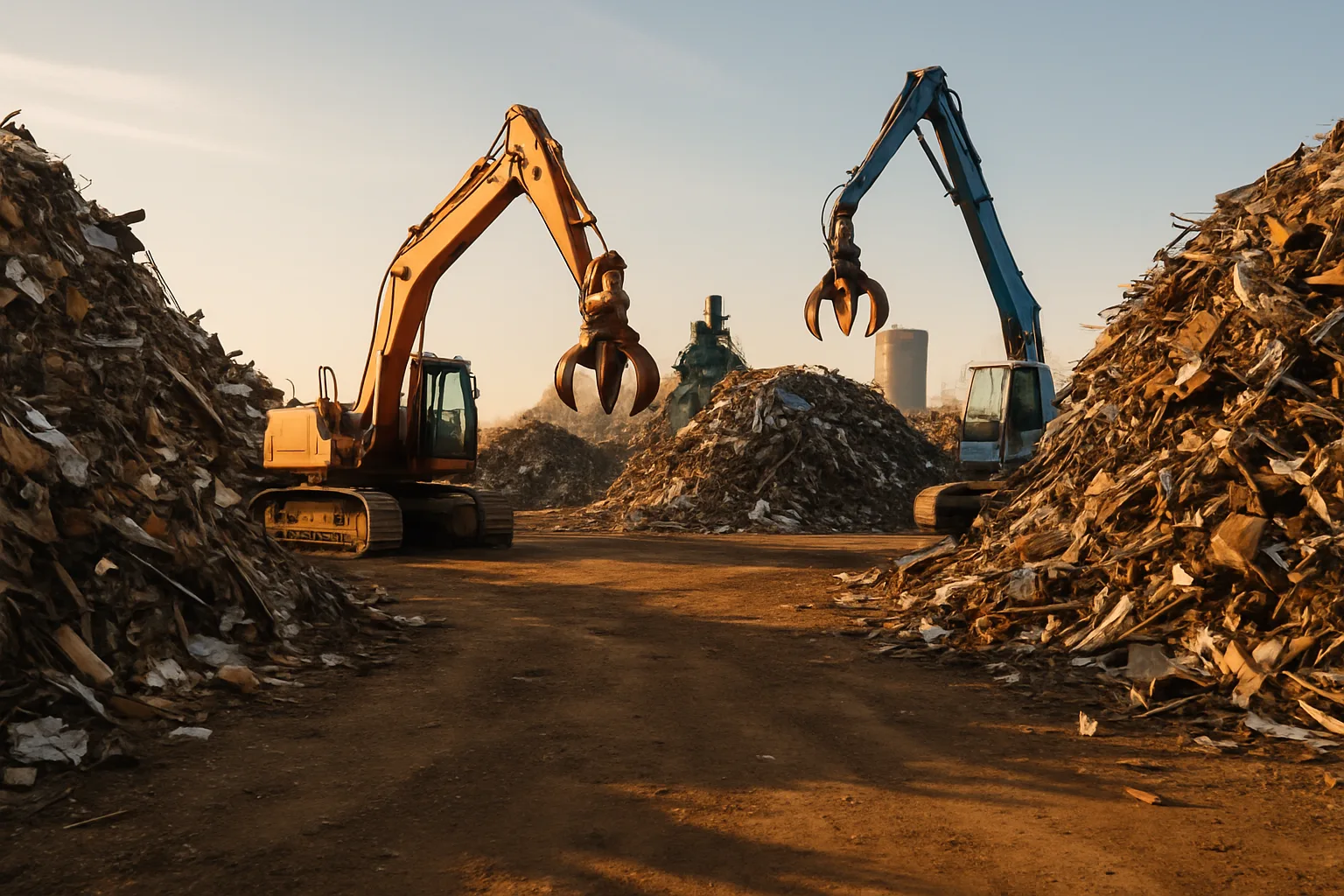
Scrap metal prices move every single day — and if you're hauling loads in Jacksonville without checking the market first, you're leaving money on the table. Copper swings. Aluminum fluctuates. Steel follows global demand signals that change overnight. Understanding what drives those daily price shifts isn't optional anymore. It's the difference between a profitable load and a frustrating one.
This guide breaks down how daily scrap metal price fluctuations actually work, what moves the needle on copper, aluminum, and steel, and how Jacksonville sellers can position themselves to consistently capture better value. Whether you're clearing out a garage or moving commercial tonnage, the same market forces apply to you.
Why Scrap Metal Prices Change Every Day
Scrap metal is a commodity. That means its price ties directly to global markets, futures trading, supply chain conditions, and raw demand from mills and smelters. When a major steel mill in the Midwest ramps up production, scrap steel demand rises and prices follow. When Chinese aluminum demand softens overnight, you feel it at your local yard the next morning.
These aren't random swings. They're the result of interconnected factors that traders and large recyclers track constantly. For the average seller in Jacksonville, the practical takeaway is simple: the price your yard quotes you today may not be the price they quote tomorrow. Timing and preparation matter.
Key drivers of daily price movement include:
- LME (London Metal Exchange) and COMEX futures — copper and aluminum spot prices anchor to these global benchmarks daily
- Domestic mill demand — U.S. steel mills buying ferrous scrap on monthly or spot basis
- Fuel and freight costs — when diesel spikes, yard margins tighten and offered prices can drop
- Currency exchange rates — a stronger USD makes U.S. scrap more expensive for foreign buyers, softening export demand
- Seasonal demand cycles — construction activity in spring and summer typically lifts steel and copper demand in the Southeast
- Tariffs and trade policy — current 2026 trade conditions continue to affect non-ferrous flows and pricing structures across North America
Jacksonville sits at a logistics crossroads in Florida. Port access, regional construction activity, and a dense network of recycling operations mean local scrap prices track closely with national trends — but local supply conditions can push them in either direction on any given day.
Copper, Aluminum, and Steel: How Each Metal Behaves Differently
Not all metals move the same way. Understanding how copper, aluminum, and steel each respond to market conditions helps you decide when to sell and when to hold — if holding is an option.
Copper is the most volatile of the three. It's widely used as an economic indicator, sometimes called "Dr. Copper" because its price direction often signals where manufacturing activity is headed. Copper price swings of several cents per pound in a single day are not unusual. For sellers with significant copper inventory — wire, pipe, sheet — timing your sale around price peaks can meaningfully improve your return.
Aluminum scrap value per pound tends to be more stable than copper but still moves with LME aluminum spot pricing. In 2026, aluminum remains in strong demand from automotive and packaging sectors. Aluminum scrap value can shift based on alloy grade, contamination level, and whether you're selling to a domestic smelter or an export buyer. Clean cast aluminum typically commands a premium over mixed or painted material. Understanding the difference between gross weight and clean yield is where sellers either make or lose money on aluminum loads.
Steel and ferrous scrap move on a different timeline. Domestic steel mills typically set their buy prices monthly, though spot adjustments happen. HMS (Heavy Melting Steel), shredded scrap, and busheling all carry different values. Florida yards serving regional mini-mills see price movement tied more closely to mill buy schedules than to day-to-day LME data.
The Jacksonville Market: Local Conditions That Affect Your Price
Jacksonville is one of Florida's largest industrial and logistics hubs. That matters for scrap sellers. More yard competition generally means better price discovery — but only if you're actually shopping your load rather than defaulting to the nearest facility.
Local factors that influence your realized price in Jacksonville include:
- Yard capacity and current inventory — a yard that's full on a specific grade may lower their buy price to slow intake
- Regional construction and demolition activity — active job sites generate copper, aluminum, and steel scrap that floods the local market temporarily
- Port-driven export activity — Jacksonville's port position means some material moves for export, which can support non-ferrous pricing when domestic demand softens
- Seasonal weather patterns — hurricane prep and post-storm cleanup in Florida can create sudden scrap supply spikes that pressure prices short-term
Using Jacksonville scrap metal services that actively track local yard pricing gives you a real advantage. Instead of calling one yard and accepting whatever they offer, you can walk in knowing where the market actually sits today.
To find the best scrap metal prices today, you need current data — not last week's rate, not a generic national average. Jacksonville's local pricing can diverge from national benchmarks, and that gap is where informed sellers make more money.
Scrap Metal Inventory Management: Stop Guessing, Start Documenting
One of the most overlooked ways to improve your scrap revenue has nothing to do with timing the market. It's about how you present your material. Buyers pay more for loads they trust. Trust comes from documentation.
Proper scrap metal inventory management means knowing exactly what you have before you approach a buyer — weights, grades, photos, and if applicable, VINs or serial numbers. A load listed as "mixed non-ferrous" leaves buyers guessing. A load documented as "clean bare bright copper wire, 450 lbs, photo verified" gives buyers confidence to bid higher.
This is exactly where platforms like SMASH Scrap — where verified buyers bid on your metal change the equation. SMASH's inventory tools let sellers document material properly before it goes to market — photos, weights, grade classifications, even VIN lookups for cores and auto parts. When buyers can see what they're buying, they bid more aggressively. That's not marketing spin. That's basic auction economics.
For yards managing larger volumes, scrap metal inventory management also means:
- Separating grades before weigh-in to avoid blended pricing
- Documenting weights with certified scales and maintaining records
- Tracking material origin for BOL and packing list accuracy
- Photographing loads before they leave your facility
Whether you're selling one load or running a recycling operation, clean documentation pays off at the scale.
Why a B2B Scrap Metal Marketplace Beats the Single-Buyer Approach
Here's the old way: call one buyer, get one number, take it or leave it. You have no idea if that number reflects today's actual market. You have no leverage. You have no comparison point.
That's not a negotiation. That's a guessing game where the buyer holds all the information.
A B2B scrap metal marketplace flips that dynamic. When multiple vetted buyers compete for your load, you see where the market actually sits. Not where one buyer wants you to think it sits — where it actually is. Competition can help reveal the market. More buyers means better price discovery. That's not a slogan. That's how auctions work.
SMASH operates as exactly this kind of platform. Sellers list their material with documentation. Vetted buyers place bids. The auction format creates real competition, and the result is a transparent sale price driven by the market — not by whoever answers the phone first. No subscription fees. SMASH only wins when the seller wins.
For Jacksonville sellers who are tired of taking the first number they hear, this model makes immediate practical sense. You can check current scrap metal prices and then bring your documented load to a marketplace where buyers actually compete for it. That combination — market awareness plus competitive buying — is how serious sellers consistently outperform the single-call approach.
To go deeper on market dynamics before your next sale, read scrap metal pricing guides that break down conditions by metal type and region.
Practical Tips for Capturing the Best Scrap Metal Prices in Jacksonville
You don't need to watch commodity futures all day to improve your scrap returns. A few practical habits make a significant difference over time.
- Check prices before you haul. Prices change daily. Know what copper, aluminum, and steel are fetching this morning before you load the truck.
- Sort your material. Mixed loads get mixed pricing. Separated grades get grade-specific pricing. Always.
- Document everything. Photos, weights, grades. The more a buyer knows, the more confident they are, and confident buyers bid higher.
- Don't default to one buyer. Jacksonville has enough yard and buyer activity that shopping your load — or listing it on a competitive platform — almost always pays off on meaningful volumes.
- Watch for seasonal windows. Construction season in Florida generates competing scrap supply. Timing your sale outside peak supply periods can support better pricing.
- Understand your grade. Aluminium scrap value varies significantly between clean cast, MLC, painted extrusions, and mixed material. Know what you have before someone else classifies it for you.
None of these steps are complicated. But most one-time or occasional sellers skip most of them — and leave real money behind as a result. Jacksonville's scrap market rewards preparation. Show up with a documented, sorted load and knowledge of today's market, and you're already ahead of the majority of sellers walking through the gate.
When you're ready to move material, the smartest move is to start with current data and a competitive selling platform. Check rates at best-scrap-metal-prices.com and get your load in front of buyers who are actually competing for it — not just waiting for you to accept their number.
Frequently Asked Questions
Q: Why do scrap metal prices in Jacksonville change so frequently?
Scrap metal prices tie directly to global commodity markets, domestic mill demand, and local supply conditions. LME copper and aluminum spot prices update daily, and domestic steel buy prices shift monthly with spot adjustments in between. Jacksonville's port activity and regional construction cycles also create local supply-demand shifts that affect what yards pay on any given day.
Q: What is aluminum scrap value per pound in Jacksonville right now?
Aluminum scrap value per pound varies by grade, cleanliness, and daily market conditions. Clean cast aluminum, bare wire, and clean extrusions each carry different per-pound values. Because LME aluminum pricing shifts daily, always check current rates before hauling. Use best-scrap-metal-prices.com for current Jacksonville-area pricing data rather than relying on rates from last week.
Q: How do I get the best scrap metal prices in Jacksonville?
Sort your material by grade before you go. Document your load with photos and weights. Check today's market prices before you haul. And don't accept the first number from a single buyer — use a competitive platform like SMASH where vetted buyers bid on your material, giving you actual market-driven pricing instead of a single take-it-or-leave-it offer.
Q: Does copper price vary between yards in Jacksonville?
Yes. Yards set their own buy prices, and those prices can vary meaningfully on the same day for the same grade of copper. Some yards pay closer to spot because they have strong buyer relationships or export access. Others pay less and keep a wider margin. Shopping your copper load — or listing it competitively — is the only way to know you're getting a fair market price.
Q: What is a B2B scrap metal marketplace and how does it help Florida sellers?
A B2B scrap metal marketplace connects sellers with multiple vetted industrial buyers in a competitive auction format. Instead of calling one yard and accepting their number, sellers list their documented loads and buyers compete with bids. For Florida sellers with significant volume, this model creates genuine price discovery and often results in better realized prices than the traditional single-buyer approach.
Disclaimer: Scrap metal prices fluctuate daily based on global commodity markets, local supply and demand, and individual yard policies. All prices referenced in this article are general in nature. Always check current rates before selling.
Follow SMASH on LinkedIn for ongoing scrap metal market insights and industry updates from the front lines of the recycling business.