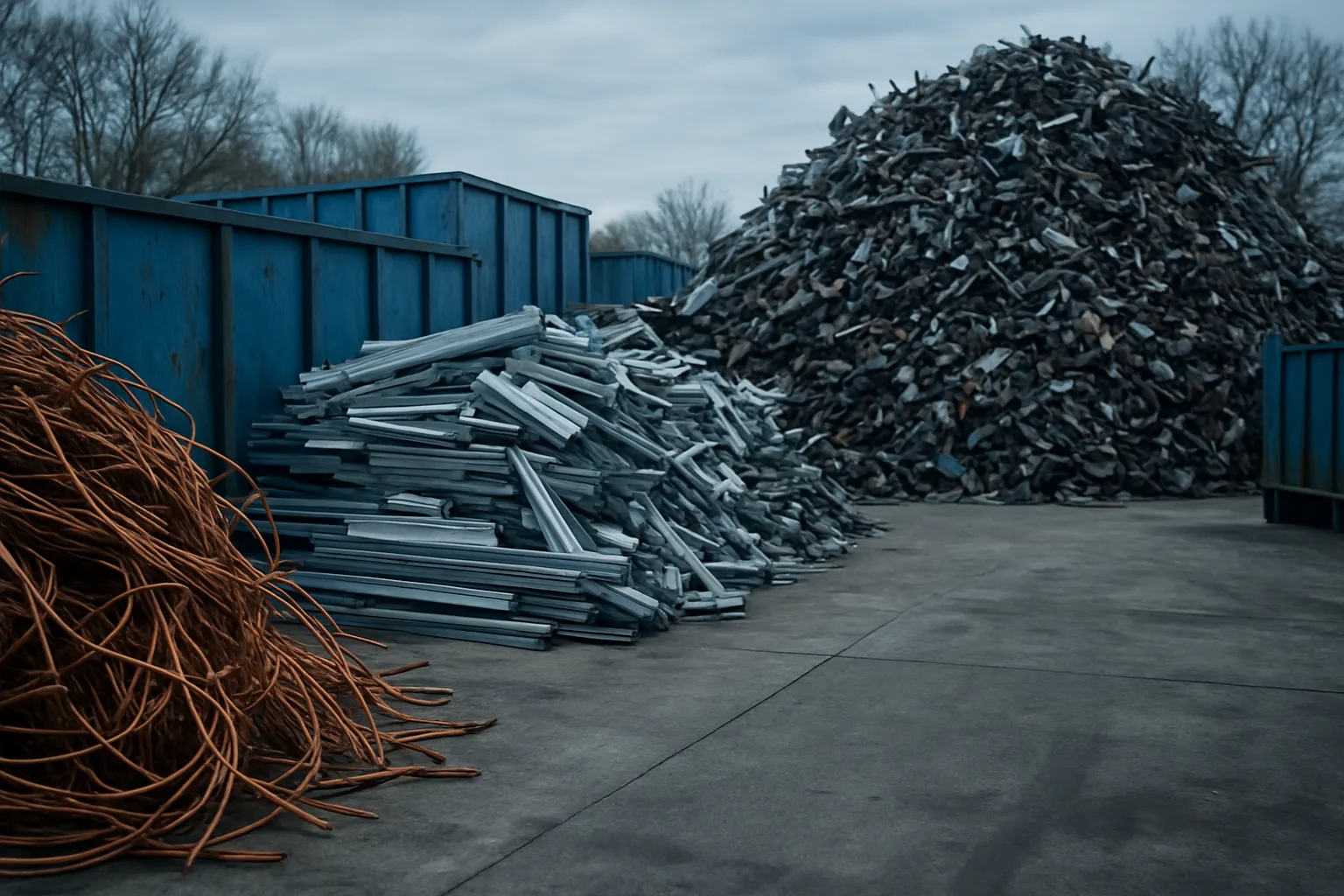
Why Scrap Metal Sellers in Fort Worth Are Leaving Money on the Table
Most scrap metal sellers pick one buyer, make one call, and take whatever price they're offered. That's not a strategy — that's a guess. If you're searching "sell scrap metal near me" and just driving to the closest yard, you're almost certainly not getting the best return on your loads. Scrap metal prices today swing hard depending on who's buying, what they need, and how much competition exists in your market.
This guide breaks down how to find the best buyer for your scrap, what to look for beyond the posted price, and why more sellers across Texas are moving away from single-buyer relationships toward competitive, transparent platforms that actually show you what the market will pay.
What Drives Scrap Metal Prices Today — And Why Local Buyers Aren't Always Honest About It
Scrap metal pricing isn't arbitrary. Copper, aluminum, and steel prices are driven by global commodity markets, domestic demand from mills and foundries, freight costs, and currency exchange rates. A buyer's posted price at a local yard is their number — not necessarily the market number. There's often a spread between what a buyer will pay and what the metal is actually worth on the open market.
In a market like Fort Worth, you have real industrial demand. The Dallas-Fort Worth metroplex is a major logistics and manufacturing hub. That means there are legitimate buyers competing for quality scrap loads — if you know how to reach them. Most sellers don't. They call one contact, hear a number, and move on. That single-point pricing leaves real money behind.
Key factors affecting scrap metal prices today:
- Copper: Heavily tied to global manufacturing output and electrical infrastructure demand. Prices shift fast.
- Aluminum: Auto sector demand, construction, and packaging all push and pull this price.
- Steel/ferrous: Mill demand, infrastructure projects, and regional supply all matter.
- Catalytic converters: PGM (platinum group metal) content drives value — accurate identification matters more than ever.
The point isn't to memorize commodity charts. The point is to understand that your buyer knows these numbers better than you do — and that imbalance costs you. To find the best scrap metal prices today, you need access to more than one opinion.
How to Actually Find the Best Scrap Metal Buyer Near You
Searching "sell scrap metal near me" gets you a map of yards. It doesn't tell you who's paying the most, who's vetted and legitimate, or who has the capacity to handle your load type. Distance is the least important variable when you're moving a serious volume of non-ferrous or specialty scrap.
Here's what to actually evaluate when choosing a buyer:
- Are they quoting against current market data? A buyer who can't explain why their copper price is what it is isn't a buyer worth trusting.
- Do they require proper documentation? Legitimate buyers want BOLs, packing lists, and photo documentation. If they don't, ask yourself why.
- Can they handle your load type? A yard that specializes in auto cores and catalytic converters may not be the right buyer for a load of insulated wire or prepared steel.
- How do they handle settlement? Auto-invoicing and clear payment terms matter. Handshake deals and paper receipts aren't a system.
- Are they competing for your business? If you're only getting one quote, you have no frame of reference. Competition reveals price.
For sellers moving regular volume in the Fort Worth area or anywhere across Texas, the smartest move is to stop treating each load as a one-off and start building a process that generates real market competition every time you sell. That's where a scrap metal auction platform changes the equation entirely.
Want to check current scrap metal prices before your next sale? Knowing the baseline before you pick up the phone puts you in a completely different position.
The Case for Competitive Auctions Over Single-Buyer Deals
The old model is simple: you call your guy, he gives you a number, you either take it or sit on the load. The SMASH model is different. You document your inventory — with photos, serial tracking, VIN lookups for catalytic converters, and proper packing lists — and put that load in front of a network of vetted buyers who compete against each other.
More buyers means better price discovery. That's not a slogan — it's how commodity markets actually work. When multiple qualified buyers see the same well-documented load, they bid based on what it's worth to them, not based on what they think you'll accept. That's a fundamentally different dynamic than a single cold call.
SMASH — the Scrap Metal Auction Sales Hub — brings this model to recyclers and yard operators across North America. No subscription fees. SMASH only wins when you win. The platform handles vetted buyers, competitive auctions, auto-invoicing, and full documentation. For sellers in Texas who are tired of guessing at market value, it's a real alternative to the phone-and-pray approach.
If you're moving non-ferrous loads, cats, cores, or specialty metals, the documentation alone changes how buyers see your inventory. A well-photographed, properly described load with accurate weights and grade calls gets taken more seriously than a vague verbal description. Get competitive bids for your scrap metal and see what your loads are actually worth on the open market.
Scrap Metal Recycling in Texas: What Sellers Need to Know in 2026
Texas has some of the highest scrap metal activity in the country. Between construction, oil and gas infrastructure, automotive, and manufacturing, there's a constant supply of ferrous and non-ferrous material moving through the state. Fort Worth specifically sits at the intersection of major logistics corridors, which means buyer access is real — if you're connected to the right network.
Regulatory awareness also matters in 2026. Texas continues to enforce secondary metals dealer regulations requiring detailed transaction records, seller identification, and photo documentation for many categories of scrap. These rules exist to combat theft — and they align directly with what good buyers already require. If you're not already documenting your loads with photos and accurate packing lists, you're behind both legally and commercially.
For sellers using platforms like SMASH, documentation is built into the workflow. VIN lookups for catalytic converter cores, photo uploads, and serial tracking aren't extras — they're how every listing is built. That protects you legally and makes your inventory more competitive. Read scrap metal pricing guides to stay current on what documentation buyers are expecting in today's market.
If you're running a yard or managing commercial scrap accounts in Fort Worth scrap metal services territory, understanding the regulatory and commercial landscape puts you ahead of sellers who are still doing things by feel.
Practical Steps to Get the Best Price on Your Next Load
Whether you're selling a single load of copper or managing recurring volumes of prepared steel and aluminum, the process matters as much as the price. Here's how to approach your next sale with discipline:
- Know your material before you quote. Separate your grades. Mixed loads get discounted. Clean copper sells for more than copper with insulation. A sorted load tells a buyer you know what you have.
- Document everything. Photos, weights, grade descriptions, and packing lists. Buyers bid higher on loads they can see and trust.
- Get more than one quote. This is the single highest-leverage move you can make. One quote is an ask. Two or more is a negotiation.
- Understand timing. Commodity markets move. If copper just spiked on infrastructure news, waiting a day or two might cost you. If it's trending down, moving quickly makes sense.
- Use the right platform. For Texas sellers moving real volume, a scrap metal auction platform like SMASH puts your documented loads in front of vetted buyers without a subscription fee. The competition does the work.
None of this is complicated. It's just a better process than calling one buyer and hoping for the best. Fort Worth sellers who build this discipline into their operations consistently get more out of every load — not because the market changed, but because they stopped leaving information and leverage on the table.
The best time to build a smarter selling process is before you need it. Start with the basics: scrap metal prices today, your load documentation, and a platform that gives you access to real competition. That combination is more powerful than any single relationship with a single buyer.
Frequently Asked Questions
Q: How do I find the best scrap metal prices today in Fort Worth, Texas?
Start by checking current commodity benchmarks for the metals you're selling — copper, aluminum, steel — so you have a baseline. Then get multiple quotes rather than relying on a single buyer. Platforms like SMASH connect sellers with vetted buyers who compete, which helps surface real market value instead of one yard's posted price.
Q: What's the difference between a scrap yard and a scrap metal auction platform?
A scrap yard is a single buyer with a single price. A scrap metal auction platform puts your load in front of multiple vetted buyers who bid competitively. The auction model creates price discovery — you see what your load is actually worth in the market, not just what one buyer is willing to pay that day.
Q: Do I need to sort my scrap metal before selling it?
Yes — sorting by grade almost always results in a better return. Mixed loads get discounted because the buyer has to account for sorting labor and uncertainty. Clean, separated copper, aluminum, or steel commands a better price and more buyer confidence, especially when combined with proper photo documentation and accurate weights.
Q: Is scrap metal recycling regulated in Texas?
Yes. Texas enforces secondary metals dealer laws that require transaction records, seller identification, and documentation for many scrap categories. These regulations apply to buyers, but sellers benefit from understanding them — especially if you're selling catalytic converters, copper, or other high-value non-ferrous metals. Proper documentation protects you and makes your loads more sellable.
Q: Are there fees to use SMASH as a scrap metal seller?
SMASH charges no subscription fees. The platform operates on a model where it only earns when you complete a successful sale — meaning your interests and SMASH's interests are aligned. For sellers moving regular volume who want access to competitive bids without upfront costs, that structure is worth understanding before your next load moves.
Stop guessing at what your scrap is worth. The market has a real price — you just need enough buyers competing to show it to you. If you're selling in Fort Worth or anywhere across Texas, build the habit of checking benchmarks, documenting your loads, and putting them in front of real competition. Get the best scrap metal prices — check rates at best-scrap-metal-prices.com before your next sale and see what a better process looks like.
Disclaimer: Scrap metal prices fluctuate based on commodity markets, regional demand, and load-specific factors. Always verify current rates before completing a transaction.
Stay ahead of scrap metal market trends and pricing shifts — follow SMASH on LinkedIn for industry updates, market insights, and news that affects what your loads are worth.