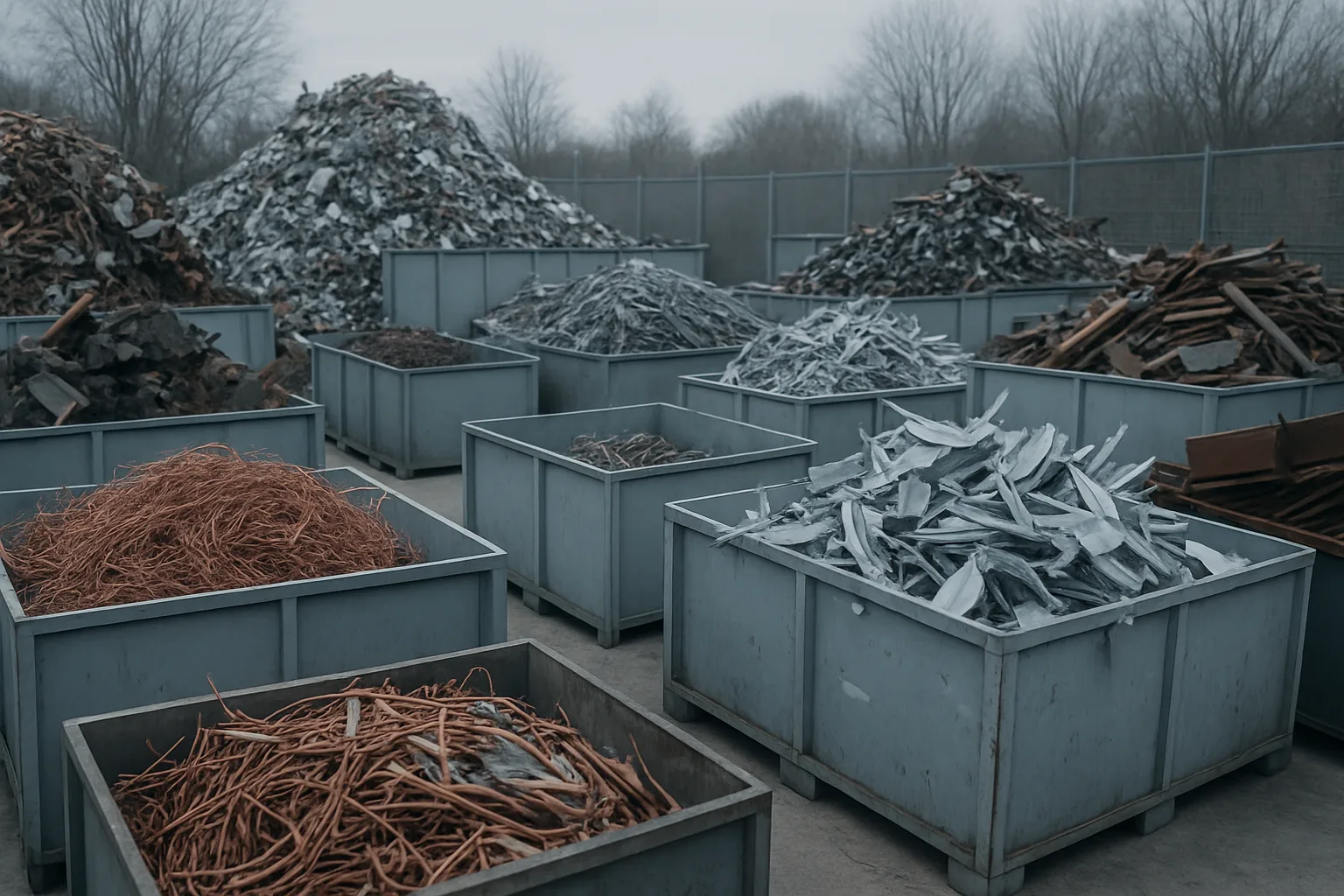
Why the Copper Scrap Price Today Can Change Before Lunch
You load up a pickup truck with copper pipe, drive to the yard, and walk out with less money than you expected. Sound familiar? The copper scrap price today can shift multiple times between the time you check it online and the time you actually step on the scale. That's not a glitch — that's how scrap metal markets work. Understanding the mechanics behind daily price movement puts more money in your pocket.
This guide breaks down what drives scrap metal prices today, which metals fluctuate most, and how sellers — whether you're running a recycling yard in Savannah, Georgia or clearing out a jobsite anywhere in the U.S. — can stop leaving money on the table.
The Core Drivers Behind Daily Scrap Metal Price Fluctuations
Scrap metal isn't priced in a vacuum. Every morning, buyers and processors look at a stack of data before they post their buy rates. That data changes constantly — sometimes hourly. If you're trying to find the best scrap metal prices today, you need to understand what's actually moving the needle.
The biggest drivers on any given day include:
- London Metal Exchange (LME) spot prices — Copper, aluminum, and nickel trade globally. LME settlement prices at the start of each trading session directly influence what domestic buyers will pay that day.
- Commodity futures movement — When futures traders push copper contracts up or down, that signal travels fast. A 2% move on COMEX can ripple into yard buy prices by midday.
- The U.S. dollar index — Metals are priced in USD globally. A stronger dollar typically pushes metal prices down; a weaker dollar pushes them up. Watch DXY if you trade regularly.
- Domestic mill demand — Steel mills and copper refiners send buy signals to processors based on their production schedules. When a mill has downtime, demand drops. When they're running hot, they'll pay more to keep inventory moving.
- Freight and logistics costs — If shipping containers to overseas buyers get expensive, domestic processors absorb more material — which can tighten or loosen local pricing depending on volume.
- Weather and regional disruptions — A hurricane hitting the Gulf Coast, port slowdowns, or infrastructure shutdowns can freeze regional pricing for days at a time. In Georgia, seasonal construction activity also affects how much scrap is hitting the market at once.
None of these factors exist in isolation. On a given Friday in July, you might see copper spot up, the dollar flat, and mill demand soft — and your net price is still lower than Tuesday because local buyers are sitting on inventory. That's the real world of scrap pricing.
Metal-by-Metal: Which Prices Are Most Volatile and Why
Not all scrap metals behave the same way. Knowing which metals swing hardest — and why — helps you time your sales more strategically. Here's how the major categories compare on a typical trading week:
Copper
Copper is the most price-sensitive scrap metal most sellers will ever deal with. The copper scrap price today tracks closely with COMEX spot, adjusted downward for processing spread. Bare bright copper, #1 copper, and #2 copper each carry different deductions. A single news event — a mining strike in Chile, a manufacturing data release from China — can move copper several cents per pound in hours. If you're sitting on a significant copper load, checking the price once a week isn't enough.
Aluminum
The aluminum price is influenced heavily by energy costs and automotive/aerospace demand. Aluminum smelting is energy-intensive, so when power prices spike, production margins compress and scrap buy prices can soften. Cast aluminum, extruded aluminum, and aluminum breakage all trade at different spreads. Expect moderate volatility — not as sharp as copper, but significant over a month.
Steel and Iron
If you're focused on how to sell scrap iron, understand that steel and iron pricing moves slower than non-ferrous metals but swings harder over longer periods. Mill orders drive #1 heavy melt and shredded steel prices. When construction is active and auto manufacturing is running, shredded scrap demand is strong. When those sectors slow down, prices compress fast. Ferrous prices are also more regionally variable — what a yard in Savannah pays for HMS isn't necessarily what a yard in Pittsburgh offers.
Catalytic Converters and E-Scrap
PGM (platinum group metal) values inside catalytic converters fluctuate with palladium and rhodium markets — some of the most volatile commodities in the world. E-scrap pricing for circuit boards and memory chips tracks tech commodity markets. These categories reward sellers who do their homework before showing up at the yard.
Selling Scrap in Savannah: What Local Sellers Need to Know
Savannah, Georgia sits in a strong position for scrap metal sellers. The Port of Savannah — one of the busiest container ports on the East Coast — means export demand for scrap is a real factor in local pricing. When overseas demand is strong and container availability is good, buyers at Georgia yards can be more aggressive on price because they have an export outlet. When export markets soften, you'll feel that in local buy rates too.
The construction and industrial activity around Savannah also generates consistent non-ferrous supply. HVAC jobs, electrical work, and demolition projects keep copper and aluminum moving through local recycling channels. If you're doing scrap metal recycling in Savannah, timing your loads to avoid peak supply days — typically Mondays after weekend cleanouts — can mean shorter wait times and sometimes better pricing as buyers try to keep scale lines moving.
A few practical tips for Savannah-area sellers:
- Separate your metals before arriving. Commingled loads get downgraded. Clean copper stays clean copper.
- Ask about minimum load requirements for non-ferrous. Some yards won't move on price until you hit a certain weight threshold.
- Track the Georgia market independently from national averages. The Southeast trades differently than the Midwest or the Northeast.
- If you're moving larger volumes, don't limit yourself to walk-in transactions. Competitive bidding through platforms like the SMASH scrap metal auction marketplace gives you access to vetted buyers beyond your local area.
The Old Way vs. the SMASH Way: How Competitive Bidding Changes Your Results
Here's the traditional approach: you call one buyer, they quote you a number, you take it or you drive somewhere else. Most sellers take the number. There's no reference point, no competition, no leverage. You're guessing whether that quote is fair.
More buyers means better price discovery. That's not theory — it's basic market mechanics. When multiple vetted buyers are competing for your load, the price they offer reflects actual market demand, not a single buyer's margin preference. SMASH is built around this idea. The platform puts your documented inventory in front of qualified buyers, creates real competition, and gives you data instead of guesswork.
SMASH handles photo documentation, inventory tracking, and auto-invoicing — the administrative friction that slows down transactions and eats into your time. And there's no subscription fee. SMASH only wins when the seller wins.
If you're moving meaningful volume — whether you're a yard operator, a demolition contractor, or a commercial seller — understanding how to leverage competitive bidding alongside daily price tracking is where the real upside lives. You can check current scrap metal prices to calibrate your expectations, then use a competitive process to close the gap between market rate and what lands in your account.
How to Track Scrap Metal Prices Daily Without Losing Your Mind
You don't need a Bloomberg terminal to stay on top of scrap pricing. A practical daily routine takes about five minutes and significantly improves your timing over a month of sales. Here's what experienced sellers actually do:
- Check COMEX copper futures before 9 AM Eastern. A quick look at front-month copper gives you a baseline for non-ferrous pricing direction that day.
- Watch the dollar index (DXY). A rising DXY typically signals softer metal prices. A falling DXY is a tailwind for commodity pricing.
- Note any major macro releases. CPI, Fed decisions, manufacturing PMI — these move commodities fast. Know the calendar.
- Call or check rates at your local yard. National benchmarks are reference points, not promises. Local buyers set their own spreads.
- Compare against regional platforms. If your local quote looks soft relative to what you're seeing elsewhere, that's a signal worth acting on.
For deeper context on how pricing works across different metals and regions, read scrap metal pricing guides that break down the mechanics behind what yards actually pay versus market spot.
Consistency beats trying to nail the perfect top of the market. Sellers who track prices weekly and move loads at reasonable windows consistently outperform sellers who hold material hoping for a spike — especially with ferrous, where storage costs and market timing rarely justify the wait.
Getting the Best Scrap Metal Prices Starts With Better Information
Daily price fluctuations aren't random noise — they're driven by real market forces you can learn to read. The copper scrap price today is a product of global trading, domestic demand, local supply conditions, and buyer margin decisions. Every one of those levers is something informed sellers can work with.
Whether you're hauling copper wire from a job site in Savannah, clearing HMS from a commercial demolition in Georgia, or managing a recycling yard's outbound sales across multiple metal grades, better information and more competition are your two best tools. Platforms like SMASH bring both to the table — vetted buyers, documented loads, and competitive auctions that let the market set the price instead of a single phone call.
Stop guessing what your scrap is worth. Get the best scrap metal prices by working with real market data — check rates at best-scrap-metal-prices.com and make your next load your best one yet.
Disclaimer: Scrap metal prices fluctuate daily based on commodity markets, regional demand, and buyer spreads. All price references in this article are general in nature. Always check current rates directly with buyers or through real-time pricing platforms before making selling decisions.
Frequently Asked Questions
Q: Why does the copper scrap price today differ from what I saw quoted online?
Online copper prices typically reflect COMEX spot or LME settlement — the raw commodity price before processing, transportation, and buyer margin are deducted. Your local yard applies a spread on top of those deductions, so the buy price you receive will always be lower than spot. The gap between spot and buy price varies by yard, region, and current inventory levels.
Q: How often do scrap metal prices change at yards in Savannah, Georgia?
Most yards update their buy prices daily, though some adjust intraday when commodity markets move sharply. Savannah-area pricing is also influenced by Port of Savannah export activity, which can create regional variation from national averages. Checking with your yard the morning you plan to sell is always the safest approach.
Q: Is it worth waiting for a better copper price before selling my scrap?
Timing the market consistently is difficult even for professional traders. For most sellers, the better strategy is tracking prices regularly and selling when the market is reasonably strong rather than trying to call the peak. Holding costs, storage risk, and the unpredictability of commodity swings usually make regular selling more profitable than holding.
Q: How do I get a better price for my scrap metal than what one yard quotes me?
Create competition. Getting quotes from multiple buyers — or using a competitive auction platform like SMASH — gives you real price discovery instead of a single buyer's margin decision. More buyers bidding on your documented load means the price reflects actual market demand, not one phone call.
Q: What's the best way to prepare my scrap before selling to get the highest price?
Separate your metals by grade — clean copper from insulated wire, aluminum extrusions from cast aluminum, and so on. Commingled or contaminated loads get downgraded, which costs you money. Having photo documentation and accurate weights ready also helps when selling through platforms that require load documentation, since transparent inventory gives buyers more confidence to bid higher.
Follow SMASH on LinkedIn for scrap metal market insights, industry updates, and pricing trends: linkedin.com/company/scrap-metal-auction-sales-hub.
```