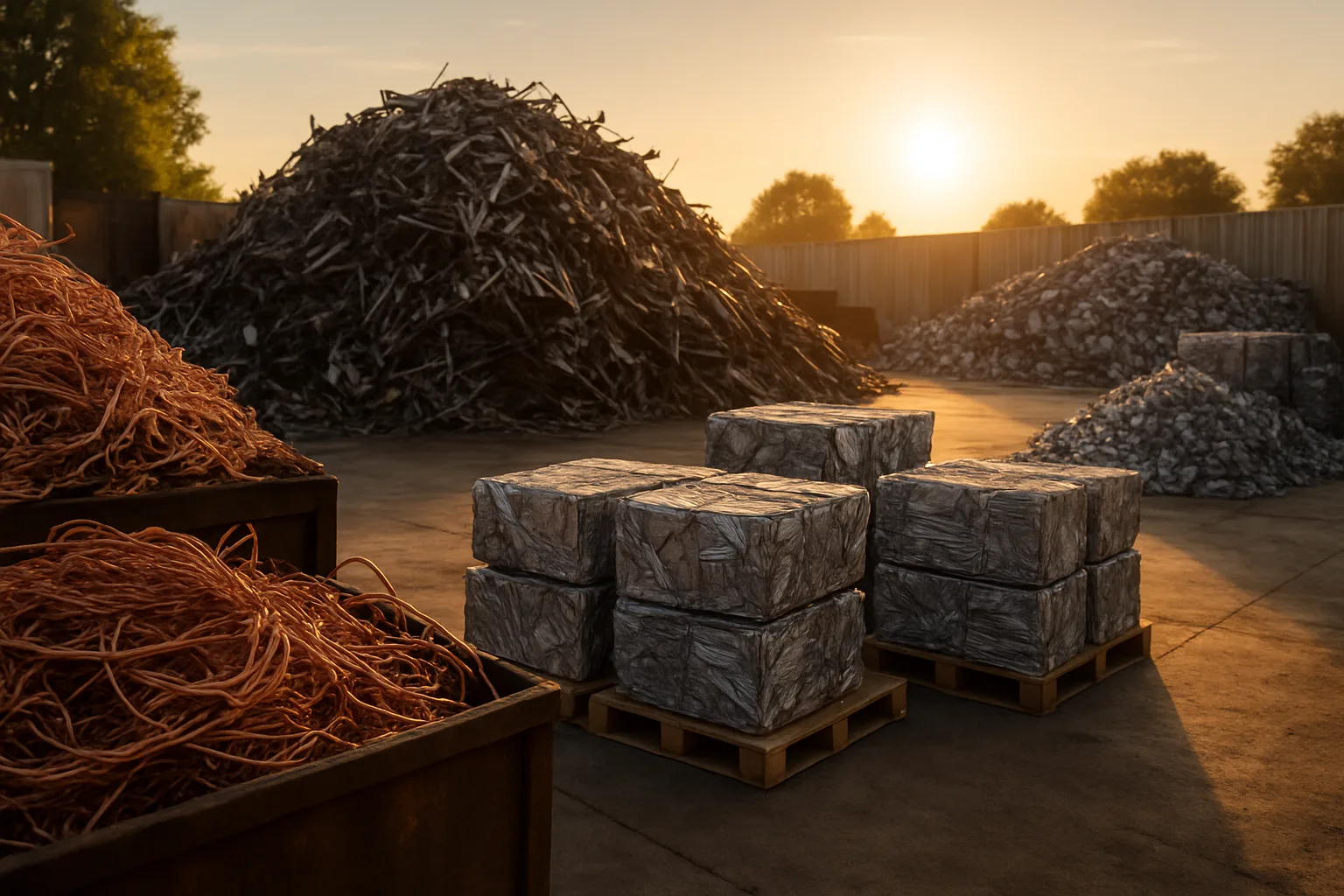
Lead-acid batteries are heavy, they're hazardous, and most recyclers completely underestimate their value. If you've got a pile of dead car batteries sitting in your yard or shop, you're not looking at a disposal problem — you're looking at cash waiting to be collected.
Whether you're a shop owner in St. Paul clearing out a season's worth of dead batteries, or a yard operator building a serious load, understanding lead scrap pricing and how battery recycling actually works will put more money in your pocket. This guide breaks it all down.
Why Lead-Acid Batteries Are Worth More Than You Think
Lead is one of the most recycled materials on the planet, and for good reason. A standard 12-volt car battery is roughly 60–70% lead by weight. That's not trace amounts — that's a significant chunk of recoverable, high-demand metal in every single unit you handle.
In the U.S., over 99% of lead-acid batteries get recycled. The lead recovery rate is exceptional compared to most other materials. Secondary lead smelters depend on battery feedstock. That demand creates a stable floor under lead scrap pricing, even when other metal markets get volatile.
- Automotive batteries (SLI): The most common type. Heavy, dense, consistently priced.
- Industrial batteries: Forklift packs, UPS systems, telecom backup — larger format, higher lead content per unit.
- AGM and gel batteries: Same lead content as flooded batteries, often cleaner to handle.
- Motorcycle and small engine batteries: Lighter, but still worth collecting in volume.
The price you get per pound of lead varies by market conditions, but the underlying demand remains strong. To find the best scrap metal prices today, you need to know what your load is worth before you accept the first number someone throws at you.
How Lead Scrap Pricing Works — and What Moves the Market
Lead trades on the London Metal Exchange (LME), and U.S. scrap prices follow that benchmark with regional adjustments. The spread between LME lead and what your local yard pays depends on several factors: processing costs, transportation, smelter demand, and how clean your material is.
Battery scrap pricing usually comes in two formats. Some buyers price by the pound of whole battery. Others buy on a per-battery basis for smaller quantities. Volume matters — a single battery at a counter gets a different rate than a pallet or a truckload offered through a competitive channel. That gap can be significant.
What affects your price per pound:
- Lead market conditions: Global demand, inventory levels, and mining output all affect the baseline.
- Electrolyte (acid) handling: Batteries with intact cases and acid intact command different rates than drained units.
- Volume: More weight almost always means a better per-pound rate.
- Buyer competition: One buyer sets the price. Multiple buyers competing? That's price discovery.
- Documentation: A clean packing list and accurate weight verification moves the transaction faster and smoother.
This is exactly where a B2B scrap metal marketplace changes the equation. Instead of calling one contact and taking whatever they offer, you put your load in front of vetted buyers who compete for it. That competition can help reveal the true market rate for your material.
The St. Paul Advantage — and the Local Market Reality
St. Paul and the broader Twin Cities metro sit at a strong logistics crossroads. Rail access, interstate connectivity, and proximity to major industrial buyers all make this region a competitive market for ferrous and non-ferrous scrap — including lead battery material.
Minnesota's cold climate is also a factor worth noting. Batteries fail faster in extreme cold. Shops and yards in St. Paul often accumulate larger volumes of dead SLI batteries through late fall and winter months than warmer-climate operations do. That volume is an asset if you know how to leverage it.
Local yards in the St. Paul area do buy lead-acid batteries, but rates vary. Some price aggressively to win volume. Others are slower to move on price. The only way to know if you're getting the market rate is to have more than one option on the table. That's not a knock on local buyers — it's just how markets work. Competition reveals price. One phone call doesn't.
If you're building volume in Minnesota and want to understand what that material is genuinely worth, read scrap metal pricing guides to get your baseline before you make a single call.
Preparing Your Battery Load for Maximum Value
Sloppy loads get discounted. Clean, documented loads get paid. It's that simple. Before you move a load of lead-acid batteries, do the work on the front end — it shows up on your check.
Sort by battery type. Don't mix automotive, industrial, and motorcycle batteries if you can avoid it. Different buyers want different specs, and a mixed load gives buyers a reason to average down.
Document everything. Accurate count, total weight, battery type breakdown, and condition notes. A clean packing list signals a professional seller. Buyers notice. When you're working through a platform like SMASH, serial tracking and photo documentation are built into the process — so your documentation works for you, not against you.
Other prep steps that protect your value:
- Keep batteries upright to contain acid and avoid contamination claims.
- Don't crush or break cases before sale — whole batteries move more cleanly through recycling channels.
- Palletize or contain the load for easy handling and accurate weight at the scale.
- Confirm any hazmat transport requirements before moving large volumes.
Proper scrap metal inventory management isn't just about organization — it's about protecting your margin. When you can hand a buyer a clear count and weight before they even inspect the load, you control the conversation.
Using a B2B Scrap Metal Marketplace to Get Competitive Lead Prices
Here's the reality most sellers in St. Paul are operating with: one yard, one price, no comparison. That's not a market — that's a single data point. You have no way of knowing if that number is fair, low, or leaving serious money behind.
SMASH is built to fix that. You list your load — batteries, count, weight, condition, location — and vetted buyers across North America can bid. No subscription fee. No guessing. The auction format creates real competition, and more buyers means better price discovery for your lead scrap.
SMASH handles the documentation side too: auto-invoicing, BOL generation, and photo documentation built into the workflow. You're not chasing paperwork after the fact. The platform does the heavy lifting so you can focus on the load, not the admin.
To get competitive bids for your scrap metal, you don't need a relationship with twelve different buyers. You need a platform where those buyers compete for your material. That's a fundamentally different model than calling around and hoping you caught the right contact on the right day.
What to Expect from Lead Prices in 2026
Lead prices in 2026 reflect a market shaped by steady battery demand, the ongoing growth of energy storage applications, and persistent pressure on primary lead mining output globally. Secondary lead from battery recycling has become even more critical to supply chains, which supports the floor under scrap pricing.
Sellers should understand that lead scrap prices do move — sometimes quickly — based on LME fluctuations, regional smelter capacity, and logistics costs. The spread between LME lead and what you receive at the scale can vary by region and buyer. That's exactly why locking into a single buyer relationship without benchmarking is a risk.
Disclaimer: Lead and scrap metal prices fluctuate based on market conditions. Always check current scrap metal prices before finalizing any transaction. The figures and ranges discussed in this article are general guidance only and not guaranteed offers.
If you're moving battery scrap regularly in Minnesota or anywhere in the Midwest, treat your pricing strategy the same way you treat your load prep: do the work before you show up at the gate. Know your weights, know your documentation, and know what the market is offering — not just what one buyer tells you it's offering.
The best way to close that gap? Put your load in front of more buyers. Competition does the rest.
Whether you're clearing one skid of dead automotive batteries from a St. Paul shop or staging a multi-pallet industrial load, you deserve to know what your material is actually worth — not just what's convenient for the first buyer who picks up the phone. Start with a solid understanding of the market, document your inventory properly, and use every tool available to drive competition on your load. Get the best scrap metal prices — check rates at best-scrap-metal-prices.com and make sure your next sale is based on real market data, not guesswork.
Frequently Asked Questions
Q: What are lead-acid batteries worth as scrap in St. Paul?
Lead-acid battery scrap prices vary based on current lead market conditions, battery type, and volume. In St. Paul, local yard rates differ — which is why comparing buyers before you sell matters. Check current pricing benchmarks before accepting any offer, and consider using a competitive bidding platform to see what your load is actually worth on the open market.
Q: How do I get the best scrap metal prices in St. Paul for battery loads?
The single most effective way to improve your return is to create buyer competition. One quote from one yard gives you one data point. Listing your load through a B2B scrap metal marketplace like SMASH puts vetted buyers in competition for your material, which can reveal stronger market pricing than a single call will.
Q: Are lead-acid batteries regulated differently than other scrap metal in Minnesota?
Yes. Lead-acid batteries are classified as hazardous waste in many contexts but are exempt from certain regulations when handled through proper recycling channels. Minnesota follows federal Universal Waste rules for batteries, which simplifies handling requirements for businesses moving batteries to recyclers. Always confirm current state and federal requirements before transporting large volumes.
Q: Does volume affect what I get paid for lead battery scrap?
Absolutely. Volume is one of the most direct levers on your per-pound price. A single battery at a walk-in counter gets a different rate than a palletized truckload offered to competing buyers. Building volume before selling — and using a platform that surfaces multiple bids — typically produces better outcomes per pound than selling small quantities to a single local buyer.
Q: What documentation do I need to sell lead battery scrap through SMASH?
SMASH's platform supports photo documentation, packing lists, and serial or inventory tracking built into the listing process. For battery loads, you'll want an accurate battery count, total weight, battery type breakdown, and condition notes. Strong documentation builds buyer confidence and reduces friction at closing — both of which support better outcomes on your sale.
Stay current on scrap metal market trends and pricing insights by following SMASH on LinkedIn — practical updates for yard operators and scrap sellers across North America.