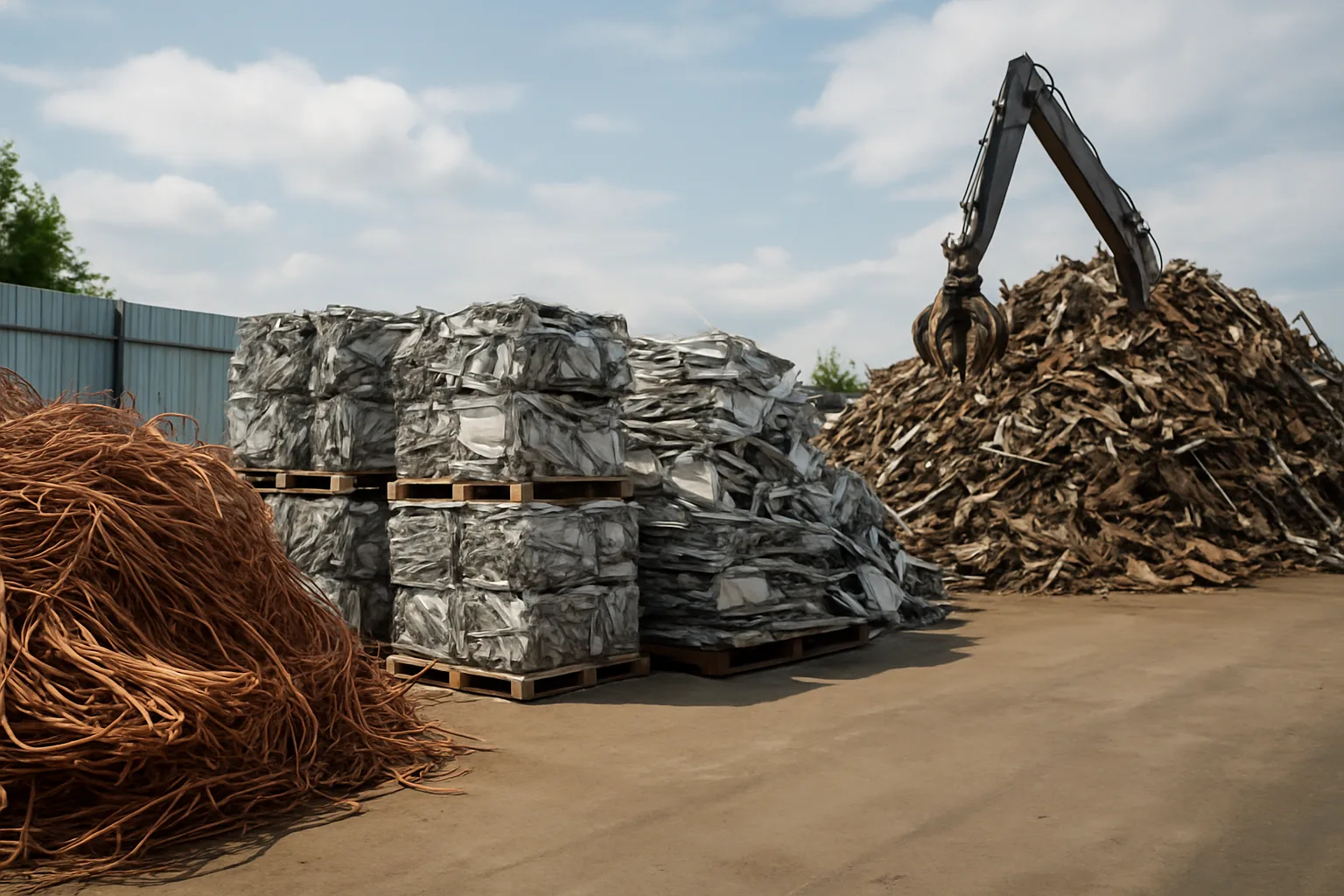
Most scrap yards in Richmond will give you a price. Only one buyer will give you the best price — and you won't know which one until you stop calling around blind.
That's the core problem with scrap metal recycling Richmond sellers face in 2026. The market moves fast. Copper prices shift week to week. Aluminum recycle value swings with global demand. Steel stays soft or spikes depending on mill activity. If you're walking into a single yard and taking whatever they quote, you're leaving money on the table — and you probably don't even know how much.
This guide breaks down how to actually find the best buyer for your scrap, what drives prices right now, and how platforms like SMASH are changing the game for sellers who are tired of guessing.
Why "Scrap Metal Near Me" Isn't Enough of a Strategy
Typing "sell scrap metal near me" and calling the first yard that shows up is a starting point, not a strategy. Local yards set their own buy prices. They're buying low and selling high — that's their business. There's nothing wrong with that. But if you don't know what the market actually supports, you have zero leverage in the conversation.
Richmond has active yards serving the broader central Virginia corridor, and there's real competition in the region for quality loads. The problem isn't access to buyers. The problem is price discovery — figuring out what your material is actually worth before you commit to a sale.
Here's what most sellers do wrong:
- Call one yard, get a quote, accept it without comparison
- Haul material without sorting it first (mixed loads always pay less)
- Sell without any documentation — no photos, no weights, no material breakdown
- Assume all buyers pay the same rate for the same metal
Every one of those habits costs you money. The fix isn't complicated — it just requires a different approach.
What's Driving Copper Scrap Prices and Aluminum Recycle Value in 2026
If you're holding copper or aluminum, you need context before you sell. Both metals are moving targets in mid-2026, and the direction matters for timing your sale.
Copper scrap prices Richmond sellers are tracking right now reflect broader tension between infrastructure spending — particularly ongoing grid modernization projects across the Southeast — and intermittent supply chain pressure from overseas smelters. Bare bright copper, #1 copper, and #2 copper all carry different premiums. Knowing the grade of your material isn't optional — it's the difference between getting paid like a scrapper and getting paid like someone who knows what they have.
Aluminum recycle value in 2026 is similarly layered. Cast aluminum, extruded aluminum, and aluminum cans all price differently. Automotive-grade aluminum from stripped vehicles typically fetches more than mixed aluminum, but only if it's clean and documented. Yards that deal in high volume want clean, sorted material. Show up with mixed, contaminated loads and you'll get discounted accordingly.
A few factors actively pushing metal prices right now:
- Grid and EV infrastructure buildout — ongoing demand for copper in charging infrastructure and transformer upgrades
- Domestic steel mill demand — fluctuates by region; Southeast mills have their own buying cycles
- Global aluminum production shifts — energy costs overseas continue to affect secondary aluminum pricing
- Tariff and trade policy uncertainty — cross-border scrap flows affect domestic buy prices more than most sellers realize
You don't need to be a commodities trader to benefit from this information. You just need to know enough to ask better questions when a yard quotes you a price. Want to stay on top of these movements? Read scrap metal pricing guides that break down what's moving and why.
How to Sort and Prepare Your Load for the Best Scrap Metal Prices Virginia
Preparation isn't glamorous, but it's where you make money before you even pull into a yard. The best scrap metal prices Virginia sellers consistently get aren't just about finding the right buyer — they're about showing up with material that justifies a premium.
Basic sorting rules that move the needle:
- Separate ferrous from non-ferrous. Iron and steel go in one pile. Copper, aluminum, brass, and stainless go elsewhere. Mixed loads get priced at the lowest common denominator.
- Strip your copper. Insulated wire pays less than bare copper. If you've got a volume of wire, stripping it yourself — or using a stripping machine — can meaningfully increase your payout.
- Clean your aluminum. Remove steel hardware, rubber, and plastic from aluminum frames, extrusions, and cast pieces. Clean aluminum grades up; dirty aluminum grades down.
- Document before you haul. Photos of your load, estimated weights, and a breakdown by material type give buyers more confidence — and on platforms like SMASH, better documentation directly supports stronger bids.
- Know your catalytic converters separately. If you're pulling cats from vehicles, treat them as a distinct category. They price on serial numbers and assay data, not by weight like other metals.
If you're selling regularly — whether you're a yard, a demolition contractor, or running an auto dismantling operation — consistent load prep compounds over time. Buyers who see clean, documented loads coming from the same source start to trust that source. Trust translates to better prices.
Sell Scrap Metal Online — Why More Sellers Are Skipping the Drive
The ability to sell scrap metal online has shifted how serious sellers approach the market. You don't have to haul a load across Richmond, wait in a yard line, and accept a spot price with no room to negotiate. The auction model changes that dynamic entirely.
Platforms like SMASH connect sellers directly to vetted buyers who compete for your loads. Instead of one buyer, one price, one take-it-or-leave-it moment — you get multiple buyers seeing your documented inventory and submitting competitive bids. That's real price discovery. Competition can help reveal the market in a way that a single cold call to a local yard never will.
SMASH handles the friction points that make selling scrap a headache at scale:
- Inventory documentation with photo uploads and material tracking
- VIN lookup and serial number tracking for catalytic converters and automotive cores
- Auto-invoicing so paperwork doesn't pile up
- Vetted buyer network — you're not pitching to unknown parties
- No subscription fees — SMASH only wins when you do
For Richmond sellers moving volume — whether that's non-ferrous from a demolition site, cores from an auto recycler, or mixed loads from a yard cleanup — getting competitive bids for your scrap metal instead of settling for one quote is a straightforward upgrade.
Finding the Right Buyer in Richmond — What to Actually Look For
Not all buyers are the same, and the right buyer for your load depends on what you're selling. A yard that dominates on steel might not be your best option for non-ferrous. A buyer that specializes in catalytic converters may not even be interested in your aluminum extrusion.
When evaluating a buyer — online or local — look for these signals:
- Transparency on pricing: Do they tell you how they're pricing your material, or just hand you a number?
- Specialization: Do they actively buy the specific material you're selling?
- Documentation standards: Do they want photos, weights, and material breakdowns — or do they prefer vague verbal descriptions? (Buyers who want documentation are usually paying for it.)
- Track record: Are they paying on time, settling accurately against actual weights, and following through on BOLs and packing lists?
- Reach: Local yards are convenient. But a buyer network that extends beyond Richmond can introduce more competition for your loads.
For locals navigating central Virginia's market, checking out Richmond scrap metal services gives you a starting point for current regional pricing and buyer options worth knowing.
The goal isn't to find the most convenient buyer. It's to find the buyer — or buyers, plural — who will pay the most for what you actually have. That requires a bit more legwork upfront, but the return is real.
How to Check Scrap Metal Prices Today Before You Sell
Walking into any transaction without current market data is a disadvantage you don't need. Scrap metal prices today shift based on LME movements, domestic mill demand, and regional yard competition. A price that was fair two weeks ago may be below market now — or above it.
Before you sell, take ten minutes to do this:
- Find the best scrap metal prices today for your specific metals and grade
- Get at least two quotes — one local, one from an online buyer network
- Factor in haul cost; a slightly better price across town may not justify the fuel and time
- Check whether prices are trending up or down before deciding to sell now vs. hold
Timing matters. Not every load needs to be sold immediately. If you have storage capacity and copper prices are trending up, holding a few days can pay off. But you need current data to make that call intelligently — not a gut feeling.
When you're ready to move your material, check current scrap metal prices and compare what buyers are actually offering against the market rate. The gap between those two numbers tells you everything about whether you're getting a fair deal.
Richmond sellers who build this habit — check rates, sort the load, document it, get multiple bids — consistently outperform sellers who just haul and hope. The market rewards preparation. It always has.
Price disclaimer: Scrap metal prices fluctuate daily based on commodity markets, regional demand, and material grade. Always verify current rates before selling.
Frequently Asked Questions
Q: What scrap metals are worth the most in Richmond right now?
Non-ferrous metals — copper, aluminum, and brass — consistently outvalue ferrous scrap like steel and iron on a per-pound basis. In 2026, copper (especially bare bright and #1 grade) and certain aluminum grades remain among the highest-value materials Richmond sellers are moving. Catalytic converters also carry significant value depending on the make, model, and PGM content.
Q: How do I find out if I'm getting a fair price at a local Richmond scrap yard?
Check current market rates before you go. Use pricing resources like best-scrap-metal-prices.com to see where regional prices are landing, then compare that against your yard's quote. If the gap is wide, it's worth getting a second quote — or listing your load through an online buyer platform like SMASH to introduce real competition into the process.
Q: Does sorting my scrap before selling actually make a difference?
Yes — meaningfully so. Mixed loads get priced at the lowest-grade material in the pile. Separating copper from aluminum from steel, and cleaning contamination off your non-ferrous metals, directly affects what grade classification a buyer assigns your material. Better grade means better price per pound.
Q: Can I sell scrap metal online if I'm based in Richmond, Virginia?
Absolutely. Platforms like SMASH operate across North America and connect Virginia sellers with vetted buyers beyond just local yards. You document your load with photos and material details, buyers submit competitive bids, and you pick the best offer. It's particularly useful for sellers moving significant volume — cores, non-ferrous loads, or catalytic converters where price variation between buyers is highest.
Q: How often do scrap metal prices change in Virginia?
Prices at the yard level typically adjust weekly, though some yards move daily on non-ferrous metals that track closely with LME (London Metal Exchange) spot prices. Copper and aluminum in particular can shift noticeably in a short window. Checking rates regularly — rather than assuming last week's price is still valid — is one of the simplest ways to protect your margins.
---The best price for your scrap isn't always at the closest yard. It's with the right buyer, at the right time, with a load that's prepared to earn it. Get the best scrap metal prices by checking current rates at best-scrap-metal-prices.com — and stop selling blind.
Stay current on scrap metal market movements and industry updates by following SMASH on LinkedIn.