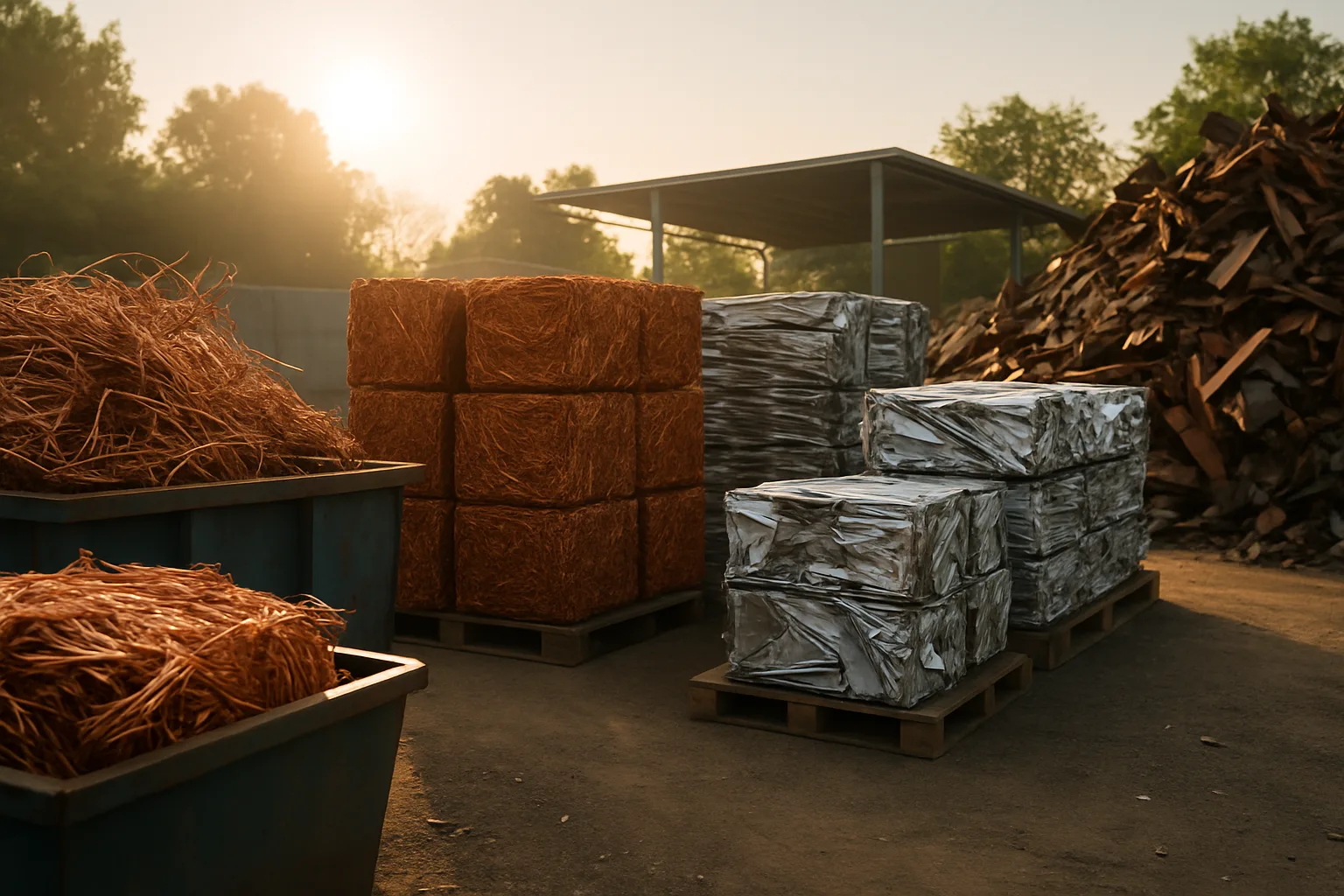
Copper hit a 14-month high earlier this year — and then dropped 8% in three weeks. If you're sitting on a load of scrap copper in Lansing and you timed it wrong, that's real money left on the table. Understanding why copper scrap prices Lansing move the way they do isn't just academic. It's the difference between a good haul and a missed opportunity.
Scrap metal prices aren't set locally. They're driven by global commodity markets, domestic demand, freight costs, and the appetite of mills and smelters on any given Tuesday. But knowing what moves the needle helps you sell smarter — not just faster.
Why Scrap Metal Prices Move Every Single Day
The London Metal Exchange (LME) and COMEX set the baseline for global copper, aluminum, and zinc pricing. Those benchmarks update daily. Scrap yards in Lansing, Michigan don't set prices in a vacuum — they're working off those global numbers, minus their margin, minus freight, minus processing costs.
That means the price a Lansing yard quotes you on Tuesday morning might be meaningfully different from what they'd quote Friday afternoon. Here's what's actually driving those daily swings:
- LME and COMEX spot prices — The global benchmark moves on manufacturing data, currency shifts, and geopolitical supply disruptions.
- Domestic mill demand — When steel mills and copper smelters are running hot, they bid up scrap. When capacity drops, prices soften.
- Freight and logistics costs — Diesel prices and rail capacity affect what buyers are willing to pay at the yard gate.
- Seasonal demand cycles — Construction ramps up in spring and summer. That drives aluminum and copper demand higher. Winter slowdowns often pull prices down.
- Inventory levels at regional yards — If yards in Michigan are sitting on oversupply, they'll drop their buy prices until inventory moves.
- Currency exchange rates — A stronger U.S. dollar makes American scrap exports more expensive for overseas buyers, softening demand.
The takeaway: no single buyer's quote tells you what the market actually is. One call to one yard gives you one data point. That's not a market price — that's a starting offer. To find the best scrap metal prices today, you need competition, not convenience.
Copper Scrap Prices Lansing: What Sellers Need to Know in 2026
Copper has had a volatile run through the first half of 2026. Infrastructure spending, EV production growth, and energy grid upgrades have kept underlying demand strong. But supply-side disruptions and shifting import/export flows have made the pricing environment unpredictable week to week.
In Lansing, the scrap copper market is active. The region has a solid industrial base — auto manufacturing, electrical contractors, HVAC trades — which generates steady copper scrap supply. That's good news in terms of volume. But it also means competition among sellers is real. Yards know supply is available, which can keep buy prices conservative unless sellers are actively shopping their loads.
When you're pricing copper scrap, the grade matters as much as the weight:
- #1 Bare Bright Copper — The premium grade. Clean, uncoated, unalloyed wire. Commands the highest price per pound.
- #1 Copper — Clean copper pipe, bus bar, and clippings. Slight haircut from bare bright.
- #2 Copper — Copper with solder, paint, or minor insulation. Lower price, but still strong relative to other metals.
- Insulated Copper Wire — Priced by the recovery percentage of copper inside. Varies widely by wire gauge and insulation type.
Misgrading your load costs you money in two ways: you accept a lower price than the material deserves, or a buyer downgrades at the dock and claws back margin. Document your loads accurately. Photo documentation isn't just for your protection — it builds credibility with buyers and helps you check current scrap metal prices against real, apples-to-apples comparisons.
Aluminum, Steel, and Non-Ferrous: The Full Picture on Scrap Metal Prices Lansing
Copper gets the headlines, but scrap metal prices Lansing covers a wide spread of materials. Aluminum and steel move on different fundamentals, and diversifying what you're tracking matters.
Aluminum is driven heavily by automotive demand. Michigan's manufacturing economy makes aluminum a high-volume scrap stream — sheet, cast, extrusions, and radiators all move differently. Aluminum prices have been supported in 2026 by ongoing EV platform production and light-weighting trends across OEM lines. Clean cast aluminum commands a premium over mixed or contaminated loads.
Steel and ferrous metals trade at lower per-pound values but high volume makes them significant. HMS (Heavy Melting Steel), #1 and #2, shredded steel, and plate and structural grades are all priced differently. Midwest steel demand has been supported by infrastructure project timelines in 2026, but watch for any slowdown signals — steel prices can retreat quickly when mill order books soften.
Other non-ferrous metals to watch:
- Brass — Yellow brass, red brass, and clean auto radiators all price separately. Strong industrial demand keeps brass relatively stable.
- Stainless Steel — Nickel content drives the price. 304 and 316 grades price very differently from 430. Know what you have.
- Lead — Battery lead and lead weights are common scrap streams. Prices are stable but subject to environmental handling requirements.
- Zinc — Die cast zinc (Zamak) is a common automotive scrap byproduct in Michigan. Prices follow LME zinc closely.
The best move any seller can make — in Lansing or anywhere — is to separate, sort, and accurately document loads before you go to market. Mixed loads get mixed pricing. Clean, graded, documented material gives buyers confidence and gives you leverage. That's exactly where platforms like the SMASH scrap metal auction marketplace create value: documented inventory, vetted buyers, and real competition on price.
How the B2B Scrap Metal Marketplace Has Changed Price Discovery
The old way to sell scrap: call one buyer, take their number, load the truck. Simple. Also leaves serious money on the table when you have no idea whether that quote reflects the real market or just what that buyer wants to pay today.
The B2B scrap metal marketplace model changes that equation. Instead of one quote from one relationship, you get multiple vetted buyers seeing the same documented load and competing on price. Competition does what it's supposed to do — it reveals the market. No guessing. No relying on whether your regular buyer is having a good month.
SMASH operates exactly this way. Sellers list loads with documented inventory — photos, weights, grades, BOLs — and vetted buyers across North America bid. The auction format creates price transparency that the old phone-call model simply can't match. And there are no subscription fees. SMASH only wins when the seller wins.
For yards and sellers in Lansing moving significant volumes of copper, aluminum, or steel, this isn't a novel concept — it's the same logic that moved commodity trading onto exchanges decades ago. More buyers, better price discovery. Documented inventory gives buyers more confidence to bid higher. That's not marketing — it's how markets work.
To understand what prices are doing before you list a load, read scrap metal pricing guides that track market movements, seasonal patterns, and grade-level pricing trends.
Timing Your Sale: When to Hold and When to Move Your Scrap
Not every load should ship the moment you have it. Market timing isn't about speculation — it's about not selling into a temporary dip when waiting a week might recover real value. That said, storage has costs. Knowing when to move requires watching the right signals.
Here's a practical framework for timing scrap sales in 2026's market:
- Watch LME and COMEX daily closes. Free data is available. A three-day trend tells you more than a single price quote.
- Track manufacturing PMI data. When the ISM Manufacturing PMI is expanding (above 50), mill demand tends to support scrap prices. Contraction signals softness ahead.
- Know your holding costs. Storage, insurance, and capital tied up in inventory all have real costs. Don't hold indefinitely chasing a market that may not move your direction.
- Move high-volume ferrous quickly. Steel price windows can close fast. The spread between a good week and a soft week can be meaningful per ton at volume.
- Be patient with premium non-ferrous. Clean copper and high-grade aluminum hold value better. A short hold waiting for a market recovery often makes sense.
- Use competitive auctions to test the market. A vetted-buyer auction format gives you real price discovery without committing to a single buyer's number.
Michigan's industrial cycle also plays a role. Watch what's happening in Detroit and across the state's manufacturing corridor. When automotive production ramps, non-ferrous demand follows. Regional signals matter alongside global ones.
Get Accurate Copper and Scrap Metal Prices Before You Sell
Selling scrap without current price data is the same as selling anything without knowing its value. You might do okay. You might not. Either way, you don't actually know.
Whether you're moving a single truckload of insulated copper wire out of Lansing or managing multi-commodity flow from a full recycling yard in Michigan, the principle is the same: know the market before you commit to a price. Document your material. Get multiple buyers looking at it. Let competition do the work.
SMASH was built by people who understand how yards operate — the loads, the grades, the buyers, the paperwork. The inventory tool, VIN lookup for automotive cores, serial tracking, photo documentation, and auto-invoicing aren't features added because they sounded good. They're there because they solve real problems in the sell cycle.
If you want to know what your scrap is worth today — not what one buyer wants to pay — start with real market data and a platform that creates genuine competition. Get the best scrap metal prices — check rates at best-scrap-metal-prices.com before your next sale.
Disclaimer: Scrap metal prices fluctuate daily based on commodity markets, regional supply and demand, and buyer-specific factors. Always verify current rates before completing a transaction.
Frequently Asked Questions
Q: What is the current price of copper scrap in Lansing, Michigan?
Copper scrap prices in Lansing fluctuate daily based on LME and COMEX spot prices, yard-specific margins, and regional supply levels. Bare bright copper commands the highest price per pound, while lower grades like #2 copper and insulated wire trade at discounts depending on recovery percentage. Always check current rates before committing to a sale — posted prices can change between morning and afternoon on active trading days.
Q: How often do scrap metal prices change?
Prices can change daily — sometimes multiple times in a single day at active yards. LME and COMEX benchmarks update during trading hours, and yards adjust their buy prices accordingly. High-volume sellers should check prices the morning of any planned transaction, not the day before.
Q: Is it worth separating different scrap metals before selling in Lansing?
Yes — separating and grading your material before you go to market almost always improves your return. Mixed loads get discounted because buyers have to account for sorting costs and uncertainty. Clean, graded, documented loads attract higher bids and give buyers the confidence to pay more. This is especially true for copper grades, where the spread between bare bright and #2 copper can be significant.
Q: What is a B2B scrap metal marketplace and how does it help sellers?
A B2B scrap metal marketplace connects scrap sellers directly with vetted industrial buyers through a competitive auction format. Instead of relying on a single local buyer's quote, sellers can expose their load to multiple buyers and let competition drive price discovery. Platforms like SMASH use documented inventory, photo verification, and vetted buyer networks to make the process transparent and efficient — with no subscription fees for sellers.
Q: What scrap metals are most common in the Lansing, Michigan area?
Lansing's industrial and automotive economy generates strong volumes of copper wire and tubing, aluminum castings and sheet, steel and HMS, and brass fittings. Auto-related scrap — including catalytic converters, aluminum wheels, and cast engine components — is also a significant stream given Michigan's manufacturing base. Non-ferrous metals like copper and aluminum typically offer the best return per pound, while ferrous steel generates value through volume.
Stay current on scrap metal market trends and pricing insights — follow SMASH on LinkedIn for regular industry updates.