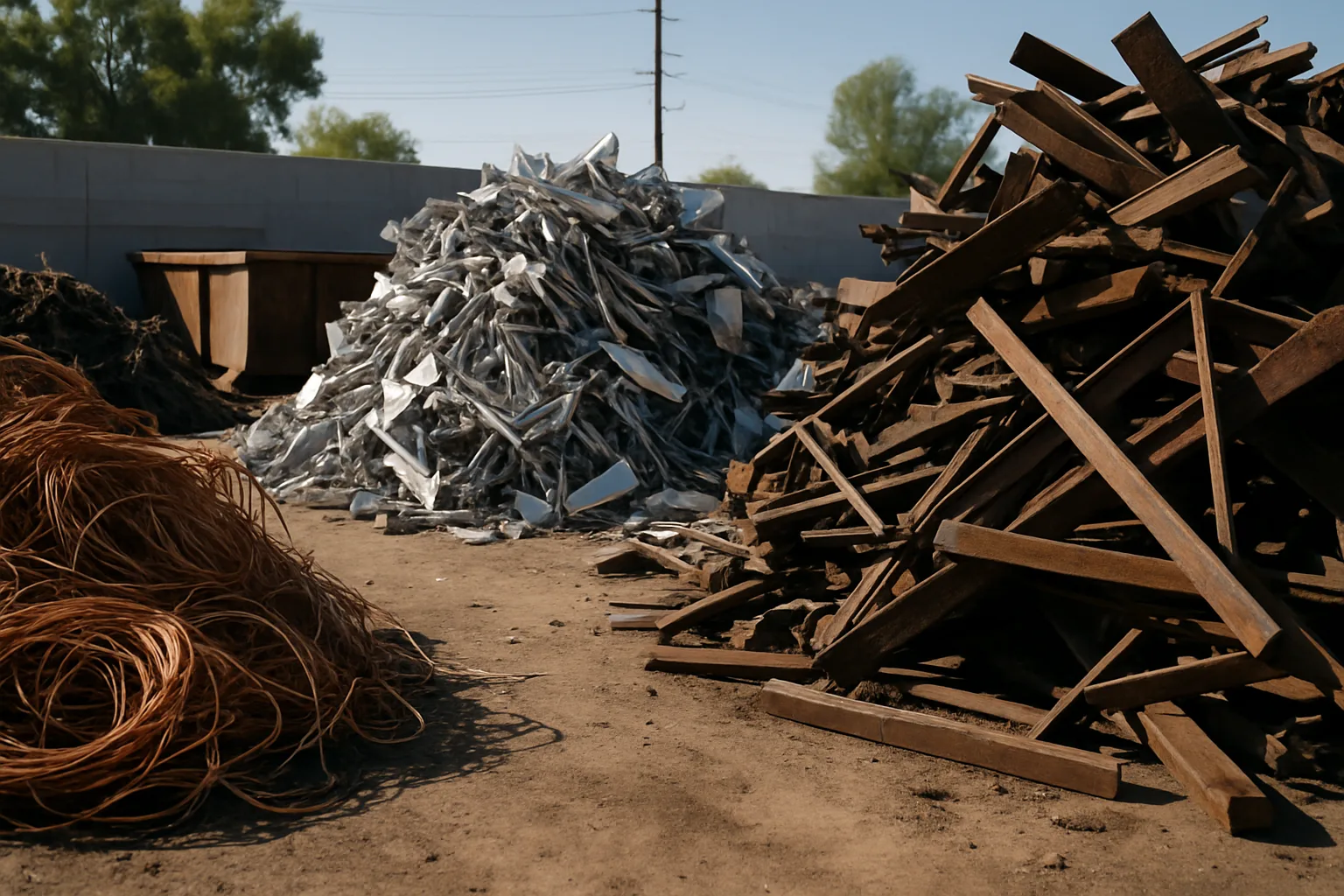
Most scrap yards pay you what they want to pay you. Unless you know the difference between what you're hauling, you'll never know if the number on that ticket is fair.
Steel and iron are not the same material. They don't weigh the same. They don't process the same. And they absolutely don't pay the same. If you're loading a trailer in Las Vegas and calling it "scrap metal," you're leaving money on the table before you even pull out of the driveway.
This guide breaks down the real price difference between steel and iron scrap, why it exists, and how to use that knowledge to get the best deal when you sell. We'll also cover where aluminum fits into the picture — because if you're sorting a mixed load, the aluminum scrap price today can shift your entire calculation.
Steel vs. Iron: What Actually Makes Them Different?
Both steel and iron are ferrous metals — meaning they contain iron and will stick to a magnet. That's where the similarity ends. Cast iron is brittle, dense, and heavy. It comes from engine blocks, machine bases, radiators, and old cookware. Steel is an alloy: iron mixed with carbon and other elements to make it stronger and more workable.
The practical difference for scrap sellers comes down to processing cost. Cast iron takes more work to melt and refine. Steel — especially clean steel like structural beams, pipes, or sheet — flows through the melt shop faster with fewer impurities. Mills pay more for material that costs them less to process. That's not a secret. That's just how the scrap market works.
- Cast iron: Engine blocks, manhole covers, old radiators, bathtubs, machine weights
- Wrought iron: Fencing, gates, ornamental metalwork — rare today, often grouped with steel
- Structural steel: Beams, columns, rebar, tubing — typically the highest-paying ferrous grade
- Sheet steel / shredder feed: Car bodies, appliances, thin-gauge material — lower price per ton due to density
- Stainless steel: Nickel and chromium content pushes prices significantly higher — always separate this out
Knowing which category your material falls into before you show up at the yard gives you a real negotiating position. It also prevents the yard from lumping premium steel in with lower-grade iron and paying you the blended rate.
Why the Price Gap Exists — and How Wide It Gets
Steel scrap prices in the U.S. fluctuate based on domestic mill demand, export markets, pig iron supply, and raw material costs. Cast iron typically trades at a discount to structural steel — sometimes a modest gap, sometimes a significant one depending on mill appetite at a given moment.
The spread between grades matters most when you're moving volume. If you're hauling a few hundred pounds, the per-hundredweight difference might be a few dollars. But when you're selling tons — or running a yard that accumulates material over weeks — that spread compounds fast.
Here's what drives the gap:
- Yield loss: Cast iron has more slag and impurities. Mills lose more in the melt.
- Density vs. volume: Cast iron is dense but bulky. It takes more space to hold a ton of it versus tightly packed steel scrap.
- Demand cycles: Foundries and steel mills use different feedstocks. When one segment slows, its preferred scrap grade softens in price.
- Contamination risk: Mixed loads get downgraded. If your iron is mixed with dirt, wood, or non-metallics, the yard discounts the entire load.
- Location: Freight costs to the nearest mill affect regional prices. In Nevada, the distance to major melt shops affects what local yards can offer.
For sellers in Nevada, regional logistics matter. Las Vegas is not sitting next to a dense cluster of steel mills the way parts of the Midwest or Southeast are. That transportation factor gets baked into the price you receive locally. It's not unfair — it's freight math. But it means maximizing your price requires even more effort around grade separation and timing.
Where Aluminum Fits In — and Why the Aluminum Scrap Price Today Changes Everything
Aluminum isn't ferrous. It won't stick to a magnet. But it often ends up in mixed loads alongside steel and iron — especially from automotive teardowns, demolition jobs, and industrial cleanouts. The aluminum scrap price today sits in a completely different range than ferrous metals, typically paying several times more per pound.
That price gap is exactly why sorting matters. A few hundred pounds of aluminum buried in a load of cast iron that gets weighed as a mixed ferrous load is a real loss. Yards that don't separate materials will pay you the lower blended rate. Yards — or platforms — that reward clean, documented, separated loads will reflect the true value of each grade.
If you're pulling a mixed load from a job site in Las Vegas, take the extra time to separate:
- Aluminum extrusions, cast aluminum parts, and sheet aluminum — these pay non-ferrous rates
- Copper wire, tubing, and fittings — often worth more per pound than anything else in your load
- Stainless steel components — nickel content adds real value over plain steel
- Cast iron vs. steel — keep these separate to capture the price difference between grades
If you want to check current scrap metal prices before you sort or haul anything, that step alone can tell you where to focus your effort. The grade with the biggest price swing is usually where the sorting time pays off fastest.
How to Get the Best Scrap Metal Prices in Las Vegas on Ferrous Loads
Selling scrap in Las Vegas is competitive — there are buyers in the market, but the default behavior for most sellers is still one call, one yard, one price. That approach made sense decades ago when information was hard to get. Today it's just leaving money behind.
Getting the best scrap metal prices Las Vegas sellers can access comes down to a few practical steps:
- Sort before you call. Separate your cast iron, your steel, your stainless, and your non-ferrous materials. Every mixed load gets averaged down.
- Know the grade before you negotiate. If you can name the grade — structural steel, #1 busheling, cast iron, shredder feed — you're not guessing. You're selling.
- Get more than one number. One bid is just a number. Two bids is a market. More bids means better price discovery.
- Document your load. Photos, weights, and grade descriptions give buyers confidence. Confident buyers bid higher.
- Time your sale when possible. Ferrous prices follow mill order books and export demand. Selling into a demand cycle beats selling into a slow week.
Platforms like SMASH make it easier to get competitive bids for your scrap metal by putting your documented load in front of vetted buyers who compete for it. That competition is what actually reveals the market price — not a single yard's posted rate. No subscription fees. SMASH only wins when you do.
For Las Vegas scrap metal services, understanding the local market dynamics — including the freight factor and regional buyer activity — helps you set realistic expectations and sell smarter.
How to Sell Scrap Metal Online and Avoid Common Mistakes
The ability to sell scrap metal online has changed the game for sellers who used to be limited to whatever buyers were physically closest to them. But online selling has its own set of pitfalls if you're not prepared.
The most common mistakes sellers make when moving to digital platforms:
- Listing without documentation. Buyers bidding remotely need to trust what you're describing. Photos, weights, and grade identification are not optional — they directly affect what buyers will offer.
- Mixing grades in a single listing. Separate your material, then list each grade. You'll get more accurate bids and avoid the blanket discount for uncertainty.
- Ignoring the logistics question. Who hauls it? What are the pickup terms? Sort this out before you list, not after a bid comes in.
- Not understanding the difference between posted prices and actual transaction prices. The number on a yard's board is a starting point. Auction-based platforms create actual competition that reflects real demand.
If you want to read scrap metal pricing guides that break down grade-by-grade pricing and help you understand what your material is actually worth before you sell, that research pays off in every transaction.
The best time to learn the difference between steel and iron scrap pricing is before you're standing at a scale with a loaded trailer. Do the homework, sort the material, and let buyers compete for what you've got.
What the Best Scrap Metal Prices Nevada Sellers Can Achieve Require
Sellers across Nevada — not just in Las Vegas — face similar challenges: distance from major mills, a market where information is often held by buyers rather than sellers, and a default culture of taking the first offer. Breaking that pattern is where the real money is.
The best scrap metal prices Nevada sellers can realistically achieve are not found by luck. They come from grade knowledge, clean loads, documentation, and access to competitive buyers. That combination is what separates a mediocre ticket from a strong one.
If you're ready to stop guessing and start getting real market numbers, find the best scrap metal prices today and see where your material actually stands in the current market. The market moves. Your price should move with it.
Frequently Asked Questions
Q: What is the aluminum scrap price today in Las Vegas?
Aluminum scrap prices fluctuate daily based on commodity markets, grade, and local buyer demand. The aluminum scrap price today in Las Vegas will depend on the specific alloy — cast aluminum, extrusions, and sheet all pay differently. Always check current posted rates and compare multiple buyers before selling. Disclaimer: Prices change frequently. Verify current rates before making any selling decisions.
Q: Is cast iron worth more or less than steel scrap?
Cast iron typically pays less per ton than clean structural steel because it costs mills more to process — more yield loss, more impurities in the melt. The exact spread varies with mill demand and regional freight costs, but separating your iron from your steel before selling almost always results in a better outcome for the steel portion of your load.
Q: How do I sell scrap metal for cash in Las Vegas?
Start by sorting your material by grade — ferrous and non-ferrous, and within each category. Document what you have with photos and estimated weights. Then contact multiple buyers rather than just the closest yard. Platforms like SMASH connect sellers with vetted buyers who compete for loads, which helps reveal actual market value rather than a single posted rate.
Q: Does it matter if I separate steel from iron before going to the yard?
Yes — significantly. Yards that receive mixed loads typically pay a blended rate, which means your higher-value steel gets averaged down to the lower iron price. Arriving with sorted, labeled material gives you leverage to negotiate each grade separately and capture the full value of what you've hauled.
Q: Can I sell scrap metal online if I'm in Nevada?
Absolutely. Online platforms let you list documented loads, reach vetted buyers outside your immediate area, and create the kind of competitive bidding that reveals real market pricing. The key is good documentation — photos, weights, and clear grade descriptions. Logistics and pickup terms need to be confirmed before finalizing any transaction.
Knowing the difference between steel and iron isn't just trivia — it's the foundation of getting paid fairly for what you haul. Sort your loads, document your grades, and put your material in front of buyers who compete for it. That's how you find the best scrap metal prices today instead of just accepting whatever number shows up on the ticket.
Stay sharp on market movements by following SMASH on LinkedIn — regular industry updates, pricing insights, and scrap market news for serious sellers.